
Enteropathic Arthritis in Crohn's and Colitis: Core Stability and Spondylitis Care
In short
Enteropathic arthritis links inflammatory bowel disease with axial spondylitis and peripheral oligoarthritis. Discover evidence-based pelvic core stabilization, posture preservation, and gut-flare exercise adaptations.
In this guide (6 sections)
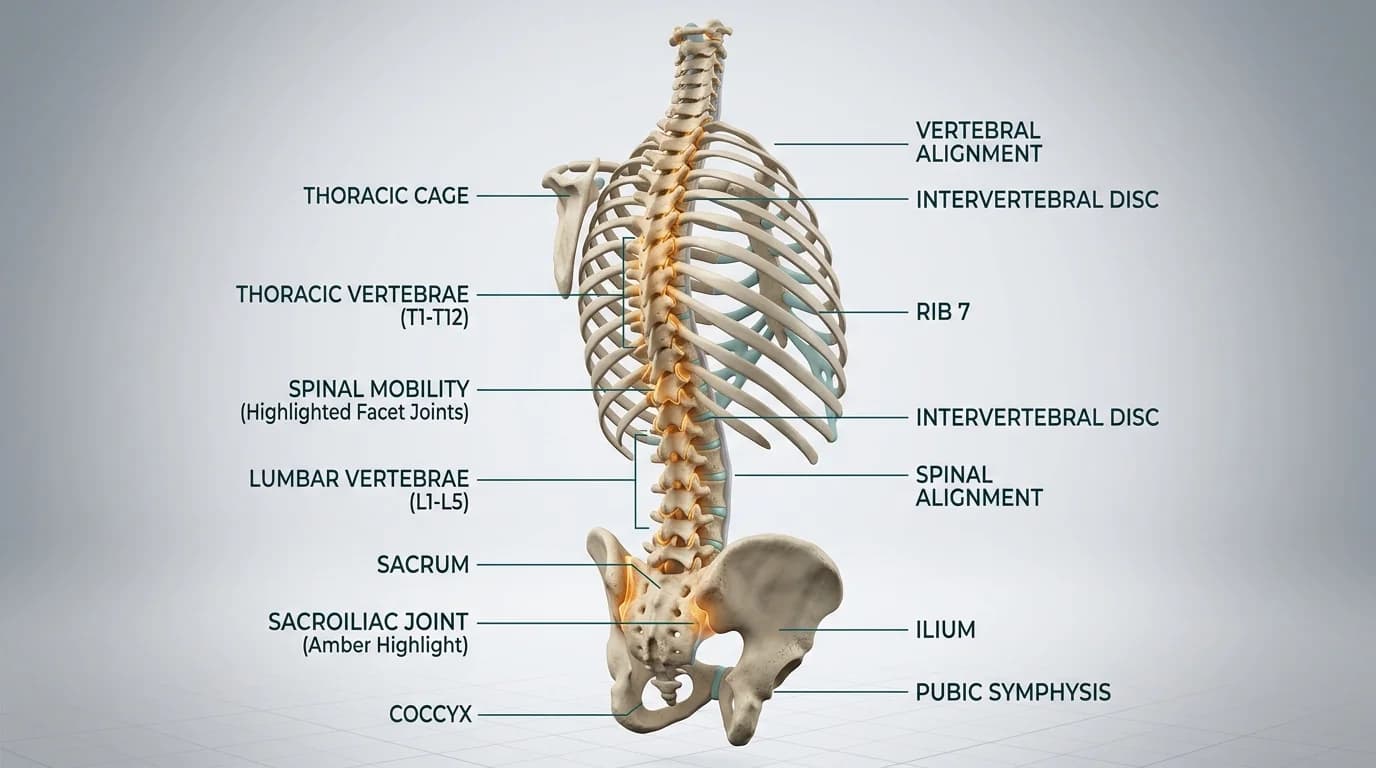
Enteropathic arthritis is a form of chronic inflammatory spondyloarthritis associated with inflammatory bowel disease (IBD), including Crohn disease and ulcerative colitis. Articular involvement manifests in two distinct patterns: peripheral arthritis, typically affecting large lower-limb joints (such as the knees and ankles) whose activity often parallels bowel inflammation; and axial arthritis (sacroiliitis and spondylitis), which progresses independently of intestinal disease activity. Compounding joint pain is chronic abdominal cramping, recurrent diarrhea, malabsorption leading to secondary osteopenia, and profound systemic fatigue. Designing a physiotherapy programme requires careful pacing to build deep pelvic core stability without spiking intra-abdominal pressure during gastrointestinal flare-ups.
Domestic and Cultural Indian Realities
In Indian society, individuals managing Crohn disease or ulcerative colitis alongside arthritis face complex social and domestic hurdles. During active bowel flares, patients experience urgent, frequent bowel movements, making them hesitant to leave home or participate in family gatherings. Performing traditional core exercises or high-impact workouts increases intra-abdominal pressure, triggering painful bowel spasms or urgent fecal incontinence. Furthermore, chronic malabsorption of vitamin D and calcium across inflamed gut mucosa accelerates secondary osteoporosis. Physiotherapists must educate patients to practice gentle, non-straining core exercises in private domestic settings and adapt bathroom environments with easily accessible, raised Western commodes.
Clinical Biomechanics and Inflammatory Pathology
The gut-joint axis is the fundamental pathophysiological driver of enteropathic arthritis. Increased intestinal mucosal permeability (leaky gut) allows bacterial antigens to translocate into the mesenteric circulation, triggering mucosal immune activation. Activated gut-homing lymphocytes expressing alpha-4-beta-7 integrin traffic to synovial tissues and entheses, producing high local concentrations of TNF-alpha, IL-23, and IL-17. In the axial skeleton, this drives enthesitis at the sacroiliac joints and anterior longitudinal ligament. Aggressive abdominal crunches or Valsalva maneuvers increase intra-abdominal pressure, which irritates inflamed bowel loops and increases shear stress across inflamed sacroiliac joints. Core rehabilitation must focus on low-pressure transversus abdominis and pelvic floor co-contraction.
Clinical Assessment and Functional Staging
Clinical evaluation integrates gastroenterological staging (such as the Crohn's Disease Activity Index or Mayo score for colitis) with rheumatological metrics, including peripheral joint swelling counts, the modified Schober test, and the BASDAI score. Clinicians assess bone mineral density via DXA scanning due to high osteopenia risk. Physiotherapists evaluate deep core motor control using real-time ultrasound or pressure biofeedback and ensure the patient can recruit the transversus abdominis without breath-holding or abdominal bulging.
Targeted Mobility and Joint Preservation Exercises
Exercises must emphasize low-load core stabilization and axial spinal extension, avoiding heavy resistance or intra-abdominal straining.
Supine Low-Pressure Core Setting with Diaphragmatic Exhalation
Objective: Activate the deep transversus abdominis and pelvic floor without increasing intra-abdominal pressure or straining the bowel
- 1Lie flat on your back on a firm bed with your knees bent at 90 degrees and feet resting flat on the surface.
- 2Place your fingertips gently on your lower abdomen, just inside your hip bones.
- 3Inhale gently through your nose, allowing your belly to rise softly without forcing.
- 4As you slowly exhale through your mouth, gently draw your lower navel inward toward your spine as if zipping a snug pair of pants, feeling a mild tightening under your fingertips.
| Rehabilitation Domain | Active Bowel Flare Phase | Clinical Remission Phase |
|---|---|---|
| Core Stabilization | Sub-maximal, low-pressure transversus abdominis activation with continuous breathing | Progressive quadruped bird-dog, side planks, and functional standing core drills |
| Spinal Mobility | Gentle supported prone lying and passive sphinx extension to combat axial stiffness | Active multi-plane thoracic rotations, wall angles, and postural resistance training |
| Aerobic Exercise | Gentle indoor walking for 10 to 15 minutes near accessible restroom facilities | Moderate-intensity stationary cycling and outdoor brisk walking for 30 minutes |
| Contraindicated Actions | Heavy abdominal crunches, Valsalva maneuvers, and high-impact jumping drills | Prolonged slouched sitting that collapses the chest and compresses abdominal organs |
Red Flags and Immediate Rheumatology Escalation
Immediate medical escalation is mandatory if a patient develops acute, severe abdominal pain with rigid guarding, rebound tenderness, high fever, and vomiting, indicating toxic megacolon or bowel perforation. Passing massive amounts of fresh rectal blood accompanied by dizziness and tachycardia demands emergency hospitalization. Sudden severe unilateral red eye with photophobia indicates acute anterior uveitis, requiring urgent ophthalmological evaluation.
Frequently Asked Questions
Can physiotherapy exercises reverse enteropathic arthritis or inflammatory bowel disease?
No. Physiotherapy cannot reverse inflammatory bowel disease or eliminate enteropathic arthritis, both of which require systemic medical management by a gastroenterologist and rheumatologist. However, physiotherapy helps manage morning stiffness, strengthens deep pelvic core musculature, preserves spinal extension, and supports physical stamina.
How do I arrange a home physiotherapy consultation for enteropathic arthritis via BookPhysio.in?
Under the National Commission for Allied and Healthcare Professions (NCAHP) Act 2021, Indian patients enjoy direct access to registered physiotherapists without an obligatory doctor referral. On BookPhysio.in, you schedule an appointment with a verified home-care clinician in your city. Payment is made directly to the therapist at your home appointment via cash or UPI; BookPhysio.in does not process booking fees online.
Related recovery guides & articles
BookPhysio.in Editorial Team
The BookPhysio.in editorial team writes and maintains this content, checking it against reliable clinical sources. Content follows our medical review policy: general information only, and no page claims a clinical review until a named registered physiotherapist has signed it off.
Read our medical review policy