
Episiotomy and Perineal Tear Scar Rehabilitation: Massage, Desensitisation, and Myofascial Release in India
In short
Painful episiotomy or tear scars can cause chronic sitting discomfort and painful intimacy. Discover how gentle scar massage, tissue desensitisation, and pelvic physiotherapy restore comfort.
In this guide (6 sections)
Perineal trauma, whether through a mediolateral episiotomy or spontaneous second-degree obstetric tears, is common during vaginal birth in Indian hospitals. While surgical stitches dissolve within a few weeks, the resulting collagenous scar tissue often heals in a tight, unyielding arrangement. Many postpartum women in India experience persistent sharp pain when sitting on hard dining chairs, wearing tight churidars, or attempting to resume marital intimacy. Because discussing perineal discomfort is often considered taboo within joint families, women silently endure chronic pain. Specialised pelvic physiotherapy offers gentle, evidence-based scar massage and myofascial desensitisation to restore tissue elasticity.
1. Functional Biomechanics: Collagen Remodelling and the Perineal Body
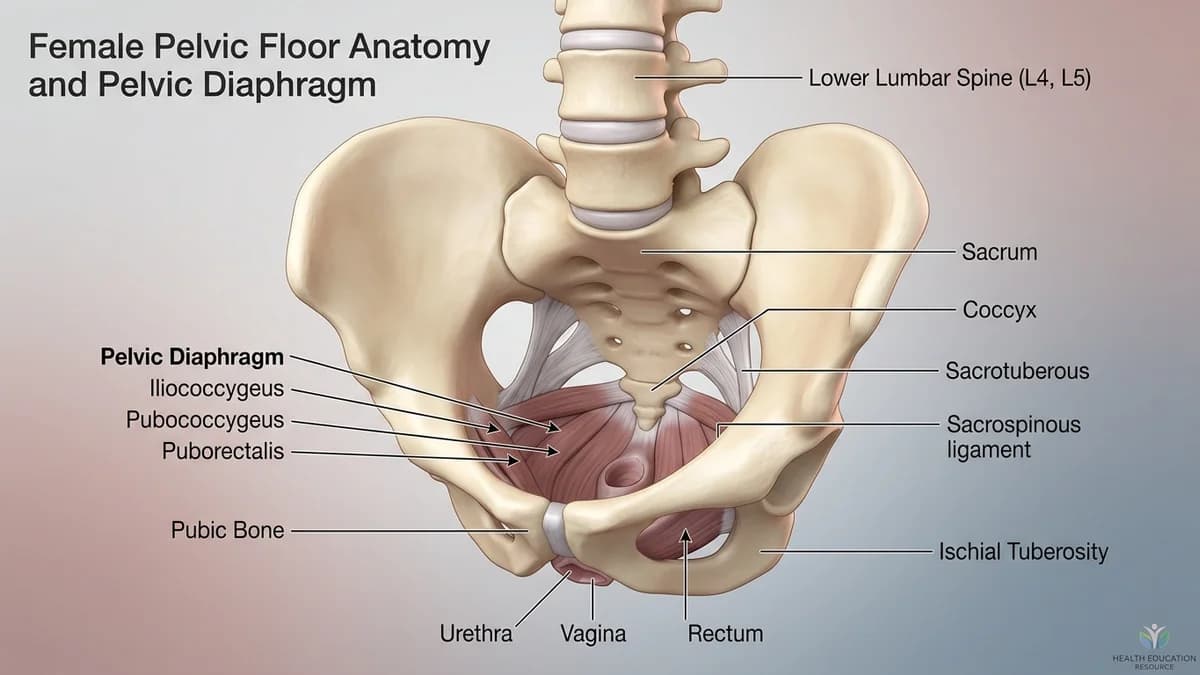
The perineal body is the central fibromuscular anchor of the pelvic floor, where the bulbospongiosus, superficial transverse perineal, external anal sphincter, and puborectalis muscles converge. An episiotomy or second-degree tear disrupts this central nexus. During secondary wound healing, type III collagen fibres are laid down rapidly in a disorganized, cross-linked matrix. Without targeted mobilisation, this scar tissue contracts, adhering to underlying muscle layers and restricting the natural compliance of the vaginal introitus. Progressive manual mobilisation applies mechanical shear stress that encourages collagen fibres to realign parallel to tension lines, increasing tissue elasticity.
2. Domestic Indian Context: Daily Chores, Ergonomics, and Privacy
Traditional postpartum practices in India often recommend warm sitz baths with turmeric or neem water, which can soothe early tissues. However, sitting directly on hard tiled floors for family meals or pooja places continuous pressure on the sensitive perineal scar. In addition, privacy for intimate personal care can be scarce in shared homes. Physiotherapists teach women to use pure virgin coconut oil or medical-grade water-based lubricants, perform scar massage in private shower spaces, and sit on a pressure-relieving foam ring or folded towel to offload the perineum.
3. Clinical Special Tests and Physical Examination
Clinical evaluation includes visual inspection of the healed perineal scar for keloid formation, erythema, or granulations. The cotton swab (Q-tip) test maps areas of localized hyperalgesia or allodynia around the introitus. Gentle digital palpation evaluates scar mobility across three planes: superficial cutaneous glide, deep transverse friction, and internal levator ani myofascial trigger points.
| Postpartum Timeline | Tissue Healing Stage | Clinical Assessment Target | Physiotherapy Technique |
|---|---|---|---|
| Weeks 0 to 6 | Acute wound healing & closure | Check for infection, dehiscence | Sitz baths, pelvic rest, gentle breathing |
| Weeks 6 to 10 | Early collagen remodeling | Tissue mobility, scar thickness | Superficial desensitisation, light oil massage |
| Weeks 10 to 14 | Mature collagen cross-linking | Elasticity during introitus stretch | Deep transverse friction, internal myofascial release |
| Beyond 14 Weeks | Consolidated scar tissue | Pain-free intimacy & sitting | Full functional integration and dilator therapy |
4. Stage-by-Stage Functional Physiotherapy Protocol
Scar rehabilitation progresses systematically from gentle external sensory desensitisation to deep transverse friction and myofascial release.
Phase 1: External Sensory Desensitisation Protocol
Objective: Calm hypersensitive superficial nerve endings around the perineal scar using varied textures.
- 1Sit comfortably in a semi-reclined position in a private bedroom or bathroom with knees bent.
- 2Ensure hands are clean and the perineal incision has fully healed (at least 6 weeks postpartum).
- 3Take a soft cotton cotton ball or clean soft cloth and gently stroke the skin surrounding the scar.
- 4Gradually progress to touching the scar itself using light circular motions, breathing calmly through your nose.
- 5Over two weeks, this helps recalibrate pain signals sent to the brain.
Phase 2: External Clock-Face Scar Mobilisation with Pure Coconut Oil
Objective: Realign collagen fibres and mobilise superficial fascial adhesions around the introitus.
- 1Apply a few drops of pure cold-pressed coconut oil or water-based lubricant to your thumb or index finger.
- 2Place your finger directly on the firmest part of the episiotomy scar.
- 3Apply gentle, sustained pressure and slide the skin along the length of the scar (parallel glide) for 1 minute.
- 4Switch to gentle side-to-side friction (perpendicular across the scar) for 2 minutes to stretch tight bands.
- 5Work around the lower half of the vaginal opening from 3 o'clock to 9 o'clock, maintaining a comfortable pressure that feels like a gentle stretch, never sharp pain.
Phase 3: Deep Internal Myofascial Release for the Perineal Body
Objective: Restore flexibility and stretch tolerance to the deep bulbospongiosus and transverse perineal muscle fibers.
- 1Lie comfortably in crook lying or semi-seated with knees relaxed open.
- 2Insert your lubricated thumb approximately 2 to 3 centimetres inside the vaginal opening.
- 3Press downward toward the rectum and outward toward the side of the scar until you feel a firm stretch.
- 4Hold this gentle static stretch for 30 to 45 seconds while taking slow, deep diaphragmatic breaths.
- 5Notice the tissue gradually softening under your thumb before releasing and resting.
Consult your gynaecologist immediately if you observe: active bleeding or pus discharging from the perineum, a foul vaginal odour, unhealed wound edges (dehiscence), high fever, or passing gas or stool through the vagina, which indicates an obstetric fistula requiring immediate surgical evaluation.
5. Clinic Consultation, Home Visits, and Transparent Fee Benchmarks
Under the National Commission for Allied and Healthcare Professions (NCAHP) Act 2021, patients in India can consult a registered pelvic health physiotherapist directly without an upfront referral, though BookPhysio.in does not ask for one. Pelvic health consultations are conducted in private, sterile clinical suites ensuring absolute confidentiality and comfort. Clinic sessions in major Indian cities range between ₹500 and ₹1,500, with home visits ranging from ₹700 to ₹2,000 where available. Patients pay their practitioner directly at each appointment, with zero platform commission.
6. Frequently Asked Questions
When can I begin massaging my episiotomy scar after delivery?
Scar massage should only begin after your obstetrician confirms that the incision has completely closed and all surgical stitches have fully dissolved, typically at your 6-week postpartum check-up. Massaging an open or inflamed wound can introduce infection or disrupt fragile healing tissues.
Is pure coconut oil safe for perineal scar massage in India?
Yes, pure virgin cold-pressed coconut oil is widely used and generally safe for external perineal massage in India due to its natural lubricating and antimicrobial properties. However, if you are prone to vaginal infections or allergies, a sterile, fragrance-free, water-based medical lubricant is recommended.
Related recovery guides & articles
BookPhysio.in Editorial Team
The BookPhysio.in editorial team writes and maintains this content, checking it against reliable clinical sources. Content follows our medical review policy: general information only, and no page claims a clinical review until a named registered physiotherapist has signed it off.
Read our medical review policy