
Ethical Transitions: Moving from Active Rehab to Pure Comfort Care
In short
Recognising when to stop active rehabilitation requires ethical courage. Learn clinical criteria for transitioning to pure comfort and dignity in terminal care.
In this guide (5 sections)
One of the most consequential clinical decisions in palliative oncology physiotherapy involves recognizing when active rehabilitation becomes non-beneficial, burdensome, or distressing to the patient. In the final trajectory of terminal illness, continuing to enforce transfers, standing balance drills, or active joint excursions ceases to be therapeutic and becomes a source of physical trauma and suffering. Palliative ethics mandates a courageous, compassionate transition from active rehabilitation to pure comfort care: prioritising gentle positioning, pressure relief, oral moistening, and loving presence.
Domestic and Cultural Indian Realities
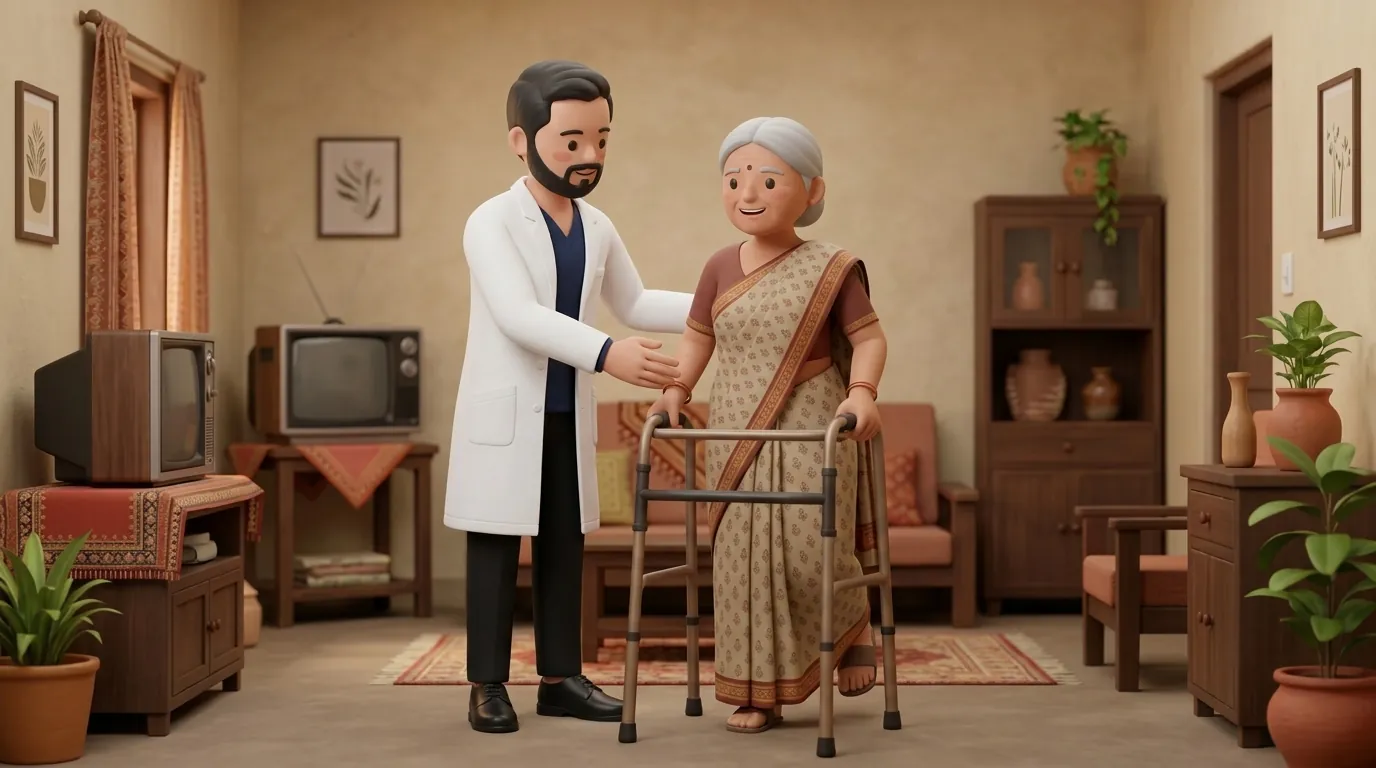
In Indian multi-generational homes, stopping active physiotherapy is often misinterpreted by grieving adult children as abandoning their parent or giving up hope. Relatives may plead with the visiting physiotherapist: "Please make him stand just once today, doctor." Clinicians navigate these moments with profound empathy, explaining that the elder body has entered its natural, sacred phase of biological completion. Physiotherapists reassure family members that transitioning to comfort care represents the highest form of filial respect, honoring the parent body by sparing them from unnecessary physical struggle.
Clinical Markers of the Active Dying Phase
The transition to pure comfort care is guided by physiological indicators marking the onset of the active dying phase (typically the final 48 to 72 hours of life). These markers include profound somnolence, inability to maintain eye contact, mottling (livedo reticularis) of the knees, feet, and hands due to peripheral microvascular collapse, Cheyne-Stokes respiration (alternating periods of hyperpnoea and apnoea), and cooling of the extremities. At this stage, metabolic energy stores are exhausted.
Pure Comfort Protocol and Non-Interventionist Care
When active rehabilitation ceases, physiotherapy does not abandon the bedside. Instead, the clinician refocuses entirely on micro-comfort: adjusting soft pillows to float heels, supporting the neck in gentle alignment, teaching family members how to moisten lips with soft swabs, and applying warm oil to dry hands. The patient rests undisturbed, spared from burdensome transfers or jarring movements.
Bedside Micro-Comfort Adjustment Protocol
Objective: Make gentle, quiet physical adjustments for peaceful rest in the dying phase
- 1Approach the bedside with quiet reverence, speaking in low, reassuring tones.
- 2Check that the elder head and neck rest comfortably in neutral alignment on a soft pillow.
- 3Slide a small, soft cushion beneath the lower calves so both heels float free of mattress contact.
- 4Verify that blankets are light and unrestrictive across the chest and feet.
- 5Gently moisten the lips with a cool water swab, resting your hand softly on the elder forearm.
| Clinical Feature | Active Palliative Rehabilitation Phase | Pure Comfort End-of-Life Phase |
|---|---|---|
| Clinical Goal | Maximize functional transfers and bedside autonomy | Zero physical exertion; complete symptom relief and peace |
| Mobility Interventions | Seated grooming; transfer board slides; commode use | Strict bed-level micro-adjustments; soft lateral tilts |
| Patient Consciousness | Alert, communicative, and responsive to prompts | Deeply somnolent, semi-comatose, or non-responsive |
| Physiological Markers | Stable peripheral perfusion; normal breathing rhythm | Peripheral mottling; Cheyne-Stokes respiration; oliguria |
Oncological Red Flags and Specialist Escalation
If a dying patient displays non-verbal signs of acute breakthrough pain, such as furrowed brow, continuous groaning, or bodily rigidity, immediately alert the palliative care physician for subcutaneous analgesic or sedative titration. Physical interventions must never replace essential medical symptom control.
Frequently Asked Questions
Does stopping active physiotherapy mean we are letting our parent die?
Stopping active physiotherapy acknowledges that the cancer has reached its final natural biological stage. It shifts focus from tiring physical exertion to pure comfort, gentle touch, and dignity, honoring the parent life with loving peace.
Do I need a doctor referral to consult a home palliative physiotherapist?
Under the National Commission for Allied and Healthcare Professions (NCAHP) Act 2021, patients in India enjoy direct access to registered physiotherapists without requiring a mandatory doctor referral. At BookPhysio.in, you consult verified physiotherapists and pay directly per session without hidden fees or platform commissions.
Related recovery guides & articles
BookPhysio.in Editorial Team
The BookPhysio.in editorial team writes and maintains this content, checking it against reliable clinical sources. Content follows our medical review policy: general information only, and no page claims a clinical review until a named registered physiotherapist has signed it off.
Read our medical review policy