
Floor Sitting Modifications in Ankylosing Spondylitis: Preserving Hip Extension
In short
Traditional cross-legged floor sitting drives destructive pelvic posterior tilt and accelerates hip flexion contractures in ankylosing spondylitis. Master ergonomic sitting modifications, prone extension routines, and posture preservation.
In this guide (6 sections)
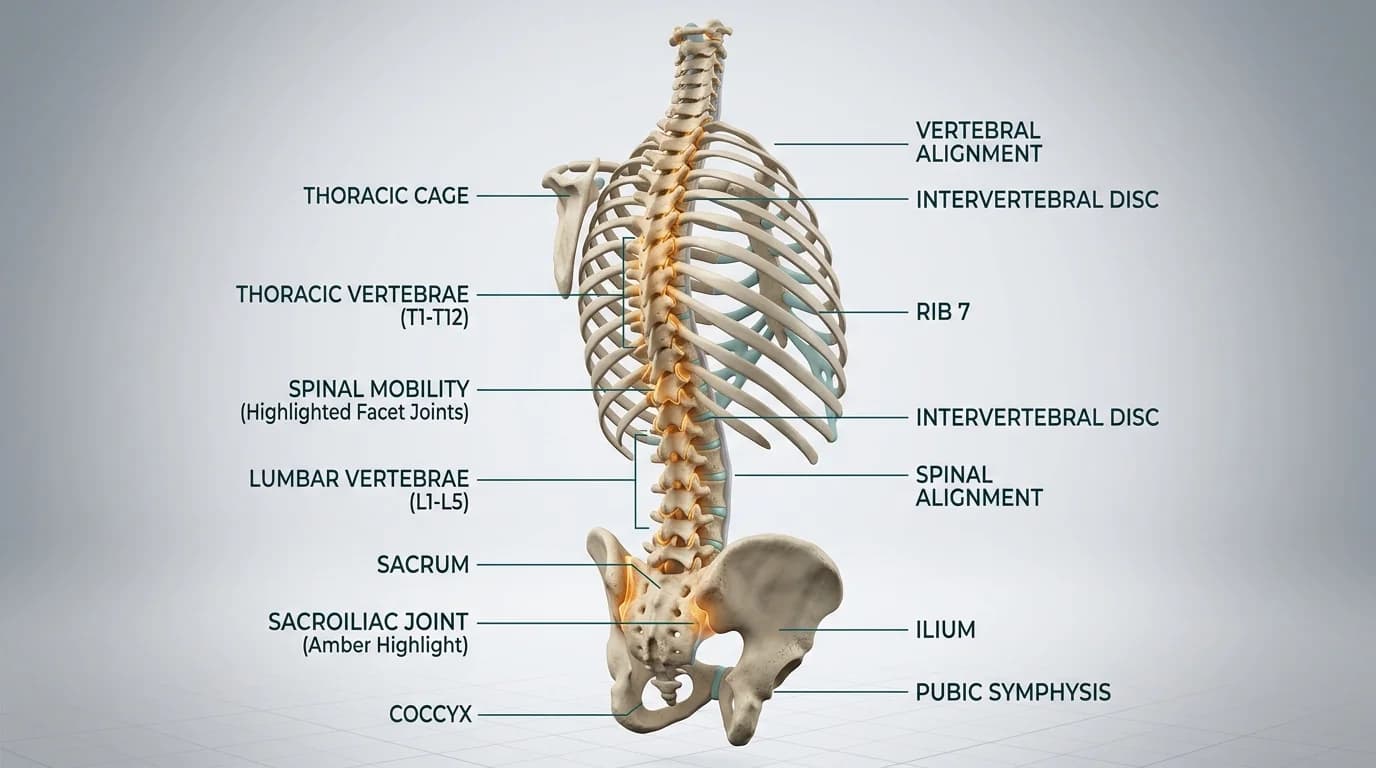
In axial spondyloarthritis and ankylosing spondylitis, structural inflammation is not limited to the spine; secondary hip joint involvement (coxitis) affects up to 40 percent of patients, serving as a primary indicator of severe disease. The hip joints and lumbar spine function as an integrated biomechanical unit to maintain upright human posture. When inflammatory sacroiliitis and coxitis occur, patients habitually adopt flexed hip postures to relax anterior capsular tension. However, prolonged sitting in flexion, particularly traditional Indian cross-legged floor sitting (sukhasana), drives progressive adaptive shortening of the iliopsoas, rectus femoris, and anterior hip capsule. The resulting hip flexion contractures force the pelvis into anterior tilt during standing, which compounds thoracic kyphosis and drives compensatory, fixed sagittal deformity.
Domestic and Cultural Indian Realities
In Indian cultural and religious life, sitting on the floor cross-legged is an integral expectation during family dining, spiritual prayers, community weddings, and festival gatherings. When an individual with ankylosing spondylitis attempts to sit on a thin floor mat, limited hip internal rotation and flexion cause immediate posterior pelvic tilting, flattening the lumbar lordosis and forcing the thoracic spine into severe kyphotic slouching. Furthermore, rising from the floor requires significant hip torque and lumbar flexion, provoking acute sacroiliac pain. Patients must be empowered to modify floor sitting by using firm, wedge-shaped meditation cushions, elevated wooden chowkis, or transitioning gracefully to chairs, explaining to family members that preserving hip extension is vital to avoid spinal fusion in a crouched deformity.
Clinical Biomechanics and Inflammatory Pathology
The hip joint capsule is reinforced anteriorly by the massive iliofemoral ligament of Bigelow, which resists hip hyperextension during bipedal standing. In spondyloarthritis, enthesopathy at the femoral head-neck junction and anterior capsular insertions promotes progressive capsular fibrosis and secondary osteophyte formation. When a patient develops a fixed 15-degree hip flexion contracture, upright standing is only possible by either exaggerating lumbar lordosis (impossible if the lumbar spine is ankylosed) or flexing the knees in a crouched stance. This crouch stance increases energy expenditure during walking by over 50 percent and places immense shear loads across the thoracic spine. Daily prone positioning and active hip extension exercises are essential to counteract this contracture.
Clinical Assessment and Functional Staging
Physiotherapy evaluation requires precise measurement of hip extension using the Thomas test: with the patient supine and the contralateral hip flexed to flatten the lumbar spine, inability of the tested thigh to rest flat on the examination surface confirms a hip flexion contracture. Hip internal and external rotation are measured in both flexion and extension. Anthropometric spinal measurements, including occiput-to-wall distance, chest expansion, and Bath Ankylosing Spondylitis Metrology Index (BASMI), are recorded to evaluate overall sagittal balance.
Targeted Mobility and Joint Preservation Exercises
Rehabilitation must prioritize daily sustained prone positioning combined with active gluteal activation to elongate anterior hip structures.
Prone Lying Hip Extension with Isometric Gluteal Setting
Objective: Lengthen the anterior hip capsule and iliopsoas while activating the gluteus maximus to restore sagittal pelvic balance
- 1Lie flat on your stomach on a firm wooden cot or exercise mat, placing a thin flat pillow beneath your pelvis if lower back stiffness is present.
- 2Rest your forehead on your folded hands, keeping your neck relaxed and breathing steadily.
- 3Tighten the buttock muscles on one side and lift that leg 2 to 3 inches off the bed, keeping the knee completely straight.
- 4Hold the extended leg steadily for 5 seconds without arching your lower back, then slowly lower.
| Postural Activity | Joint-Preserving Modification | Habitual High-Contracture Pattern |
|---|---|---|
| Floor Sitting Protocol | Elevated dense foam wedge cushion (6 to 8 inches) tipping pelvis forward, or high chowki | Sitting flat on bare floor with rounded back and collapsed chest for extended hours |
| Resting Posture | Sustained prone lying for 20 minutes daily on a firm surface without head pillows | Sleeping on a soft mattress curled in a tight foetal flexion posture with pillows under knees |
| Chair Selection | Firm ergonomic chair with 100-degree backrest angle and adjustable lumbar support roll | Deep, soft sagging sofas that pull hips into deep flexion and collapse lumbar curve |
| Rising Technique | Transferring through half-kneeling with sturdy hand support on a heavy table or chair | Explosive curling and twisting from the floor using sudden lumbar flexion torque |
Red Flags and Immediate Rheumatology Escalation
Rapidly progressive, severe groin pain radiating down the anterior thigh with an inability to bear weight indicates rapid destructive hip osteoarthritis (coxitis) or avascular necrosis of the femoral head, requiring immediate orthopaedic consultation for total hip arthroplasty consideration. Sudden unremitting nocturnal sacral pain accompanied by fever suggests septic sacroiliitis.
Frequently Asked Questions
Can hip extension exercises reverse a fused hip in ankylosing spondylitis?
Once complete bony ankylosis of the hip joint has occurred, exercise therapy cannot reopen the fused joint space; total hip replacement surgery is required to restore mobility. However, in early and moderate stages, daily hip extension exercises and prone lying help manage morning stiffness, prevent soft tissue contractures, and preserve walking independence.
How do I book a qualified home physiotherapist for spondylitis rehabilitation via BookPhysio.in?
Under the National Commission for Allied and Healthcare Professions (NCAHP) Act 2021, Indian patients enjoy direct access to registered physiotherapists without an obligatory doctor referral. On BookPhysio.in, you schedule an appointment with a verified home-care clinician in your city. Payment is made directly to the therapist at your home appointment via cash or UPI; BookPhysio.in does not process booking fees online.
Related recovery guides & articles
BookPhysio.in Editorial Team
The BookPhysio.in editorial team writes and maintains this content, checking it against reliable clinical sources. Content follows our medical review policy: general information only, and no page claims a clinical review until a named registered physiotherapist has signed it off.
Read our medical review policy