
Microcellular Rubber (MCR) Footwear for the Rheumatoid Forefoot: Offloading Metatarsalgia
In short
Plantar fat pad atrophy and metatarsal head subluxation in rheumatoid arthritis turn daily walking into an excruciating challenge. Master the science of microcellular rubber (MCR) orthotics, rocker soles, and forefoot offloading.
In this guide (6 sections)
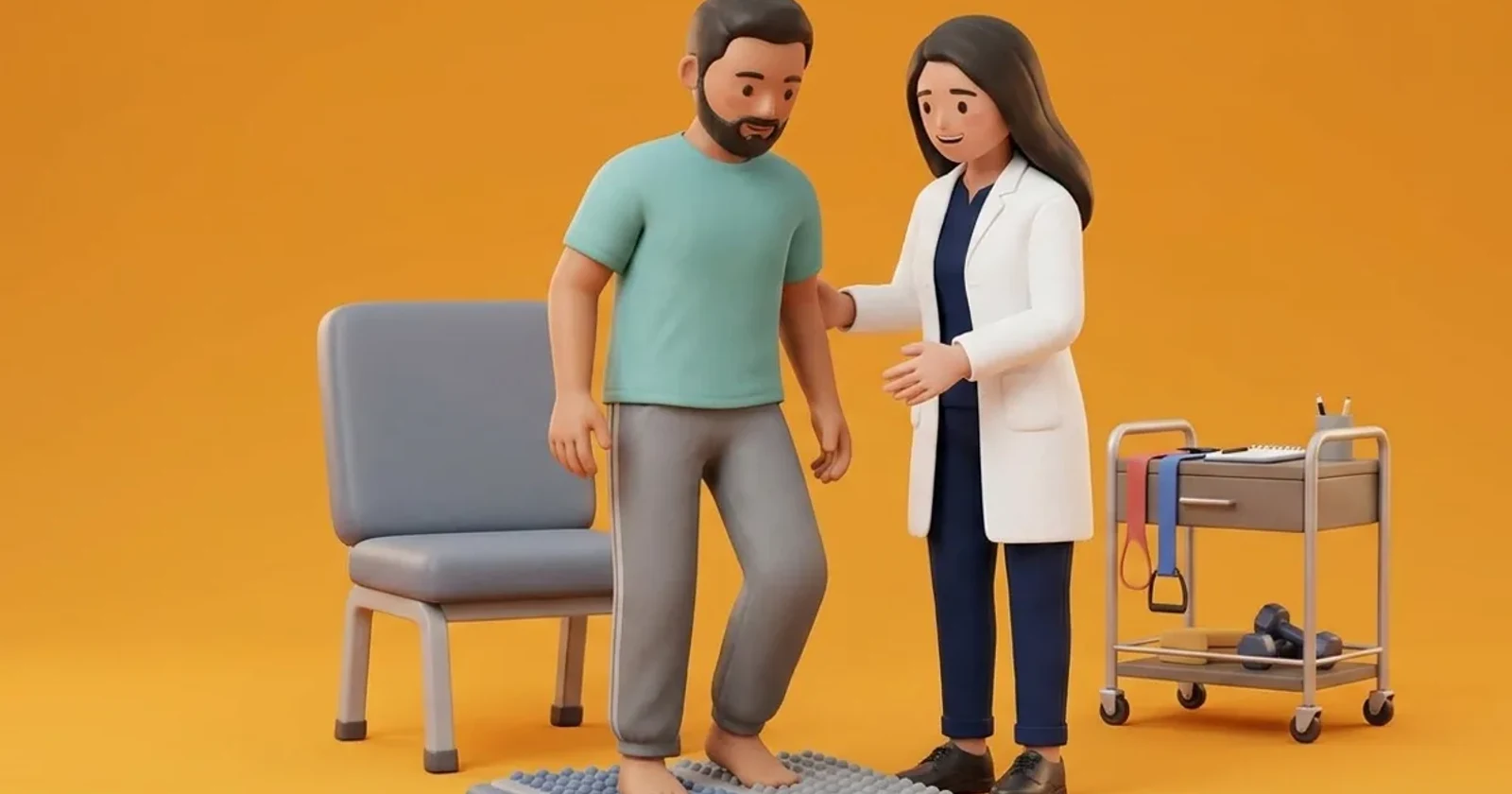
The human foot is uniquely engineered to bear body weight and absorb impact through a specialised plantar adipose cushion situated beneath the metatarsal heads. In chronic rheumatoid arthritis, persistent synovitis within the metatarsophalangeal (MTP) joints destroys the fibrocartilaginous plantar plates, leading to dorsal subluxation of the proximal phalanges. This mechanical failure drives the plantar fat pad distally, leaving the eroded, osteopenic metatarsal heads exposed directly beneath atrophic skin. During ambulation, peak plantar pressures under the second and third metatarsal heads spike dramatically, producing severe metatarsalgia, intractable plantar callosities, and high risk of skin ulceration. Prescribing specialised therapeutic footwear incorporating microcellular rubber (MCR) insoles is an essential biomechanical intervention to redistribute peak pressures and preserve mobility.
Domestic and Cultural Indian Realities
In Indian society, walking barefoot indoors across hard marble, granite, or vitrified tile floors is a mandatory cultural custom in residential homes and temples. For a patient with severe rheumatoid forefoot deformities, every barefoot step transmits unfiltered ground impact directly into unprotected bony prominences. Furthermore, commercial Indian sandals (such as Kolhapuris or thin hawai chappals) feature hard, unyielding leather soles or thin rubber that exacerbates focal shear. Patients must be provided with dedicated indoor therapeutic footwear lined with 15 to 20 Shore A microcellular rubber, featuring wide, deep toe boxes and adjustable Velcro straps to accommodate diurnal swelling.
Clinical Biomechanics and Inflammatory Pathology
Microcellular rubber (MCR) is a specialised closed-cell elastomeric polymer originally developed for insensitive neuropathic and arthritic feet. Its cellular micro-architecture provides exceptional viscoelastic shock absorption and high elastic recovery, resisting permanent compressive deformation under repetitive cyclical loading. In the rheumatoid foot, where the transverse arch has collapsed and metatarsal heads act as focal pressure points, an MCR footbed conforms dynamically to the plantar contour. By spreading the contact area across the entire plantar vault, peak pressure is reduced by up to 40 percent. Adding a rigid rocker-bottom sole shifts the biomechanical pivot point proximal to the MTP joints, completely eliminating the painful 65-degree forefoot dorsiflexion typically required during terminal stance toe-off.
Clinical Assessment and Functional Staging
Clinical assessment involves non-weight bearing and weight-bearing examination of the forefoot. Clinicians palpate each metatarsal head individually, evaluating for localized pain, bursal swelling, and hyperkeratotic callosities. The passive flexibility of claw toes and the reducibility of hallux valgus are measured. Static and dynamic pedobarography or Harris mat ink footprints are utilized to quantify peak focal pressure concentrations under each metatarsal head. Foot and ankle mobility is scored using the Foot Function Index (FFI).
Targeted Mobility and Joint Preservation Exercises
Exercise therapy must be conducted in non-weight bearing positions, focusing on intrinsic foot muscle activation and gentle plantar fascia mobilization.
Seated Non-Weight Bearing Towel Curls on Soft Mat
Objective: Strengthen intrinsic foot flexors to support the transverse arch without compressive metatarsal loading
- 1Sit comfortably on a chair with your bare feet resting flat on a soft cotton towel spread over a cushioned mat.
- 2Keep your heels firmly anchored to the floor throughout the movement.
- 3Use your toes to gently scrunch and gather the towel backward toward your heels in a smooth, rhythmic motion.
- 4Release your toes completely, smoothing the towel back out with your hands before repeating.
| Footwear Component | Prescribed Therapeutic MCR Footwear | Hazardous Conventional Footwear |
|---|---|---|
| Insole Material | Dual-layer 10 mm microcellular rubber (MCR 15-20 Shore A) with breathable top cover | Hard unyielding compressed leather, rigid plastic orthotics, or thin EVA foam |
| Metatarsal Relief | Integrated metatarsal dome pad positioned immediately proximal to metatarsal heads | Flat insole surface with zero transverse arch elevation, leaving metatarsals exposed |
| Outsole Mechanics | Rigid or semi-rigid rocker-bottom outsole promoting smooth forward roll without toe bend | Thin, completely flexible rubber sole forcing sharp forefoot hyperextension |
| Upper Construction | Extra-depth, wide rounded toe box crafted from soft, smooth stretchable leather | Narrow, pointed, tapered toe box with rigid interior seams compressing claw toes |
Red Flags and Immediate Rheumatology Escalation
The development of deep, non-healing ulcerations, localized black necrotic eschars over metatarsal heads, or foul-smelling purulent discharge indicates deep soft tissue infection or rheumatoid vasculitis, requiring urgent surgical debridement and systemic antibiotic therapy. Sudden, unremitting severe resting pain in the toes accompanied by coldness and cyanosis signals acute digital ischemia.
Frequently Asked Questions
Can therapeutic MCR footwear reverse rheumatoid foot deformities?
No. MCR footwear cannot reverse structural claw toe deformities or restore eroded metatarsal heads. However, by redistributing plantar pressure, cushioning exposed bones, and eliminating painful toe-off bending, therapeutic footwear helps manage morning stiffness, provides profound pain relief, and prevents debilitating skin ulceration.
How do I book a specialised home physiotherapy assessment for custom footwear fitting via BookPhysio.in?
Under the National Commission for Allied and Healthcare Professions (NCAHP) Act 2021, Indian patients enjoy direct access to registered physiotherapists without an obligatory doctor referral. On BookPhysio.in, you schedule an appointment with a verified clinician in your city. Payment is made directly to the therapist at your home appointment via cash or UPI; BookPhysio.in does not process booking fees online.
Related recovery guides & articles
BookPhysio.in Editorial Team
The BookPhysio.in editorial team writes and maintains this content, checking it against reliable clinical sources. Content follows our medical review policy: general information only, and no page claims a clinical review until a named registered physiotherapist has signed it off.
Read our medical review policy