
Footwear Selection Guide for Indian Diabetics: Wide Toe Box and Adjustable Closures
In short
Selecting proper footwear is the single most effective way to prevent neuropathic foot ulcers. Learn the essential criteria for choosing diabetic shoes in India.
In this guide (6 sections)
Therapeutic footwear is an indispensable medical prescription for individuals with diabetic peripheral neuropathy. Ill-fitting shoes account for more than 50 percent of all diabetic foot ulcers worldwide, resulting from unperceived focal pressure, repetitive friction, and narrow toe box compression. For individuals with loss of protective sensation, shoes that feel snug or comfortable in the store are often dangerously tight, because blunted sensory nerves require excessive pressure before registering a fit. A clinically sound diabetic shoe must incorporate a broad, rounded toe box, extra vertical depth, adjustable velcro or lace fastenings, a firm heel counter, and a cushioned multi-density microcellular rubber insole to distribute ground reaction forces safely.
Domestic and Cultural Indian Realities
In Indian retail footwear markets, fashionable shoes frequently feature narrow, pointed profiles, stiff synthetic materials, and paper-thin soles. Many diabetic individuals buy standard street sandals or low-cost slip-ons that lack proper arch contouring and heel support. Furthermore, foot swelling varies substantially throughout the day due to hot Indian weather, prolonged sitting, and mild venous insufficiency. Buying shoes in the morning frequently results in footwear that constricts the feet by late afternoon. Patients must always shop for shoes in the late afternoon when physiological foot volume is at its peak. Footwear must be chosen based on an exact tracing of the weight-bearing foot on cardboard, rather than relying on subjective feeling.
Clinical Biomechanics and Neuropathic Breakdown
When a shoe toe box is too narrow, transverse compressive forces squeeze the first and fifth metatarsal heads together, driving the lesser toes into clawing and creating severe shear against the lateral and medial shoe walls. If vertical depth is inadequate, dorsal claw toe knuckles rub against the shoe ceiling, creating blister-inducing friction with every step. Shoes that lack adjustable fastenings force the toes to claw reflexively to keep the shoe from slipping off during the swing phase of walking. Proper diabetic footwear eliminates these shear mechanisms by securing the foot firmly across the instep and heel with adjustable velcro straps, leaving the toes completely free of contact.
Clinical Assessment and Neuropathy Screening
Assessment begins with the cardboard tracing test: the patient stands on a piece of white cardboard while the clinician traces the full perimeter of both feet. The shoe insole is removed and placed directly over the tracing; if the foot outline extends beyond the insole perimeter at any point, the shoe is clinically rejected. The clinician palpates inside the shoe to ensure there are no protruding seams, rough stitching, or raw edges. Sensory testing with a 10g monofilament confirms whether the patient has loss of protective sensation, dictating the need for custom orthotic insoles.
Targeted Offloading and Intrinsic Foot Conditioning
Prescribing diabetic footwear requires educating the patient on a structured break-in schedule. New shoes must never be worn for a full day immediately; they should be worn for only 1 to 2 hours at home on the first day, followed by careful mirror inspection of the skin. If no redness or marks appear, wearing time is increased by 1 hour each day over two weeks. Patients must always wear clean, soft cotton socks inside their shoes to absorb perspiration and reduce friction.
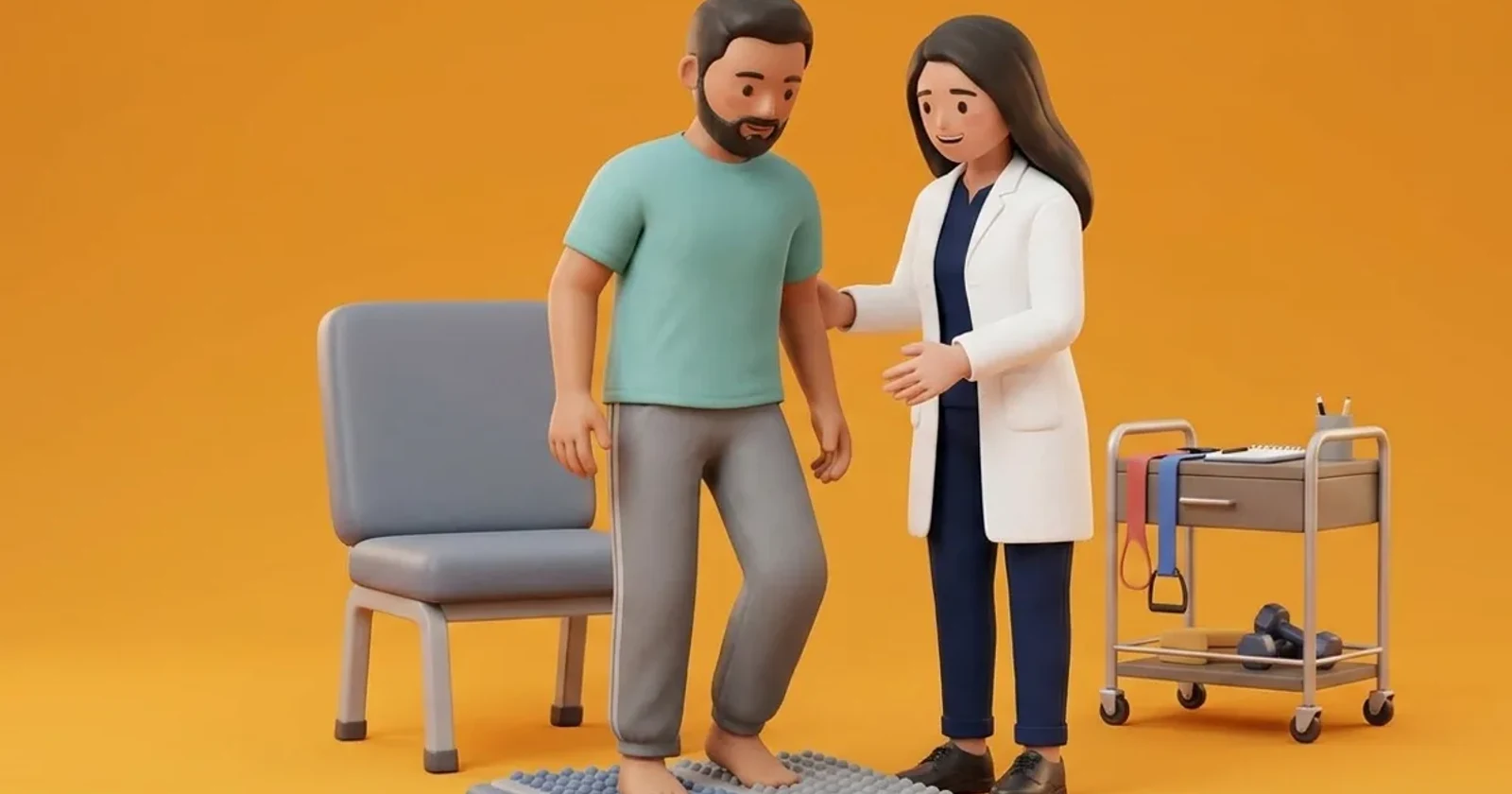
Seated Foot Tracing and Alignment Verification
Objective: Verify foot positioning and practice non-weight bearing ankle alignment
- 1Sit upright in a chair with both feet resting flat on a cardboard sheet on the floor.
- 2Keep your heels aligned under your knees without letting your ankles roll inward.
- 3Spread your toes comfortably without forcing them.
- 4Have a family member trace around your foot with a vertical pencil.
- 5Compare the tracing against your shoe insole to confirm generous width.
| Shoe Structural Component | Clinical Requirement Specification | Biomechanic Protection Mechanism |
|---|---|---|
| Toe Box Width and Shape | Broad, rounded, matches foot shape; 10-12mm toe clearance | Prevents digital crowding, hallux valgus pressure, and apical corns |
| Vertical Toe Box Depth | Extra 10 to 12mm depth above standard footwear | Accommodates dorsal claw knuckles without shoe ceiling friction |
| Fastening Mechanism | Two or three wide adjustable velcro straps or eyelet laces | Accommodates diurnal swelling; prevents foot sliding and toe clawing |
| Insole Material and Shore Rating | Removable 8-10mm multi-density MCR or Plastazote, Shore A 15-20 | Redistributes peak vertical impact; dampens ground reaction forces |
| Heel Counter and Outsole | Firm, rigid thermoplastic heel counter; non-skid rubber sole | Stabilizes rearfoot coronal motion; prevents ankle inversion/eversion |
Red Flags and Urgent Diabetic Foot Escalation
Immediate medical escalation is necessary if taking off footwear reveals red marks that persist longer than 15 minutes, fluid-filled blisters, or broken skin over bony prominences. The shoe must not be worn again until evaluated and modified by a physiotherapist or orthotist. Any purulent drainage, local heat, or spreading redness demands emergency medical review.
Frequently Asked Questions
Why do my new shoes need to be longer than my actual foot length?
During walking, your foot naturally elongates and slides forward slightly during the push-off phase. Your shoes need roughly 10 to 12 millimetres (about the width of an adult thumb) of clear space between the tip of your longest toe and the front of the shoe to prevent your toes from repeatedly striking the shoe wall.
Can I wear slip-on loafers if they feel wide enough?
Slip-on shoes are not recommended for diabetic feet. Because they lack adjustable straps or laces, slip-ons must be tight across the instep to stay on your foot, which compresses dorsal nerves and blood vessels. As the shoe loosens with wear, your foot slides forward, forcing your toes to claw to keep the shoe on.
Related recovery guides & articles
BookPhysio.in Editorial Team
The BookPhysio.in editorial team writes and maintains this content, checking it against reliable clinical sources. Content follows our medical review policy: general information only, and no page claims a clinical review until a named registered physiotherapist has signed it off.
Read our medical review policy