
Garment Sewing Machine Operators: Pedal Ankle Strain and Neck Care
In short
Garment factory operators in Tirupur and Surat operate foot pedals while leaning over needles for 10 hours daily. Learn targeted clinical rehabilitation.
In this guide (6 sections)
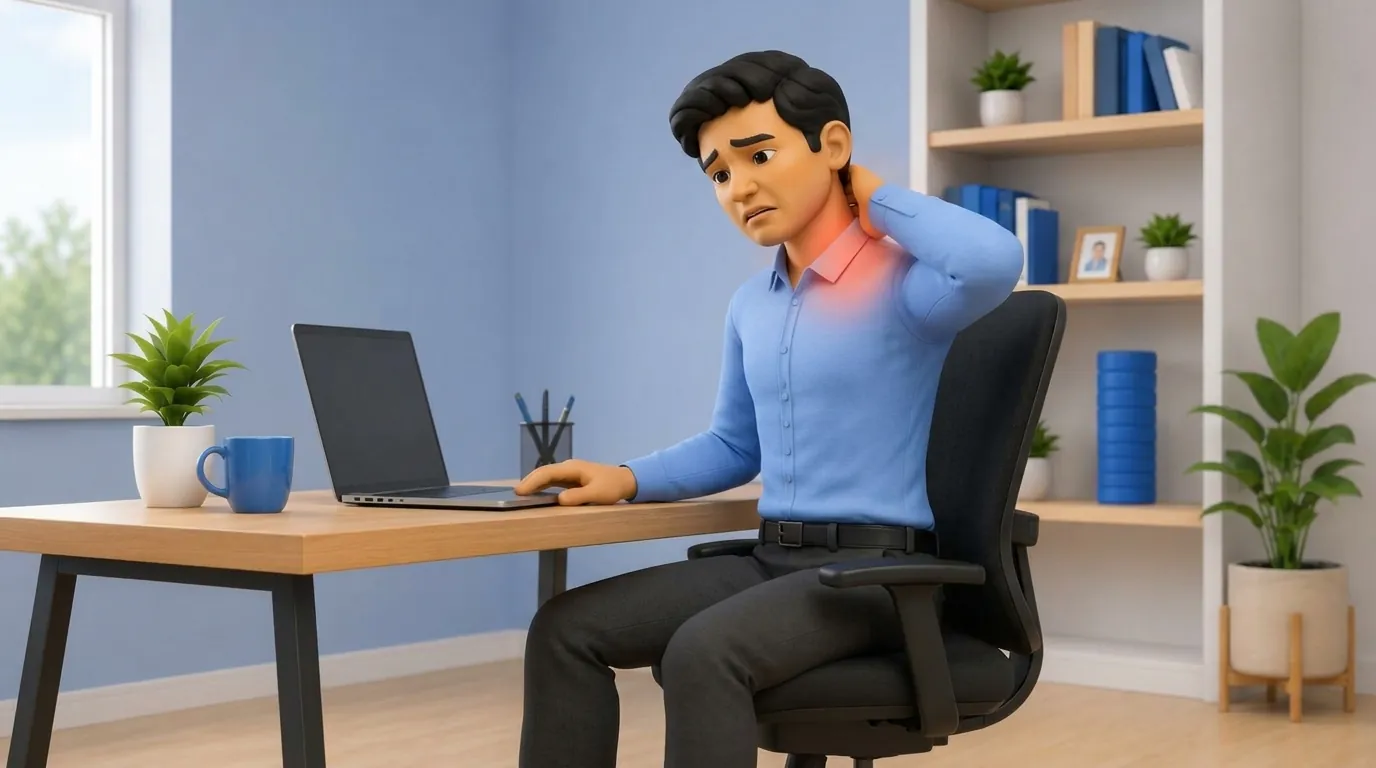
India textile and export garment manufacturing hubs in Tirupur, Surat, Noida, and Bengaluru employ hundreds of thousands of sewing machine operators. Workers sit on backless wooden stools, operating an electric treadle foot pedal with the right foot while guiding fabric under high-speed sewing needles. This setup forces the operator into asymmetric pelvic rotation, sustained neck flexion of 45 to 60 degrees, and repetitive ankle plantarflexion. The cumulative strain leads to Achilles tendinopathy, anterior ankle impingement, thoracic scoliosis, and chronic cervical spondylosis.
Domestic and Cultural Indian Realities
Export apparel lines operate on rigid assembly line quotas where an operator stitches up to 120 garment pieces per hour. Workstations feature unpadded wooden stools without backrests or armrests. Because sewing machines are fitted with a single right-sided floor pedal, operators keep the right leg forward and active while the left leg remains static under the bench. To track the stitching line accurately, operators lean their upper bodies forward and to the left, sustaining a twisted spine for entire 10-hour work shifts.
Clinical Biomechanics and Occupational Overuse
Repetitive depression of the sewing pedal requires thousands of rapid contractions of the right gastrocnemius, soleus, and tibialis anterior muscles. Over time, this unilateral activation causes Achilles tendon micro-trauma and tightens the calf complex, restricting ankle dorsiflexion. Asymmetric sitting rotates the pelvis forward on the right side, shearing the right sacroiliac joint. Concurrently, intense forward neck stoop places high tensile stress on the posterior cervical musculature and increases intradiscal pressures at C5-C6.
Workplace Ergonomic Assessment and Postural Metrics
Ergonomic evaluation uses RULA and the Rapid Entire Body Assessment (REBA), with typical scores between 8 and 10 indicating immediate need for redesign. Clinical examination assesses active ankle dorsiflexion range with a goniometer, palpates the Achilles tendon for focal thickening, and evaluates pelvic asymmetry. Cervical range of motion testing highlights marked limitations in extension and right rotation.
Targeted Workplace Conditioning and Stretching Protocols
Interventions include introducing adjustable industrial chairs with lumbar backrests, adding dual-sided pedal linkages to allow alternating between left and right foot operation, and tilting machine tables slightly toward the operator to reduce neck flexion. Operators perform active ankle pumps and cervical extension stretches during hourly line breaks.
Seated Active Ankle Plantarflexion and Dorsiflexion Reset
Objective: Restore ankle mobility and reduce Achilles tendon tightness from sewing pedal use
- 1Sit back in your chair with your spine upright and feet resting flat on the floor.
- 2Lift your right foot off the floor and pull your toes up toward your shin as far as possible.
- 3Hold the upward stretch for 3 seconds, feeling the calf muscles stretch.
- 4Point your toes downward fully as if pressing an imaginary pedal, holding for 3 seconds.
- 5Repeat smoothly for 10 cycles, then switch to the left foot to balance muscular tone.
| Body Segment | Occupational Trauma Pattern | Physiotherapy Remediation |
|---|---|---|
| Right Ankle Joint | Achilles tendinopathy from repetitive unilateral pedal depression | Install alternating foot pedal and perform eccentric calf drops |
| Sacroiliac Joint | Pelvic torsion and unilateral piriformis spasm | Provide lumbar-supported seating and pelvic realignment stretches |
| Cervical Spine | 45-degree forward flexion watching needle stroke | Incline sewing machine table by 10 to 15 degrees toward operator |
| Thoracic Spine | Asymmetric kyphoscoliotic posture leaning toward needle point | Thoracic rotation mobility drills and posture correction breaks |
Red Flags and Specialist Escalation
Sudden sharp pain in the back of the ankle accompanied by an audible pop and inability to stand on tiptoes indicates an acute Achilles tendon rupture requiring immediate orthopaedic consultation. Progressive hand weakness or radiating numbness down the arm necessitates prompt cervical spine evaluation.
Frequently Asked Questions
Can physiotherapy help sewing machine operators manage ankle and neck pain?
Physiotherapy aims to relieve repetitive strain and restore functional capacity through ankle mobility routines, pelvic balance exercises, and ergonomic workstation modifications. Switching pedal foot use helps rebalance muscle strain across both legs.
Do I need a doctor referral to see a physiotherapist for ankle pain in India?
Under the National Commission for Allied and Healthcare Professions (NCAHP) Act 2021, patients in India enjoy direct access to registered physiotherapists without requiring a mandatory prior medical referral. At BookPhysio.in, you consult verified physiotherapists and pay directly per session without hidden fees or platform commissions.
Related recovery guides & articles
BookPhysio.in Editorial Team
The BookPhysio.in editorial team writes and maintains this content, checking it against reliable clinical sources. Content follows our medical review policy: general information only, and no page claims a clinical review until a named registered physiotherapist has signed it off.
Read our medical review policy