
Genitourinary Syndrome of Menopause (GSM): Pelvic Muscle Atrophy and Gentle Resistance in India
In short
Vaginal dryness, burning, recurrent urinary tract infections, and pelvic floor thinning in menopause are medical, treatable issues. Discover gentle resistance training for GSM.
In this guide (6 sections)
Genitourinary Syndrome of Menopause (GSM), previously termed vulvovaginal atrophy, atrophic vaginitis, or urogenital atrophy, is a progressive, chronic condition affecting over 50 percent of post-menopausal women across India. Characterised by vaginal dryness, irritation, burning, dyspareunia, urinary frequency, and recurrent urinary tract infections (UTIs), GSM results from systemic oestrogen withdrawal affecting the estrogen-receptor-dense tissues of the vulva, vagina, urethra, and pelvic floor. In Indian society, women frequently accept these distressing symptoms as an inevitable, unspoken consequence of ageing, withdrawing from physical intimacy and living in silent discomfort. Evidence-based pelvic health physiotherapy combined with medical guidance safely restores tissue elasticity and muscular support.
1. Functional Biomechanics: Estrogen Depletion, Collagen Loss, and Sarcopenia
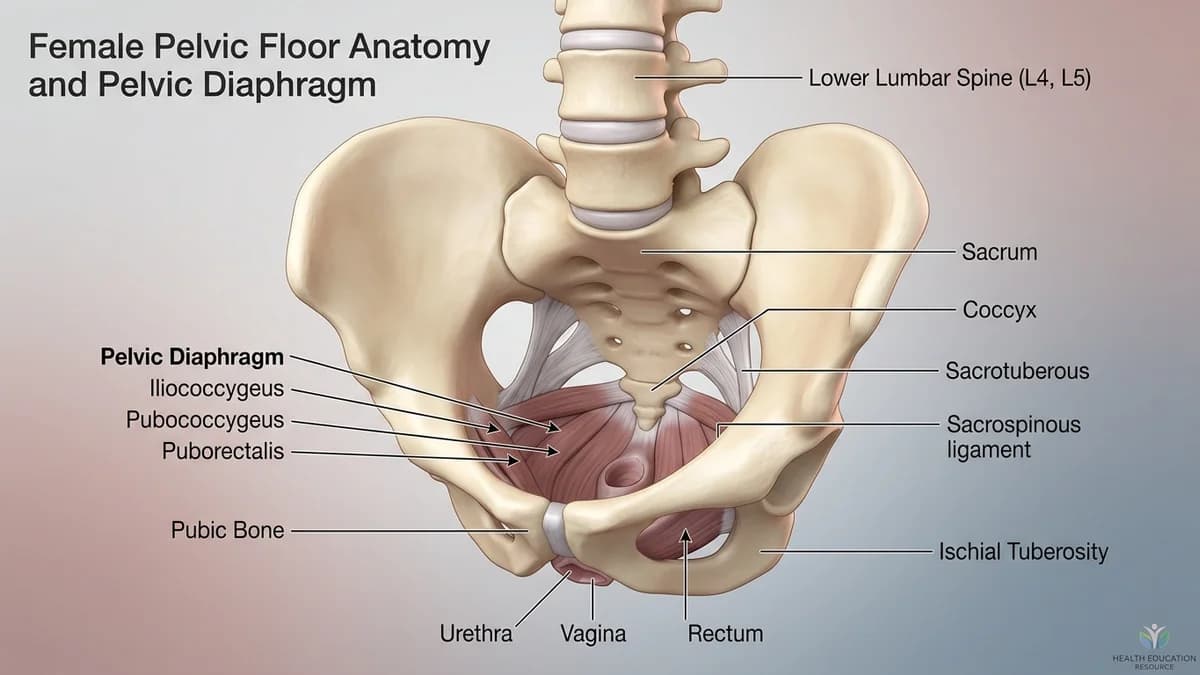
Oestrogen plays an essential trophic role in maintaining the health of pelvic connective tissues. In post-menopausal hypoestrogenism, the stratified squamous epithelium of the vagina thins from 30 layers down to 4 to 5 layers, rugal folds disappear, and vascular capillary networks regress. Simultaneously, the underlying endopelvic fascia loses type I collagen content, and the striated levator ani muscles experience progressive age-related sarcopenia (muscle atrophy). The vaginal introitus narrows, and the urethral mucosa loses its vascular seal, predisposing women to both stress incontinence and ascending bacterial colonization. Gentle resistance training stimulates local mechanotransduction, improving microvascular perfusion and muscular tone.
2. Domestic Indian Context: Daily Chores, Ergonomics, and Privacy
In Indian joint families, post-menopausal women often transition into the role of household matriarch, supervising extended families while experiencing hot flushes, sleep disturbances, and vulvar irritation. Wearing traditional tight petticoats (ghagra/petticoat strings) can cause chafing against thinned, fragile vulvar skin. Furthermore, cultural taboos around sexual health mean women rarely discuss vaginal dryness with their spouses or family physicians. Physiotherapists provide practical advice on breathable cotton clothing, safe non-hormonal vaginal moisturisers, and gentle pelvic floor exercise routines that maintain muscular tone.
3. Clinical Special Tests and Physical Examination
Evaluation utilizes the Vaginal Health Index (VHI) score, assessing tissue elasticity, fluid volume, mucosal pH (normally <4.5; rises to >5.5 in GSM), mucosal integrity, and moisture. Gentle physical examination evaluates levator ani resting tone, Oxford scale contraction strength, and excludes lichen sclerosus.
| Tissue Parameter | Score 1 (Severe Atrophy) | Score 3 (Moderate Changes) | Score 5 (Healthy Tissue) |
|---|---|---|---|
| Overall Elasticity | None; tissue rigid, fragile, easily tears | Fair; partial elasticity with gentle stretch | Excellent; supple, normal anatomical recoil |
| Fluid / Moisture | None; mucosa dry, inflamed, sticky | Moderate; minimal coating, dry in parts | Normal; moist, healthy vaginal lubrication |
| Vaginal pH | pH > 6.0 (basic, infection risk) | pH 5.1 to 5.5 (elevated baseline) | pH < 4.5 (acidic, protective flora) |
| Physiotherapy Role | Gentle desensitisation, moisturiser guidance | Low-load resistance, blood flow restoration | Functional maintenance & pelvic floor strength |
4. Stage-by-Stage Functional Physiotherapy Protocol
Rehabilitation centres on stimulating local blood flow, rebuilding pelvic floor motor tone through gentle resistance, and restoring tissue elasticity.
Phase 1: Seated Pelvic Floor Blood Flow Induction Pumping
Objective: Enhance pelvic microvascular circulation to nourish atrophic vaginal and urethral tissues.
- 1Sit comfortably on a firm chair with feet flat and spine lengthened.
- 2Inhale to prepare. As you exhale softly, apply a light 30 to 40 percent squeeze and lift of your pelvic floor.
- 3Hold for only 2 seconds, then release completely for 3 seconds.
- 4Repeat rhythmically for 15 gentle pulses, feeling warmth and circulation returning to the pelvic bowl.
- 5Keep your buttocks, thighs, and abdominal muscles completely relaxed.
Phase 2: Gentle Resistance Band Gluteal Bridges
Objective: Build posterior chain and pelvic muscular support to counter post-menopausal sarcopenia.
- 1Lie on your back with knees bent at 90 degrees and feet placed hip-width apart.
- 2Place a light loop resistance band around your thighs just above your knees.
- 3Maintain light outward pressure into the band to engage your hip abductors.
- 4Exhale softly, engage your pelvic floor, and press through your heels to raise your hips into a bridge.
- 5Hold at the top for 4 seconds, then lower under slow control over 3 seconds.
Phase 3: Standing Hip Abduction for Pelvic Stability
Objective: Strengthen gluteus medius and pelvic stabilizers to support upright walking and continence.
- 1Stand tall holding onto a sturdy kitchen counter or table for balance.
- 2Keep your torso upright without leaning to the side.
- 3Slowly lift your right leg out to the side by 20 to 30 degrees, keeping your toes pointing forward.
- 4Hold for 2 seconds at the top, feeling your outer hip muscles contract.
- 5Lower slowly under control, then repeat on the opposite leg.
Consult a gynaecologist immediately if you experience: any post-menopausal vaginal bleeding (even a single drop or light spotting, which requires immediate endometrial screening), severe unremitting vulvar itching with white architectural changes (suggesting lichen sclerosus), or persistent hematuria.
5. Clinic Consultation, Home Visits, and Transparent Fee Benchmarks
Under the National Commission for Allied and Healthcare Professions (NCAHP) Act 2021, patients in India can consult a registered pelvic health physiotherapist directly without an upfront referral, though BookPhysio.in does not ask for one. Pelvic health physiotherapists provide private, compassionate consultations, guiding women on pelvic exercise and non-hormonal moisturisers. Clinic consultations in Indian cities range between ₹500 and ₹1,500, with home visits ranging from ₹700 to ₹2,000 where available. Patients pay their physiotherapist directly at each consultation, with zero platform commission.
6. Frequently Asked Questions
What is the difference between a vaginal lubricant and a vaginal moisturiser in India?
A vaginal lubricant is used temporarily during intimacy to reduce friction, whereas a vaginal moisturiser (such as a hyaluronic-acid-based gel) is applied regularly 2 to 3 times weekly to hydrate and plump thinned vaginal tissues long term. For post-menopausal women with GSM, regular moisturiser use combined with pelvic floor exercises provides lasting tissue comfort.
Can pelvic floor exercise replace topical oestrogen therapy for GSM?
Pelvic floor exercises rebuild muscular tone, improve circulation, and prevent organ prolapse, but they cannot replace systemic or local oestrogen at the cellular level. Combining low-dose prescription topical vaginal oestrogen (as recommended by your gynaecologist) with pelvic physiotherapy produces the best clinical outcomes.
Related recovery guides & articles
BookPhysio.in Editorial Team
The BookPhysio.in editorial team writes and maintains this content, checking it against reliable clinical sources. Content follows our medical review policy: general information only, and no page claims a clinical review until a named registered physiotherapist has signed it off.
Read our medical review policy