
Hand Oedema Management: Retrograde Massage and Coban
In short
Persistent hand swelling acts as the glue of the hand, causing stiff joint contractures. Elevation, Coban wrapping, and retrograde massage restore fluid drainage.
In this guide (5 sections)
Post-traumatic and postoperative swelling in the hand represents a critical clinical challenge. In hand therapy, swelling is famously characterized as the glue of the hand: protein-rich interstitial exudate rapidly precipitates fibrin; this cements gliding tissue planes, shortens collateral ligaments, and produces dense periarticular contractures. Unmanaged dorsal hand swelling forces the metacarpophalangeal (MCP) joints into hyperextension and the thumb into adduction, creating an intractable intrinsic minus posture. Immediate, systematic decongestive therapy is mandatory.
Domestic and Cultural Indian Realities
In Indian home environments, patients with swollen hands often let the arm dangle dependent by their side while walking, cooking, or watching television, dramatically worsening gravitational venous pooling. Tight metallic bangles, sacred threads (mauli), and tight rings on swollen digits pose severe strangulation hazards, risking digital ischemia and skin necrosis. Hand therapists mandate immediate removal of all jewelry and teach practical domestic elevation techniques using stacked cotton pillows.
Surgical Pathoanatomy and Biomechanical Principles
The dorsal skin of the hand is thin, elastic, and loosely attached to underlying deep fascia, while the palmar skin is dense and tightly bound. Consequently, up to 80 percent of hand swelling accumulates on the dorsal aspect, where lymphatic and superficial venous collectors are easily compressed. Interstitial fluid pressure elevates rapidly. Gentle retrograde centripetal massage and short-stretch cohesive wrapping (Coban) apply external hydrostatic pressure that overcomes lymphatic barrier pressure, funneling fluid into deep forearm lymphatic channels.
Postoperative Rehabilitation Phases and Splinting Protocols
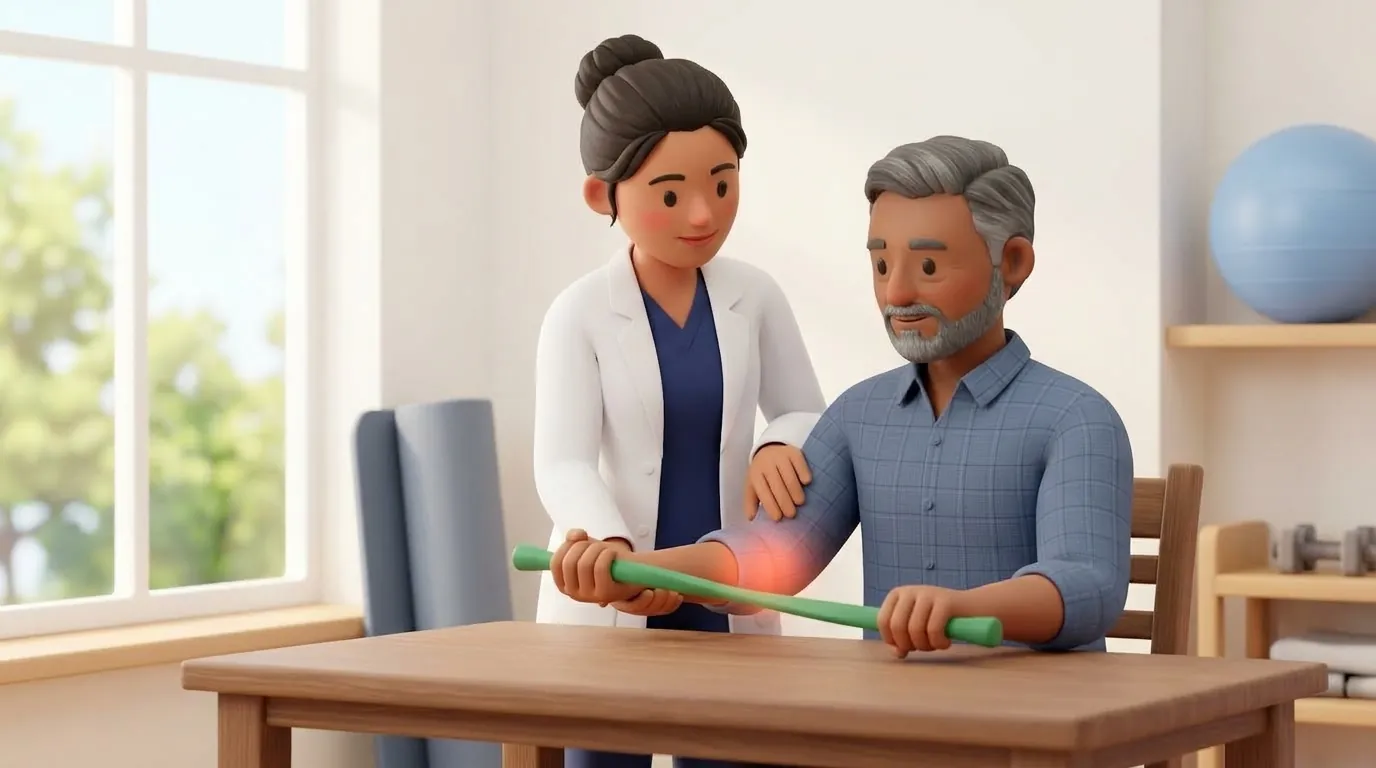
Decongestive management is built upon the triad of elevation, compression, and active muscle pumping. The hand is positioned strictly above heart level whenever resting. Coban self-adherent wrap (2.5cm width) is applied spirally from distal fingertip to proximal phalanx base, overlapping by 50 percent with light, calibrated stretch (approximately 30 percent tension). Retrograde massage is performed using light, rhythmic strokes directed towards the axillary lymph nodes.
Centripetal Retrograde Lymphatic Drainage Stroke
Objective: Propel protein-rich interstitial edema from digital sheaths into proximal venous circulation
- 1Rest your swollen arm on stacked pillows so your hand and wrist rest comfortably above heart level.
- 2Coat your fingers lightly with a water-based moisturizer to allow smooth, friction-free strokes.
- 3Use the thumb and index finger of your unaffected hand to gently circle the tip of the swollen finger.
- 4Using light, milking pressure, stroke slowly upward from the fingertip toward the knuckle and wrist.
- 5Continue the smooth upward stroking across each finger and over the back of the hand for 5 minutes.
| Intervention Component | Clinical Mechanism | Application Guidelines |
|---|---|---|
| Strict Limb Elevation | Gravity assists venous return, drops capillary hydrostatic pressure | Hand maintained above heart level during all sitting and sleeping periods |
| Coban Spiral Wrapping | External compression increases interstitial hydrostatic pressure | Applied distal-to-proximal with 30% stretch; remove if fingertip cools |
| Retrograde Massage | Mechanical mobilization of lymphatic fluids into proximal trunks | Light rhythmic stroking towards axilla; avoid forceful squeezing |
| Active Muscle Pump Drills | Contraction of forearm muscles compresses deep lymphatic vessels | Composite fist-making and finger spreading performed hourly |
Red Flags and Specialist Escalation
Sudden, asymmetrical, pitting edema accompanied by calf tenderness (suggesting systemic deep vein thrombosis), localized fiery redness, red streaks spreading up the forearm (lymphangitis), or severe throbbing pain unresponsive to elevation requires urgent medical evaluation for acute cellulitis or deep space infection.
Frequently Asked Questions
Why is swelling called the glue of the hand in physiotherapy?
Swelling fluid is rich in protein. When it stays trapped in the hand for weeks, it turns into thick scar tissue that glues joints and tendons together, causing severe permanent stiffness that is very difficult to reverse.
Do I need a doctor referral to treat severe hand swelling on BookPhysio.in?
BookPhysio.in does not ask for a doctor referral. Direct access is protected by the NCAHP Act 2021. You consult licensed hand physiotherapists directly and pay per session with complete fee transparency.
Related recovery guides & articles
BookPhysio.in Editorial Team
The BookPhysio.in editorial team writes and maintains this content, checking it against reliable clinical sources. Content follows our medical review policy: general information only, and no page claims a clinical review until a named registered physiotherapist has signed it off.
Read our medical review policy