
High Heels, Kolhapuris, and Hallux Valgus (Bunions): Foot Biomechanics and Physio in India
In short
Pointed heels and rigid Kolhapuri chappals displace the big toe into painful bunions. Discover evidence-based toe-spacing exercises and foot physiotherapy.
In this guide (5 sections)
In Indian women's footwear fashion, two contrasting style staples dominate wardrobes across generations: modern narrow, pointed-toe high heels worn for corporate wear and wedding festivities, and traditional handcrafted leather Kolhapuri chappals paired with ethnic attire. Yet, from an orthopaedic and podiatric biomechanics standpoint, both styles represent an anatomical assault on the structural architecture of the human foot.
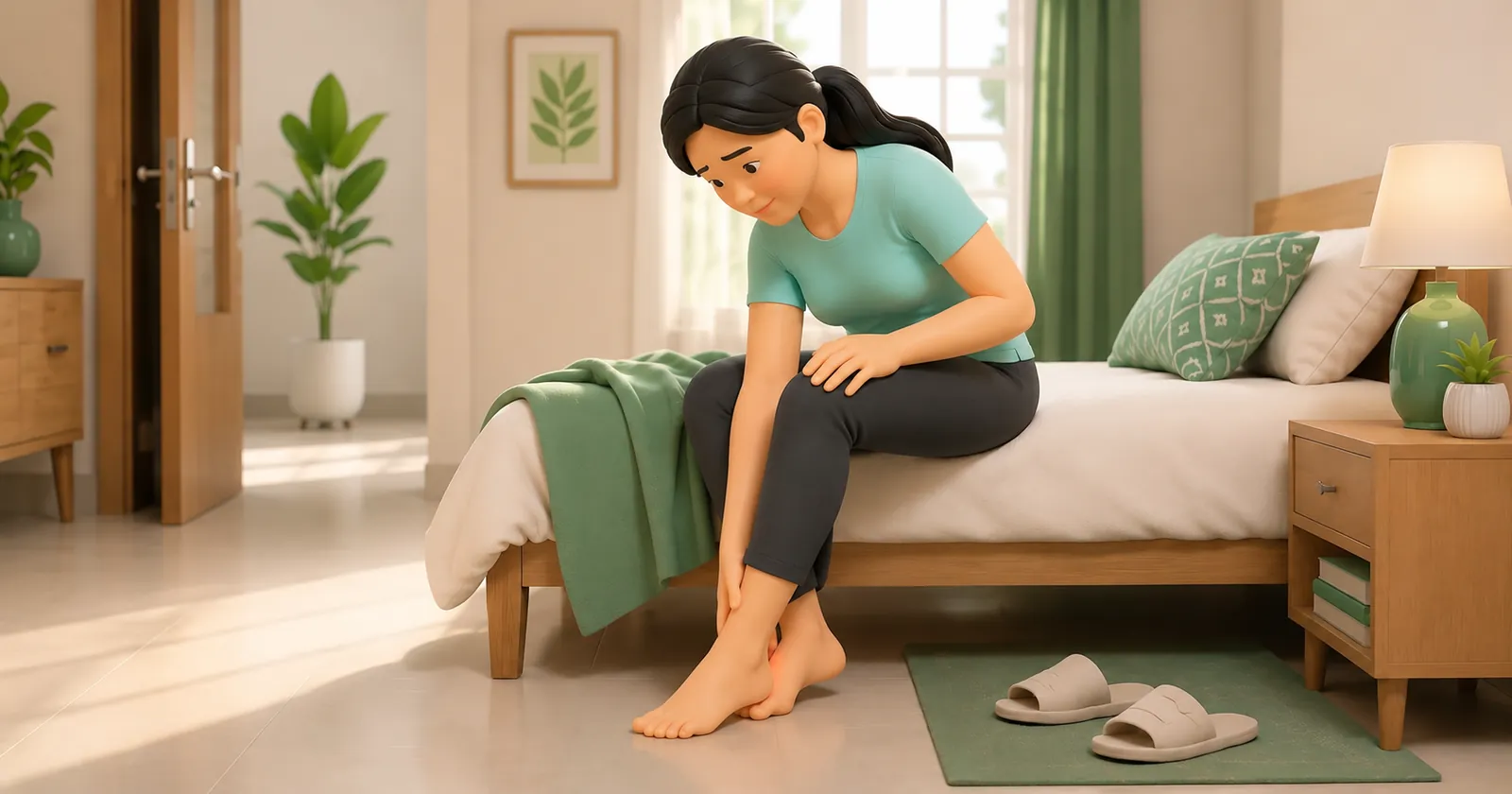
Over years of regular wear, millions of Indian women develop a progressive, painful, unsightly bony bump at the base of their big toe: known clinically as Hallux Valgus (a Bunion). The big toe angles sharply inward toward the second toe, the joint becomes red and inflamed, fitting into shoes becomes an agonizing trial, and every step produces throbbing metatarsalgia. Specialized foot and ankle physiotherapy, intrinsic muscle retraining, and toe-box footwear modifications halt bunion progression and restore comfortable, pain-free walking.
1. Pathomechanics: The First Metatarsophalangeal Joint and Sesamoid Subluxation
The human foot is an engineering masterpiece of 26 bones, 33 joints, and over 100 muscles and ligaments. The first metatarsophalangeal (MTP) joint carries up to 50 percent of the body weight during terminal stance and push-off in normal walking. Beneath the first metatarsal head lie two tiny pea-shaped bones called sesamoids, which act as a frictionless pulley for the flexor hallucis brevis tendon.
When a woman slips into a high heel with a narrow, triangular toe-box, two destructive mechanical forces converge: 1. Plantarflexion Elevation: elevating the heel 7 to 9 centimeters shifts over 75 percent of total body weight directly onto the metatarsal heads. 2. Medial Squeeze: the narrow triangular toe-box forcibly crushes the toes together, wedging the hallux (big toe) laterally into valgus alignment.
As the big toe deviates laterally past 15 degrees, the muscular balance across the joint collapses. The adductor hallucis and extensor hallucis longus tendons shift laterally, turning into a "bowstring" that pulls the toe further into deformity. The first metatarsal head drifts medially, stretching the medial joint capsule and forming the prominent bony bunion. Concurrently, the sesamoid bones subluxate laterally out of their protective grooves, causing severe cartilage erosions, bursitis, and secondary transfer metatarsalgia across the second and third toes.
| Footwear Design | Forefoot Weight Distribution & Toe Box | Sesamoid & Joint Stress | Clinical Hallux Valgus Risk Profile |
|---|---|---|---|
| Wide Natural Toe-Box Flat Shoe | Even 50/50 heel-to-forefoot distribution; toes splay naturally | Sesamoids stay perfectly centered; zero lateral bowstringing | Optimal; protects natural transverse arch and prevents deformity |
| Traditional Flat Kolhapuri Chappal | Zero arch support; hard unyielding leather sole; tight toe ring | Toe ring wedges first webspace; hard sole shocks metatarsals | Moderate-to-high risk; causes fat pad atrophy and clawing |
| Narrow Stiletto High Heels (>7 cm) | 75% to 85% of body weight hammered onto metatarsal heads; cramped toe box | Severe sesamoid subluxation; lateral tendon bowstringing | Extreme hazard; rapidly accelerates bunions, neuroma, and hammer toes |
2. The Indian Kolhapuri Dilemma: Hard Soles and Tight Toe Rings
While high heels are a widely acknowledged culprit, traditional flat Indian footwear presents its own unique biomechanical traps. Traditional leather Kolhapuri chappals feature completely flat, rock-hard, unyielding leather soles with zero arch cushioning or shock absorption. When walked on hard modern marble or concrete surfaces, the foot receives zero cushioning.
More critically, classical Kolhapuris feature a rigid leather thong or loop that wraps tightly around the big toe (angotha). If the toe loop is tight or misaligned, it exerts continuous medial traction on the proximal phalanx, jamming the first MTP joint. To keep the open slipper from flying off the foot during walking, the wearer involuntarily "claws" the lesser toes, triggering hammer toes, extensor tendon tightness, and painful calluses under the ball of the foot.
Footwear fashion does not have to mean foot destruction. By choosing modern ergonomic footwear with wide anatomical toe boxes, using medical silicone toe spacers, and conditioning intrinsic foot muscles, women can halt bunion progression.
3. Three-Phase Intrinsic Foot Muscle Rebuilding and Bunion Halting Protocol
Three-Phase Foot Core Strengthening and Bunion Mobilisation Protocol
Objective: Strengthen the abductor hallucis muscle, restore transverse arch stability, and realign the first MTP joint.
- 1Phase 1 (Passive Joint Distraction and Silicone Spacing - Daily): 1. Manual First MTP Distraction: sit comfortably; grasp the base of your big toe firmly with one hand and the first metatarsal shaft with the other; gently pull the toe straight out away from the foot to open the joint space, then gently guide it into neutral alignment; hold for 30 seconds; repeat 5 times. 2. Medical Silicone Toe Spacers: wear a soft silicone toe separator between your big toe and second toe for 2 to 3 hours daily while relaxing at home to stretch tight lateral capsule fibers.
- 2Phase 2 (The "Short Foot" Doming Exercise - 4 Days Weekly): The "Short Foot" exercise is the gold standard for restoring the medial longitudinal arch: sit with feet flat on the floor; without curling your toes, draw the ball of your big toe backward toward your heel, doming the arch of your foot upward; hold the arch contraction for 6 seconds while keeping toes relaxed and flat; perform 3 sets of 10 repetitions per foot.
- 3Phase 3 (Active Abductor Hallucis Strengthening - Toe Yoga - 4 Days Weekly): 1. Big Toe Isolation: keep lesser four toes pinned flat to the floor while lifting only the big toe upward; hold 3 seconds; repeat 10 times. 2. Toe Splay (Abduction): lift all toes off the floor, spread them as wide apart as possible (fanning out), then place only the big toe down medially and the little toe down laterally; this directly fires the abductor hallucis muscle to pull the bunion back toward center.
- 4Footwear Selection Rule: Choose footwear with an anatomical "foot-shaped" toe box where your toes can splay completely flat without touching the sides. If you must wear heels for a wedding, limit wear to under 2 hours and use cushioned gel metatarsal pads.
4. Critical Red Flags: Recognizing When Bunions Require Orthopaedic Surgery
While conservative physiotherapy and orthotics halt early-to-moderate bunion progression, severe end-stage deformities require orthopaedic surgical evaluation. Seek specialist consultation if you experience persistent severe bunion pain that limits your ability to walk even short distances in wide, comfortable flat shoes, secondary crossover deformity where the second toe has subluxated completely over the top of the big toe (severe cross-toe / hammer toe), non-healing pressure ulcers, calluses, or skin breakdown over the bunion prominence (especially critical in diabetic patients at high risk of osteomyelitis), or severe joint stiffness with crepitus indicating advanced end-stage Hallux Rigidus (osteoarthritis of the first MTP joint).
Frequently Asked Questions
Can physiotherapy exercises completely reverse an existing bony bunion without surgery?
Physiotherapy cannot magically shave down a mature, ossified bone prominence. However, in mild to moderate bunions (hallux angle < 20 degrees), strengthening the abductor hallucis muscle and wearing toe spacers realigns joint kinematics, halts further progression, eliminates pain, and restores comfortable shoe wear without surgery.
Do night bunion splints work to straighten crooked big toes?
Rigid night splints pull the big toe into straight alignment while sleeping, providing pleasant temporary pain relief and stretching tight lateral joint tissues. However, splints alone cannot cure a bunion; active daytime intrinsic muscle strengthening is essential to maintain dynamic alignment when walking.
Why do Indian women develop bunions so much more frequently than men?
Women possess more flexible, compliant ligamentous connective tissue due to hormonal variations, making their joints more susceptible to deformational pressures. Combined with wearing narrow high heels and tight-toed ethnic footwear, women develop hallux valgus up to 4 to 6 times more often than men.
What is transfer metatarsalgia and why does it cause pain under the ball of my foot?
When a bunion destabilizes the first big toe joint, the big toe can no longer bear its normal 50 percent share of walking push-off weight. The body involuntarily shifts the weight onto the smaller second and third metatarsal heads, causing severe bruising, burning pain, and thick calluses under the ball of the foot.
How do I book a foot biomechanics assessment through BookPhysio.in?
BookPhysio.in connects patients across major Indian cities with certified musculoskeletal physiotherapists specializing in lower limb biomechanics, gait analysis, and custom foot orthotics. Transparent fees range from ₹400 to ₹1,500 in clinic and ₹600 to ₹2,000 for home visits, with zero platform commission and direct payment per visit.
Related condition guides


BookPhysio.in Editorial Team
The BookPhysio.in editorial team writes and maintains this content, checking it against reliable clinical sources. Content follows our medical review policy: general information only, and no page claims a clinical review until a named registered physiotherapist has signed it off.
Read our medical review policy