
High-Impact Yogasanas in Active Spondyloarthritis: Safety Contraindications and Alternatives
In short
While gentle yoga maintains spinal alignment, aggressive high-impact yogasanas pose severe fracture and entheseal tearing hazards in ankylosing spondylitis. Master contraindications, safe posture adaptations, and therapeutic alternatives.
In this guide (6 sections)
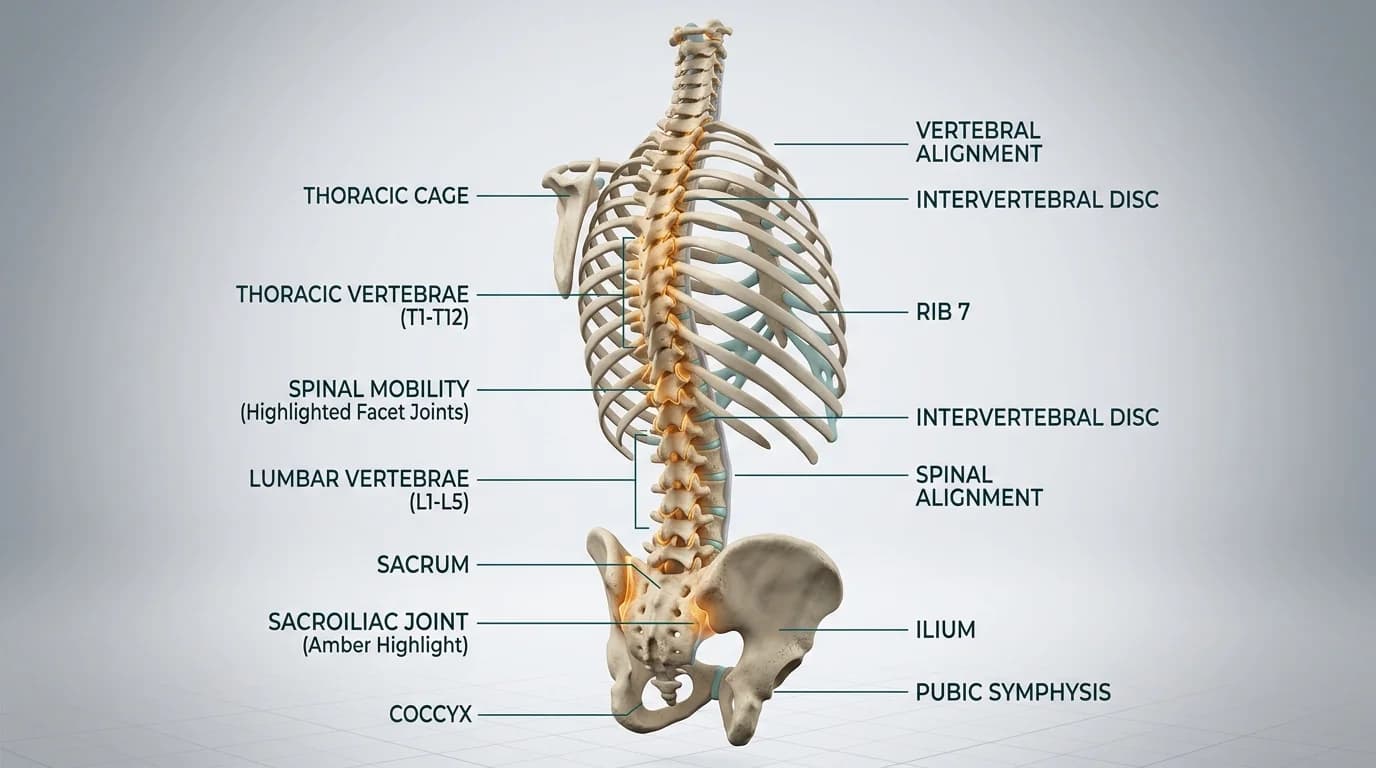
Yoga is a treasured cultural foundation of physical and mental wellness across India, widely recommended by family and social circles for chronic back pain. In axial spondyloarthritis and ankylosing spondylitis, however, practicing traditional yoga without clinical screening can lead to catastrophic spinal trauma. Proliferative enthesopathy and marginal syndesmophyte formation convert flexible spinal segments into brittle, fused osseous columns. Attempting aggressive, forceful backward bending postures (such as Chakrasana), inverted positions (Sirshasana), or intense spinal twists (Ardha Matsyendrasana) subjects rigid vertebrae to severe focal stress concentrations, risking chalk-stick fractures, epidural haematomas, or spinal cord transection.
Domestic and Cultural Indian Realities
In Indian society, patients newly diagnosed with spondylitis are frequently urged by well-meaning peers to attend rigorous community yoga camps or follow televised yoga gurus advocating extreme flexibility postures as a universal remedy. Patients often feel inadequate if they cannot achieve deep backbends or sit flat in Padmasana (lotus pose), pushing past acute inflammatory joint pain to force their bodies into high-risk postures. This unguided effort frequently triggers acute sacroiliac flares or peripheral enthesitis. Patients and yoga instructors must realize that an ankylosed spine behaves like a long bone; physiotherapy principles of low-load, supported axial extension must replace forceful contortionism.
Clinical Biomechanics and Inflammatory Pathology
In healthy spines, multi-segmental flexibility distributes bending moments across 24 motion segments. In ankylosing spondylitis, syndesmophyte bridging fuses adjacent vertebrae, eliminating intersegmental micro-motion. When an external bending moment is applied, the lever arm is exceptionally long, and all tensile stress concentrates at the nearest unfused or partially fused junction. Furthermore, chronic inflammation induces localized osteopenia around fused segments. Inverting the body in Sirshasana (headstand) places full body weight onto a rigid cervical spine, creating an acute risk of atlantoaxial displacement or subaxial fracture. In contrast, gentle supported prone postures such as modified Bhujangasana provide low-load axial extension that preserves functional posture without fracture risk.
Clinical Assessment and Functional Staging
Before clearing any yoga routine, physiotherapists evaluate radiographic spinal changes, screening for bamboo spine, syndesmophyte distribution, and discovertebral junction erosions (Andersson lesions). Clinical measurements include cervical rotation, lateral flexion, and the Bath Ankylosing Spondylitis Metrology Index (BASMI). Any history of neck pain or suboccipital discomfort warrants cervical flexion-extension radiography before any postural yoga is attempted.
Targeted Mobility and Joint Preservation Exercises
Therapeutic yoga in spondyloarthritis must be restorative, supported with props, and focused on gentle axial extension and diaphragmatic breathing.
Supported Salamba Bhujangasana (Gentle Sphinx Pose)
Objective: Promote gentle thoracic extension and chest opening without hyperextending vulnerable lumbar or cervical junctions
- 1Lie prone on a firm mat, placing a folded blanket beneath your abdomen to support the lumbar spine.
- 2Place your forearms on the mat with elbows directly under your shoulders and palms flat.
- 3Gently draw your chest forward between your arms while lengthening your neck and keeping your gaze toward the floor ahead.
- 4Hold the relaxed posture for 5 deep breath cycles and ensure zero pinching in the lower back.
| Asana Category | Safe Supported Therapeutic Alternative | Dangerous / Contraindicated Asana |
|---|---|---|
| Spinal Extension | Supported Sphinx pose or gentle standing backward arch with hand support on hips | Chakrasana (full wheel pose) or Dhanurasana (bow pose) forcing extreme spinal bending |
| Inversions | Viparita Karani (legs resting vertically up a wall with flat back on floor) | Sirshasana (headstand) or Sarvangasana (shoulder stand) loading rigid cervical spine |
| Spinal Twisting | Seated open gentle thoracic rotations within comfortable mid-range limits | Forceful leveraged twists (Ardha Matsyendrasana) using arms to torque the spine |
| Forward Bending | Supported half-standing forward bend with hands resting on a high table | Aggressive seated forward bends (Paschimottanasana) attempting to touch head to knees |
Red Flags and Immediate Rheumatology Escalation
Any acute onset of severe, localized spinal pain, crackling sensation, or new neurological symptoms (such as numbness, tingling in arms or legs, or loss of balance) following a yoga session indicates a spinal fracture or haematoma. The patient must be kept completely immobilized and transported immediately to an emergency spinal trauma centre.
Frequently Asked Questions
Can aggressive yogasanas reverse ankylosing spondylitis?
No. Aggressive yogasanas cannot reverse ankylosing spondylitis or reverse fused syndesmophytes, and attempting forceful bends risks catastrophic spinal fractures. However, clinically modified, gentle yoga postures help manage morning stiffness, preserve chest expansion, and support functional upright posture.
How do I book a qualified home physiotherapist to design a safe exercise routine via BookPhysio.in?
Under the National Commission for Allied and Healthcare Professions (NCAHP) Act 2021, Indian patients have direct access to registered physiotherapists without an obligatory doctor referral. On BookPhysio.in, you schedule an appointment with a verified clinician in your city. Payment is made directly to the therapist at your home appointment via cash or UPI; BookPhysio.in does not process booking fees online.
Related recovery guides & articles
BookPhysio.in Editorial Team
The BookPhysio.in editorial team writes and maintains this content, checking it against reliable clinical sources. Content follows our medical review policy: general information only, and no page claims a clinical review until a named registered physiotherapist has signed it off.
Read our medical review policy