
Hip Fracture Hemiarthroplasty: Day-1 Weight-Bearing Physiotherapy Guide
In short
Prompt day-1 weight-bearing mobilization after hip fracture hemiarthroplasty is essential to prevent fatal pulmonary, thromboembolic, and deconditioning complications in seniors.
In this guide (2 sections)
The Surgical Urgency of Geriatric Hip Fracture Recovery
Femoral neck fractures in older adults represent one of the most critical orthopedic emergencies in geriatric medicine. Because the femoral head blood supply is disrupted, displaced fractures are routinely treated with bipolar or unipolar hemiarthroplasty rather than internal fixation.
Historically, prolonged postoperative bed rest led to staggering 1-year mortality rates exceeding 30%, driven by hypostatic pneumonia, deep vein thrombosis (DVT), pulmonary embolism, and pressure injuries. Modern geriatric orthopaedic protocols establish that bedside standing and weight-bearing within 24 hours of surgery is vital for survival.
Cemented vs Uncemented Hemiarthroplasty Mobilisation Protocols
| Surgical Technique | Bone Anchorage Mechanism | Immediate Weight-Bearing Status | Physiotherapy Mobilisation Priority | |
|---|---|---|---|---|
| Cemented Hemiarthroplasty (Gold Standard) | Polymethylmethacrylate (PMMA) micro-interlock | Weight-Bearing as Tolerated (WBAT) immediately on Day 1 | Bedside standing, transfer to high chair, 5-10m walking on Day 1-2 | |
| Uncemented Press-Fit Stem | Biological bone ingrowth into porous coating | Touch-down weight-bearing (TDWB) or WBAT per bone quality | Strict adherence to surgeon load limits; emphasize abductor isometric stability | |
| Dynamic Hip Screw / Cephalomedullary Nail | Intertrochanteric fracture internal fixation | Full weight-bearing as tolerated with modern stable implants | Quad sets, ankle pumps, sit-to-stand mechanics avoiding excessive varus shear |
Day-1 to Week-6 Progressive Mobilisation Phases
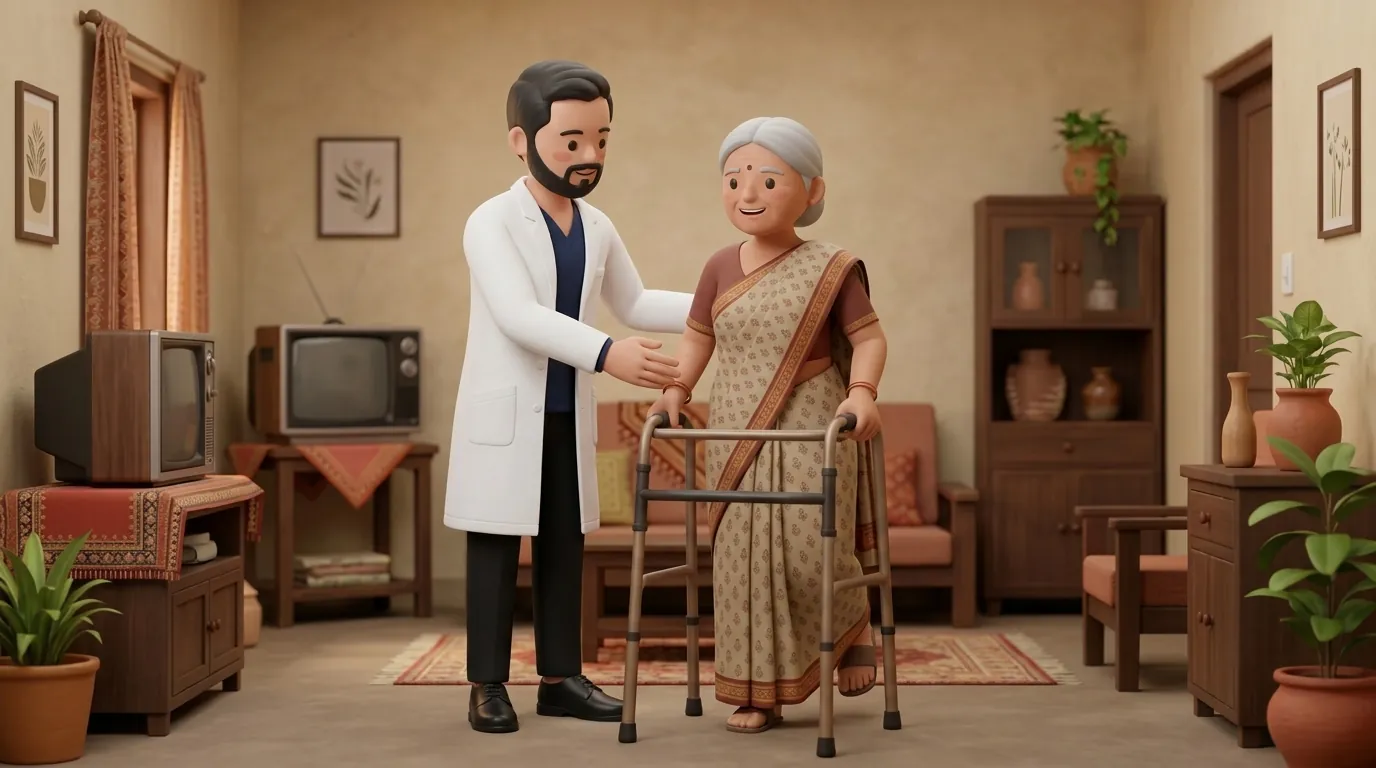
- Day 1 (Post-Op Hour 12-24): Perform vigorous ankle pumps to enhance venous return, teach deep breathing exercises, and achieve unassisted bedside sitting followed by assisted standing at a walker.
- Day 2-3: Transition from bed to an elevated armchair, practice rhythmic weight-shifting onto the operated limb, and initiate hallway ambulation with a walker.
- Weeks 2-3 (Home Setting): Progress from walker to a single elbow crutch or quad cane. Initiate closed-kinetic chain mini-squats and standing hip abduction.
- Posterior Hip Dislocation Precautions (if posterior approach used): Strictly avoid hip flexion beyond 90 degrees, adduction past midline (no crossing legs), and internal rotation for 6 to 12 weeks.
- Raised Toilet Seat and Chair Elevation: Provide toilet seat extenders and firm foam cushions so hip flexion remains under 80 degrees during seated hygiene routines.
Frequently Asked Questions About Hip Hemiarthroplasty Rehabilitation
Is it safe for an 85-year-old to put weight on their operated leg the day after hip surgery?
Yes. Modern cemented hemiarthroplasties achieve maximum mechanical strength instantly as the bone cement cures within 15 minutes of surgery. Putting full weight on the operated leg is safe and drastically reduces life-threatening bed-rest complications such as blood clots and pneumonia.
Can my parent use an Indian squat toilet after hip replacement surgery?
No. Squatting on an Indian toilet requires deep hip flexion of 130 to 150 degrees, which will immediately dislocate a newly operated hemiarthroplasty or total hip replacement. A western commode with a raised toilet seat and sturdy grab rails is strictly mandatory.
Related condition guides


Related recovery guides & articles
BookPhysio.in Editorial Team
The BookPhysio.in editorial team writes and maintains this content, checking it against reliable clinical sources. Content follows our medical review policy: general information only, and no page claims a clinical review until a named registered physiotherapist has signed it off.
Read our medical review policy