
Hip Protector Underwear: Biomechanics of Femoral Neck Impact Shielding in Seniors
In short
Over ninety percent of hip fractures occur from direct sideways impact onto the greater trochanter. Discover how biomechanical hip protectors shield fragile bones.
In this guide (6 sections)
Hip fractures represent the most catastrophic consequence of geriatric falls, carrying a one-year mortality rate exceeding twenty percent and causing permanent loss of independent ambulation in half of surviving patients. Biomechanical research establishes that over ninety percent of hip fractures result from a direct lateral impact onto the greater trochanter during a sideways fall. Hip protectors, purpose-designed undergarments incorporating shock-absorbing or energy-shunting pads positioned over the trochanteric region, provide a passive mechanical barrier that significantly reduces peak impact force transmitted to the fragile femoral neck.
Domestic and Cultural Indian Realities
In Indian clinical practice, adopting hip protectors presents distinct cultural and environmental challenges. India's hot, humid climate makes wearing multi-layered undergarments uncomfortable, leading to skin irritation and non-compliance among older adults. Furthermore, elderly Indian women wearing traditional sarees or loose petticoats often find standard Western-style hip protectors bulky or aesthetically displeasing. Many older adults also experience night-time urinary frequency, finding fitted protective undergarments cumbersome to manage during urgent nocturnal toilet visits. However, because Indian domestic floors are predominantly unyielding marble or concrete, unbuffered hip impact carries extreme fracture risk, making lightweight, breathable hip protectors an essential clinical option for frail seniors.
Clinical Biomechanics and Postural Control Decay
During a sideways fall from standing height, the human body impacts the floor with kinetic energy averaging four hundred to five hundred joules. In an older adult with osteopenia or osteoporosis, the fracture threshold of the femoral neck is often as low as two thousand newtons of peak force. With age-related loss of subcutaneous adipose tissue over the lateral hip, direct impact transmits shock waves directly to the bone, easily exceeding this fracture threshold. Hip protectors function through two distinct biomechanical mechanisms: energy absorption (soft viscoelastic pads compress and absorb impact energy) and energy shunting (rigid or semi-rigid shields divert the peak force away from the vulnerable greater trochanter onto the surrounding soft tissues of the thigh and pelvis).
Functional Assessment and Risk Stratification
Candidates for hip protector prescription are identified through detailed fracture risk profiling, combining bone mineral density (T-score below minus two point five) with clinical fall risk indicators. Seniors who exhibit frequent lateral balance loss, impaired reactive stepping, low body mass index (BMI under twenty), or a history of previous fall-related fractures derive the highest clinical benefit from wearing hip protectors, particularly during high-risk ambulatory periods and night-time mobility.
Targeted Strength and Balance Exercises
While hip protectors provide vital passive impact shielding, active physiotherapy rehabilitation remains essential to improve neuromuscular fall resistance. Rehabilitation focuses on hip abductor strengthening, reactive stepping drills, and safe lateral fall deceleration techniques that teach seniors to absorb falling energy through upper-body rolling rather than direct hip impact.
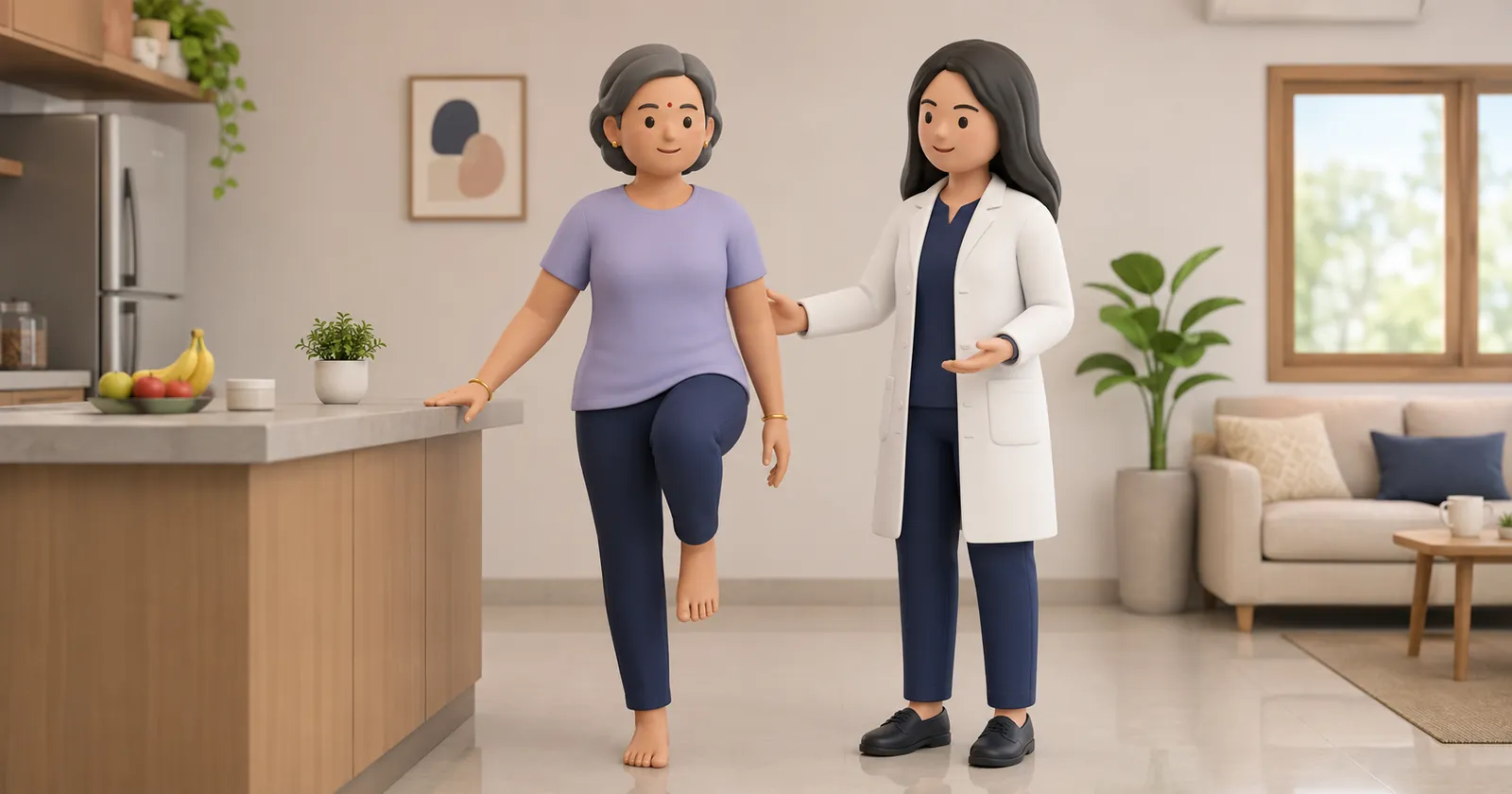
Supported Standing Hip Abduction Strengthening
Objective: Strengthen gluteus medius to improve lateral pelvic stability and resist sideways balance loss
- 1Stand tall facing a sturdy table or kitchen counter, holding the edge with both hands for support.
- 2Keep your left leg slightly bent and shift your body weight smoothly onto your left foot.
- 3Keeping your right leg straight and toes pointing forward, lift your right leg out to the side thirty centimetres.
- 4Hold the outer position for two seconds, feeling the muscles on the side of your hip engage.
- 5Lower the leg slowly back down to the floor over a controlled three-second count, then repeat with the left leg.
| Protector Design Type | Mechanical Shielding Principle | Clinical Practical Considerations |
|---|---|---|
| Energy-Shunting (Hard Shell) | Rigid composite dome bridges the trochanter, shunting force to pelvis and thigh | Highly effective impact reduction; bulkier profile under traditional Indian attire |
| Energy-Absorbing (Soft Viscoelastic) | Viscoelastic memory foam compresses upon impact, absorbing kinetic energy | Superior comfort, flexible, highly compliant for sleeping and hot climates |
| Hybrid Air-Cell / Shear-Thickening | Non-Newtonian materials remain flexible during walking but stiffen instantly on impact | Optimal blend of discreet ergonomics and robust fracture protection |
| Open-Crotch / Easy-Access Design | Ergonomic undergarment design allowing rapid toilet access without removal | Essential for seniors with urge incontinence and frequent nocturnal bathroom trips |
Red Flags and Emergency Post-Fall Escalation
Even when wearing hip protectors, a high-impact fall warrants careful physical examination. If an older adult experiences a fall and complains of severe hip or groin pain, observe the resting position of the lower extremity. Shortening of the limb coupled with external rotation of the foot confirms an acute displaced femoral neck fracture. Do not allow the patient to attempt weight bearing. Immobilise the leg with cushions and arrange immediate emergency transport to an orthopaedic trauma centre.
Frequently Asked Questions
Should an older adult wear hip protectors while sleeping in bed?
Because many falls happen during urgent night-time visits to the bathroom in the dark, wearing soft, breathable viscoelastic hip protectors during sleep provides critical protection when seniors are at their most vulnerable.
How do physiotherapists assist in selecting and fitting hip protectors in India?
Geriatric physiotherapists measure anatomical pelvic dimensions, evaluate fall directionality, and recommend climate-appropriate, breathable hip protectors tailored to patient daily routines. Under the NCAHP Act 2021, Indian patients enjoy direct access to registered physiotherapists. BookPhysio.in connects you with verified physiotherapists for in-home consultations with direct session payments.
Related recovery guides & articles
BookPhysio.in Editorial Team
The BookPhysio.in editorial team writes and maintains this content, checking it against reliable clinical sources. Content follows our medical review policy: general information only, and no page claims a clinical review until a named registered physiotherapist has signed it off.
Read our medical review policy