
Home Palliative Visit Frequency: Balancing Comfort and Fatigue
In short
Too many therapy visits can exhaust a dying elder. Learn how to titrate home physiotherapy frequency using the Palliative Performance Scale at home.
In this guide (5 sections)
Determining the optimal frequency of home physiotherapy visits in palliative oncology requires clinical judgment and empathetic calibration. While skilled positioning, respiratory easing, and family training deliver profound relief, excessive professional visits can overwhelm frail patients, consuming limited energy reserves and disrupting restful sleep. Palliative physiotherapy utilizes objective functional scales, particularly the Palliative Performance Scale (PPS), to titrate visit frequency. Care shifts progressively from active mobility training to family coaching and gentle bedside comfort.
Domestic and Cultural Indian Realities
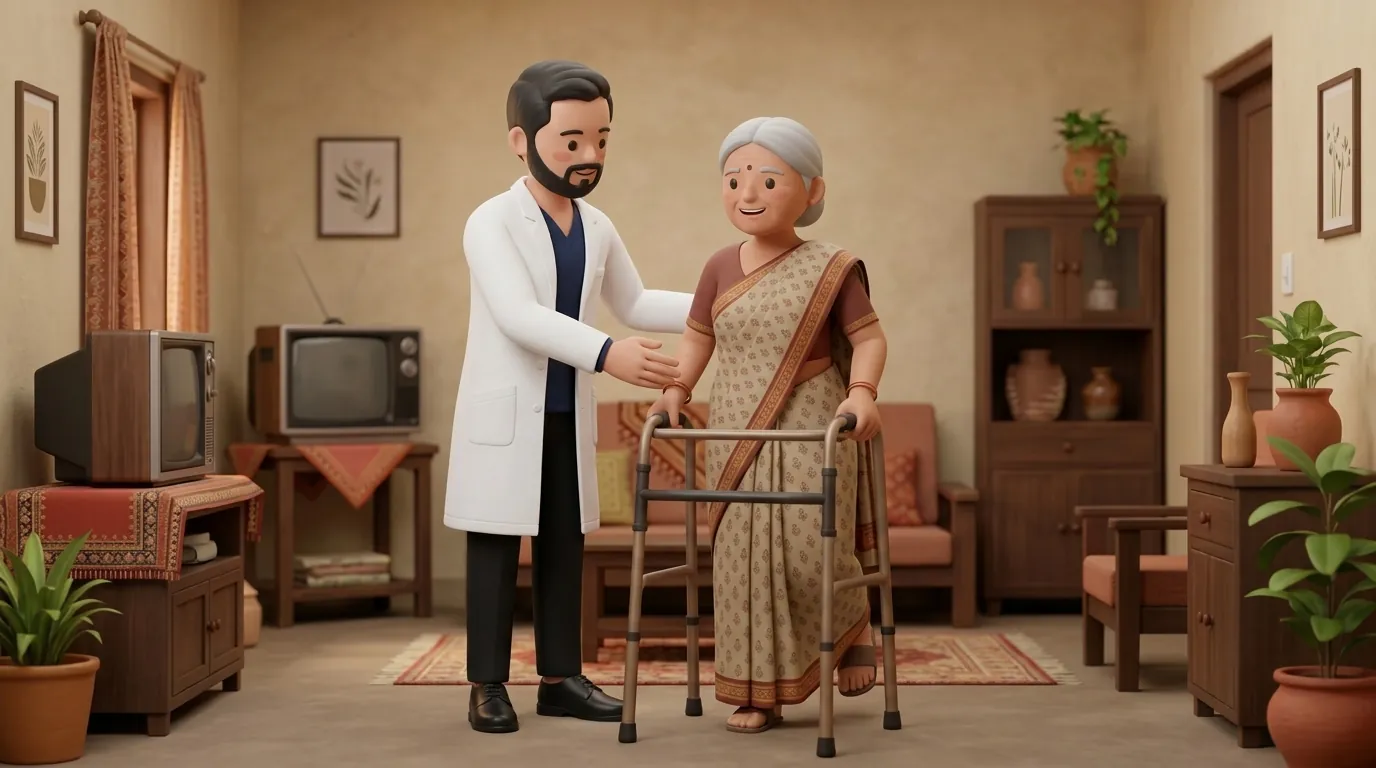
In Indian families, relatives often believe that booking daily therapy sessions proves their filial devotion and financial commitment to an ailing parent. Families may insist on daily 60-minute physiotherapy sessions, unaware that having a visiting professional arrive daily forces the elder into social and physical exertion that leaves them bedbound with exhaustion for hours afterward. Palliative physiotherapists educate families on the law of diminishing returns in terminal care, demonstrating that two focused visits weekly, paired with family caregiver coaching, yields superior comfort and peaceful dignity.
Palliative Performance Scale (PPS) Functional Titration
The PPS evaluates ambulation, activity level, self-care ability, oral intake, and conscious state on a 10-point percentage scale. Patients with PPS scores of 60 to 70 percent benefit from two to three weekly visits focused on assisted transfers and fall risk mitigation. As performance status drops to 40 to 50 percent (mostly bedbound, extensive assistance required), visit frequency tapers to once or twice weekly, shifting clinical focus to contracture prevention and slide sheet transfers. When PPS falls below 30 percent (active dying phase), routine therapy yields to on-demand family support.
Caregiver Coaching and Sustainable Visit Scheduling
Sessions are limited to 20 to 30 minutes of gentle, unhurried contact. The clinician dedicates the final 10 minutes of each visit to coaching primary family caregivers, guiding them to deliver 30-degree turns, passive ankle pumps, and mouth care independently. This educational model ensures continuous comfort care throughout the week without tiring the patient with frequent outsider visits.
Pre-Visit Energy and Fatigue Screening Check
Objective: Assess daily patient readiness before initiating physical mobility or repositioning
- 1Greet the elder softly, observing spontaneous eye opening, facial expression, and breathing effort.
- 2Ask the primary caregiver about the elder sleep quality, food intake, and pain over the past 12 hours.
- 3Check resting pulse and respiratory rate, looking for tachypnoea or signs of autonomic exhaustion.
- 4If the elder displays profound lethargy, shorten the session immediately to gentle comfort touch only.
- 5Document the functional PPS score to track disease trajectory and adjust subsequent visit schedules.
| PPS Score Range | Clinical Functional Status | Recommended Visit Frequency and Focus |
|---|---|---|
| PPS 60% to 70% | Reduced ambulation; mostly seated; partial assistance | 2 to 3 visits weekly: transfer training, fall prevention, 4Ps |
| PPS 40% to 50% | Mainly bedbound; extensive assistance for self-care | 1 to 2 visits weekly: slide sheets, contracture care, air beds |
| PPS 20% to 30% | Totally bedbound; minimal intake; drowsy or confused | Weekly or on-demand: comfort touch, caregiver support |
| PPS 10% | Active dying phase; coma; minimal oral intake | Zero active exercise; focus purely on peaceful positioning |
Oncological Red Flags and Specialist Escalation
A precipitous drop in PPS score (such as dropping from 60 percent to 30 percent over 48 hours) signals an acute oncological complication rather than expected progression. Clinicians must immediately alert the palliative physician to evaluate for acute infection, cord compression, hypercalcaemia, or intracranial event.
Frequently Asked Questions
Is it better to have daily physiotherapy for a bedbound terminal cancer patient?
Daily professional therapy is usually counterproductive in advanced illness. It over-tires the elder and consumes their limited energy. Two well-designed visits per week focused on caregiver training provide superior comfort without inducing fatigue.
Do I need a doctor referral to consult a home palliative physiotherapist?
Under the National Commission for Allied and Healthcare Professions (NCAHP) Act 2021, patients in India enjoy direct access to registered physiotherapists without requiring a mandatory doctor referral. At BookPhysio.in, you consult verified physiotherapists and pay directly per session without hidden fees or platform commissions.
Related recovery guides & articles
BookPhysio.in Editorial Team
The BookPhysio.in editorial team writes and maintains this content, checking it against reliable clinical sources. Content follows our medical review policy: general information only, and no page claims a clinical review until a named registered physiotherapist has signed it off.
Read our medical review policy