
Interstitial Cystitis and Painful Bladder Syndrome: Dietary Triggers, Non-Kegel Down-Training in India
In short
Severe bladder pressure, constant burning, and frequency without bacterial infection signal interstitial cystitis. Learn how dietary modifications and pelvic down-training provide relief.
In this guide (6 sections)
Interstitial cystitis (IC), also termed bladder pain syndrome (BPS), is a chronic, debilitating condition characterized by suprapubic pelvic pain, intense pressure, and urinary urgency that temporarily eases after voiding. Patients in India, predominantly women between 25 and 55, frequently endure years of misdiagnosis, repeatedly taking antibiotics for suspected urinary tract infections (UTIs) despite sterile urine cultures. The constant pain and necessity of voiding 20 to 40 times daily severely disrupt work and family life. In over 80 percent of IC patients, pelvic floor hypertonicity and central nervous system up-regulation drive the condition. Performing Kegel exercises is strictly counterproductive; effective management requires non-Kegel somatic down-training and dietary trigger management.
1. Functional Biomechanics: Glycosaminoglycan (GAG) Layer Breakdown and Viscero-Somatic Reflexes
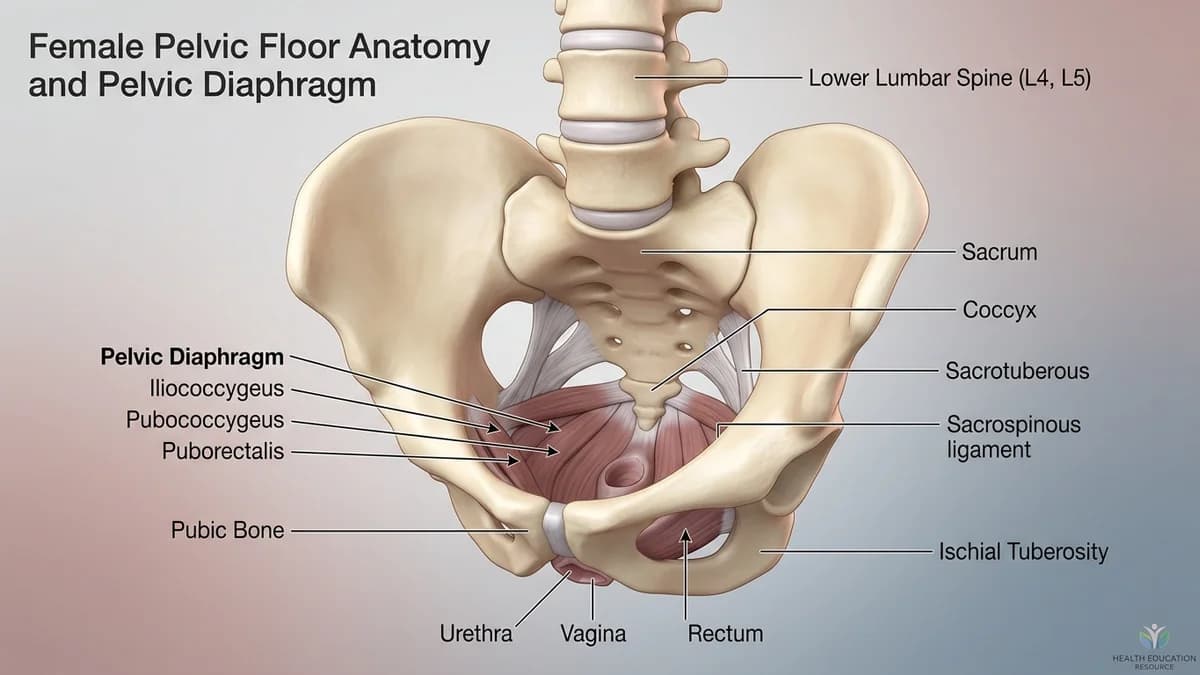
The urothelium of the bladder wall is normally shielded by a protective glycosaminoglycan (GAG) mucin layer. In interstitial cystitis, this barrier becomes compromised and 'leaky', allowing potassium ions and toxic urinary metabolites to penetrate the submucosa. This depolarizes sensory C-nerve fibres, triggering mast cell degranulation, local histamine release, and neurogenic inflammation. Through viscero-somatic cross-sensitisation at the sacral spinal cord (S2-S4), persistent bladder nociception causes reflex motor spasm in the adjacent levator ani and obturator internus muscles. The hypertonic pelvic floor muscles compress the pudendal nerve and urethra, creating secondary pain that mimics an infection.
2. Domestic Indian Context: Daily Chores, Ergonomics, and Privacy
Indian dietary habits heavily influence bladder irritation. Staple foods like spicy red chilli powder, green chillies, sour tamarind (imli), raw tomatoes, pickles (achaar), fermented batters (dosa/idli), and multiple cups of strong masala chai are potent urothelial irritants. In addition, urban working women often delay urination for hours due to unhygienic public restrooms, increasing bladder irritation. Physiotherapists guide patients on systematically identifying dietary triggers using a 2-week elimination food-and-symptom diary, shifting to bladder-friendly alkaline foods, and implementing somatic pelvic floor relaxation.
3. Clinical Special Tests and Physical Examination
Assessment begins by ruling out bacterial infection, bladder stones, or carcinoma in situ via urine microscopy, cytology, and uroflowmetry. Physical examination involves palpating the anterior vaginal wall directly beneath the bladder base (evaluating bladder tenderness) and assessing myofascial trigger points in the levator ani and obturator internus.
| Food Category | High-Irritant Trigger (Eliminate) | Bladder-Soothing Alternative | Physiological Mechanism |
|---|---|---|---|
| Beverages | Masala chai, black coffee, citrus juices | Warm water, chamomile, fennel tea | Removes caffeine and acidic diuretic stress |
| Spices and Seasonings | Red chilli, black pepper, vinegar, garam masala | Coriander seeds, cumin, turmeric in moderation | Reduces neurogenic chemical urothelial burn |
| Sour / Fermented Foods | Tamarind (imli), raw tomato, pickles (achaar) | Bottle gourd (lauki), ridge gourd (turai), ash gourd | Alkaline vegetables soothe bladder lining |
| Snacks and Sweets | Artificial sweeteners, dark chocolate | Pears, blueberries, tender coconut water | Eliminates bladder-spasming chemical compounds |
4. Stage-by-Stage Functional Physiotherapy Protocol
Rehabilitation centres on non-Kegel somatic down-training, manual release of hypertonic pelvic attachments, and autonomic nervous calming.
Phase 1: Supported Supine Butterfly (Supta Baddha Konasana) Pelvic Opening
Objective: Passively lengthen hypertonic adductor and levator ani muscles to offload visceral bladder pressure.
- 1Lie on your back on a supportive mat, placing a bolster or folded blanket under your head.
- 2Bring the soles of your feet together and let your knees open out to the sides.
- 3Place cushions beneath your outer thighs so your inner groin feels completely supported with zero strain.
- 4Place your hands over your lower abdomen just above your pubic bone.
- 5Inhale deeply into your hands, visualizing your bladder softening and your pelvic floor expanding like an opening flower.
- 6Exhale softly through open lips, letting all muscular tension melt away.
Phase 2: Visceral Bladder Lift and Suprapubic Skin Rolling
Objective: Release superficial fascial restrictions between the abdominal wall and the bladder dome.
- 1Lie in crook lying with knees bent and feet flat on the floor.
- 2Place the pads of your fingers 3 centimetres above your pubic bone.
- 3Inhale to prepare. As you exhale, gently sink your fingertips 1 centimetre into your lower belly.
- 4Gently hook your fingers and lift the superficial tissue upward toward your navel by 1 centimetre.
- 5Hold this gentle upward tissue stretch for 30 seconds while breathing calmly, relieving downward bladder traction.
Phase 3: Quadratus Lumborum and Lateral Hip Mobility Stretch
Objective: Decompress the thoracolumbar junction and sympathetic nerve roots that innervate the bladder.
- 1Sit upright on a chair with feet flat on the floor.
- 2Reach your right arm straight up toward the ceiling.
- 3Gently side-bend your torso to the left, feeling a long, comfortable stretch along your right flank and waist.
- 4Take 3 deep breaths into your right ribcage, then return to centre smoothly.
- 5Repeat on the opposite side to balance autonomic spinal outflow.
Seek immediate urological evaluation if you experience: visible gross blood in your urine (hematuria), high fever with severe chills and flank pain, inability to pass urine accompanied by intense bladder distension, or new onset of unexplained weight loss.
5. Clinic Consultation, Home Visits, and Transparent Fee Benchmarks
Under the National Commission for Allied and Healthcare Professions (NCAHP) Act 2021, patients in India can consult a registered pelvic health physiotherapist directly without an upfront referral, though BookPhysio.in does not ask for one. Specialized physiotherapists perform internal myofascial trigger point release and gentle pelvic neuro-mobilisation in private clinical suites. Clinic appointments in Indian cities typically range between ₹500 and ₹1,500, with home visits ranging from ₹700 to ₹2,000 where available. Patients pay their physiotherapist directly at each consultation, with zero platform commission.
6. Frequently Asked Questions
Why do Kegel exercises make my interstitial cystitis pain worse?
In interstitial cystitis, the pelvic floor muscles are already locked in a protective, hypertonic spasm due to chronic bladder inflammation. Performing Kegels squeezes these already exhausted, shortened muscles, worsening local ischemia, pinching the pudendal nerve, and compressing the bladder neck, which triggers severe pain and frequency.
Can drinking tender coconut water help calm my bladder pain flare-ups?
Yes. Fresh tender coconut water is mildly alkaline and rich in natural potassium and electrolytes, which can help neutralize acidic urine and soothe an irritated bladder lining. However, individuals with severe potassium sensitivity should introduce it in small amounts to assess individual tolerance.
Related recovery guides & articles
BookPhysio.in Editorial Team
The BookPhysio.in editorial team writes and maintains this content, checking it against reliable clinical sources. Content follows our medical review policy: general information only, and no page claims a clinical review until a named registered physiotherapist has signed it off.
Read our medical review policy