
Isometric vs Isotonic Strengthening in Inflammatory Arthritis: Clinical Exercise Dosing
In short
Balancing mechanical loading between active inflammatory flares and disease remission is critical in arthritis rehabilitation. Master the biomechanics of joint-safe isometric contractions versus progressive isotonic strengthening.
In this guide (6 sections)
Strengthening musculature around arthritic joints is essential to absorb shock and protect periarticular cartilage from accelerated degradation. However, prescribing inappropriate exercise modes during varying phases of inflammatory arthritis can provoke acute symptom exacerbations. Isometric contractions, where muscle tension is generated without joint excursion, produce minimal intra-articular shear stress and are well-tolerated during periods of elevated disease activity. Conversely, isotonic exercises, involving dynamic concentric and eccentric muscle actions through an arc of motion, build functional strength, tendon compliance, and muscular endurance during disease remission. Clinical mastery of when and how to transition between these modalities is foundational in rheumatological rehabilitation.
Domestic and Cultural Indian Realities
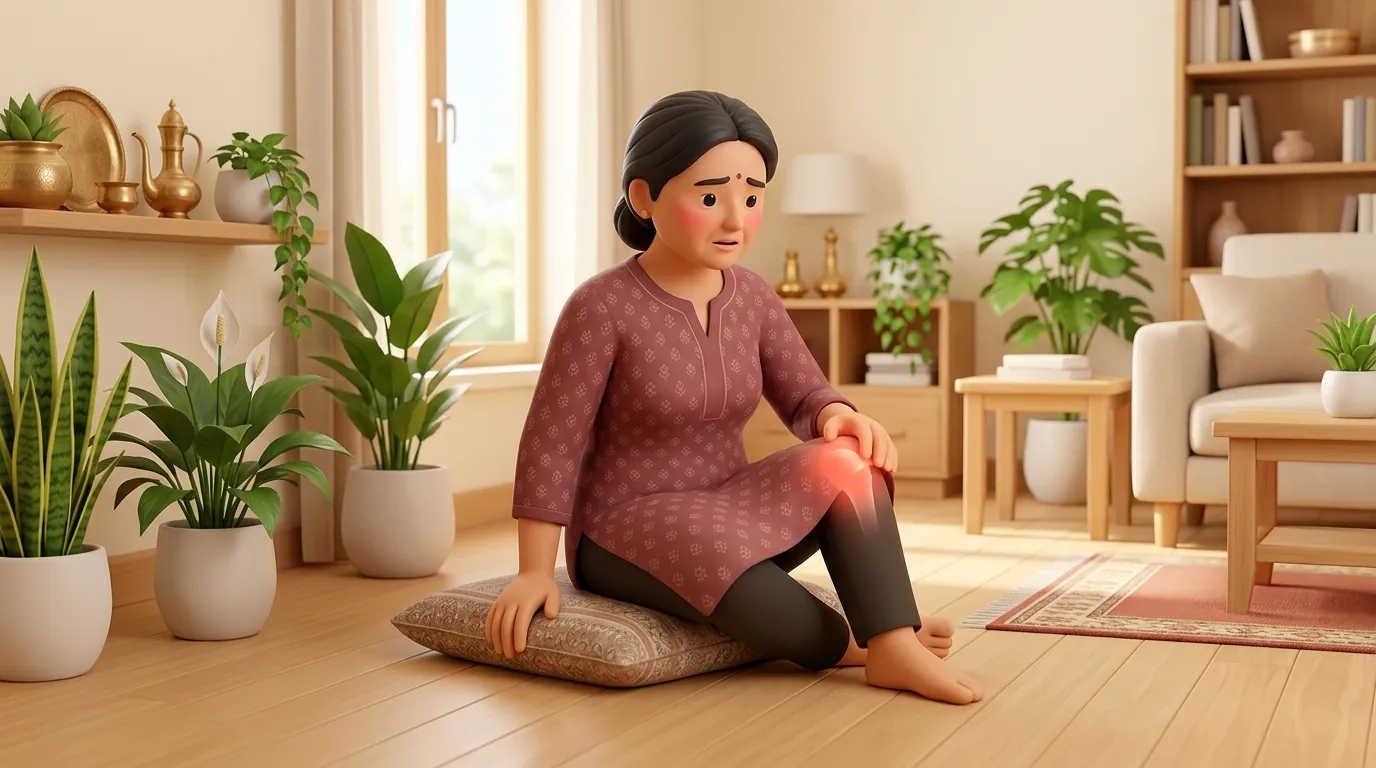
In Indian households, patients living with rheumatoid arthritis or spondyloarthritis frequently receive contradictory advice regarding physical activity. During an acute flare with swollen, hot joints, family members often urge them to rest completely in bed, which accelerates disuse muscle atrophy within days. Alternatively, patients attempt heavy domestic chores or follow intense gymnasium workouts on good days, triggering immediate inflammatory rebound. Patients must learn to utilize gentle isometric muscle setting right in bed or while seated during flares, transitioning to progressive isotonic strengthening with elastic resistance bands only when joint effusion and morning stiffness have receded.
Clinical Biomechanics and Inflammatory Pathology
During an acute flare, inflamed synovial tissue produces high volumes of exudate, elevating intra-articular pressure. Dynamic isotonic movements, particularly through terminal ranges of motion, cause sharp spikes in intra-articular pressure that can exceed capillary perfusion pressure, inducing localized ischemia-reperfusion injury and releasing free oxygen radicals. Furthermore, dynamic shear forces across friable, enzyme-degraded cartilage accelerate chondrocyte apoptosis. In contrast, sub-maximal isometric contractions (40 to 60 percent of maximum voluntary contraction) activate the muscle pump, maintain neural motor drive, and prevent arthrogenic muscle inhibition without producing destructive articular shear.
Clinical Assessment and Functional Staging
Staging relies on objective clinical inflammation markers: duration of morning stiffness, presence of palpable joint warmth, and joint swelling counts. When morning stiffness exceeds 45 minutes and joints are warm with measurable effusion, the patient is restricted to isometric protocols. When morning stiffness drops below 20 minutes, joints are cool, and serum CRP levels are normalized, progressive isotonic protocols using light elastic resistance bands (1 to 2 kg resistance) can be safely introduced.
Targeted Mobility and Joint Preservation Exercises
During flare management, isometric exercises should be performed at multiple joint angles within mid-range positions, avoiding joint extremes.
Multi-Angle Isometric Quadriceps Setting with Foam Roll Support
Objective: Maintain knee extensor recruitment and prevent vastus medialis atrophy without intra-articular shearing
- 1Lie flat on your back on a firm surface with a small foam roller or rolled towel placed beneath your knee, positioning it in approximately 30 degrees of gentle flexion.
- 2Gently contract your anterior thigh muscles, pressing the back of your knee firmly downward into the foam roll without lifting your heel.
- 3Hold the static contraction steadily for 6 seconds while maintaining smooth diaphragmatic breathing.
- 4Gradually release the contraction over 2 seconds, resting completely for 5 seconds between repetitions.
| Clinical Feature | Isometric Strengthening (Flare Phase) | Isotonic Strengthening (Remission Phase) |
|---|---|---|
| Joint Excursion | Zero joint movement; static contraction held at mid-range resting angle | Dynamic motion through controlled, comfortable active range of motion |
| Articular Shear Force | Minimal to negligible; joint surfaces remain stationary | Moderate to high; requires stable, quiescent articular cartilage |
| Effusion Impact | Does not exacerbate intra-articular pressure spikes; safe during mild effusion | Can irritate inflamed synovium if performed during active effusion |
| Strength & Hypertrophy | Preserves motor unit recruitment and prevents rapid disuse atrophy | Builds functional strength, eccentric deceleration control, and muscle mass |
Red Flags and Immediate Rheumatology Escalation
If performing isometric or isotonic exercises provokes sharp, unremitting joint pain that persists for more than 2 hours post-exercise, the mechanical load was excessive and must be reduced. Any sudden swelling in a single joint accompanied by severe redness, skin calor, and high fever requires urgent evaluation to exclude septic arthritis.
Frequently Asked Questions
Can isometric exercises reverse inflammatory arthritis?
No. Strengthening exercises cannot reverse the underlying autoimmune inflammatory process causing arthritis. However, evidence-based isometric and isotonic exercises help manage morning stiffness, preserve joint stability, prevent disuse muscle wasting, and protect joint cartilage from mechanical wear.
How do I book an experienced home physiotherapist for exercise prescription via BookPhysio.in?
Under the National Commission for Allied and Healthcare Professions (NCAHP) Act 2021, Indian patients enjoy direct access to registered physiotherapists without an obligatory doctor referral. On BookPhysio.in, you schedule an appointment with a verified clinician in your city. Payment is made directly to the therapist at your home appointment via cash or UPI; BookPhysio.in does not process booking fees online.
Related recovery guides & articles
BookPhysio.in Editorial Team
The BookPhysio.in editorial team writes and maintains this content, checking it against reliable clinical sources. Content follows our medical review policy: general information only, and no page claims a clinical review until a named registered physiotherapist has signed it off.
Read our medical review policy