
Common Kegel Exercise Mistakes: Breath Holding, Gluteal Clenching, and Muscle Substitution in India
In short
Performing Kegels incorrectly can worsen urine leaks and trigger pelvic pain. Discover the three most common mistakes and learn how to recruit the right muscles.
In this guide (6 sections)
Since Dr. Arnold Kegel first described pelvic floor muscle training in 1948, 'doing Kegels' has become a household phrase across India for treating urinary leaks and postpartum recovery. However, clinical studies consistently reveal that over 50 percent of women and men who attempt Kegels based on verbal instructions perform them incorrectly. Instead of a subtle inward and upward lift, individuals frequently hold their breath, clench their buttock cheeks together, squeeze their inner thighs, or, most destructively, bear down forcefully as if straining on the toilet. Far from strengthening the pelvic floor, these errors increase downward intra-abdominal pressure, stretch pelvic ligaments, and worsen organ prolapse and urinary leaks.
1. Functional Biomechanics: The Valsalva Hazard and Motor Substitution Patterns
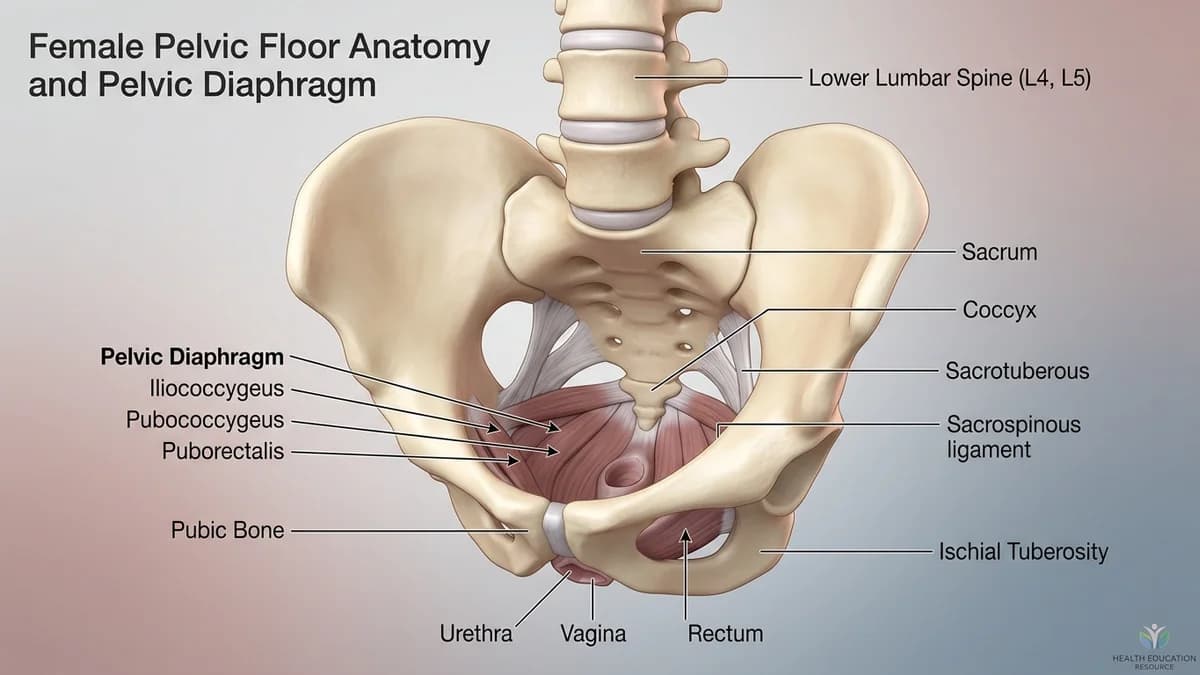
The pelvic floor is composed of deep, striated levator ani muscle fibres that require subtle motor control rather than brute force. When an individual attempts a 'hard Kegel', the brain frequently defaults to high-threshold motor units in large superficial muscles: the gluteus maximus, adductor longus, and rectus abdominis. Clenching the gluteals rotates the femurs outward without lifting the bladder neck. Worse still, closing the glottis and holding the breath initiates a Valsalva manoeuvre, spiking intra-abdominal pressure and pushing the bladder and uterus downward through the pelvic hiatus. An effective Kegel is an isolated cranial lift coordinated smoothly with exhalation.
2. Domestic Indian Context: Daily Chores, Ergonomics, and Privacy
In Indian fitness culture, exercise is often equated with heavy sweating, strain, and visible effort. When women read about Kegels in magazines or online, they often apply the same aggressive mindset, performing hundreds of forceful, clenched squeezes while doing household chores or watching television. Furthermore, stopping urine mid-flow on the toilet is frequently shared on social media as an exercise, a practice that disrupts the normal voiding reflex and increases urinary tract infection risks. Physiotherapists educate patients on the principle that less is more: 10 precise, correct contractions produce far greater clinical benefits than 100 flawed squeezes.
3. Clinical Special Tests and Physical Examination
Clinical assessment utilizes digital palpation or real-time transabdominal ultrasound to verify the direction of muscle movement. The clinician palpates the anterior abdominal wall and inner thighs to check for accessory muscle substitution while assessing whether the pelvic floor moves cranially (correct) or caudally (bearing down).
| Biomechanical Dimension | Common Flaw (Mistake) | Biomechanical Hazard | Correct Physiotherapy Cue |
|---|---|---|---|
| 1. Breath Holding | Holding breath with closed glottis | Spikes downward intra-abdominal pressure | Exhale smoothly through open lips during lift |
| 2. Gluteal / Adductor Clench | Squeezing buttocks or knees together | Substitutes hip muscles without pelvic lift | Sit bones stay still; subtle internal lift |
| 3. Bearing Down (Valsalva) | Pushing outward like passing hard stool | Stretches endopelvic fascia, worsens prolapse | Imagine gently drinking through a straw |
| 4. Mid-Stream Urine Stop | Practicing Kegels while urinating | Disrupts voiding reflex, causes UTI risks | Exercise only on an empty bladder |
4. Stage-by-Stage Functional Physiotherapy Protocol
Rehabilitation begins by stripping away accessory muscle substitution, using proprioceptive cues to isolate the levator ani cleanly.
Phase 1: The 'Straw Cue' and Isolated Pelvic Floor Elevation
Objective: Isolate the inward and upward lift of the levator ani while keeping buttocks and thighs completely relaxed.
- 1Lie on your back with knees bent and feet flat on the floor in a comfortable space.
- 2Place your hands on your buttocks to verify that your gluteal muscles remain soft and squishy.
- 3Take a relaxed breath in through your nose, letting your belly rise softly.
- 4As you exhale slowly through pursed lips, imagine you are using a straw to gently sip a liquid upward through your vagina or penis.
- 5Feel an internal upward lift inside your pelvis without your hips lifting, buttocks tightening, or breath catching.
- 6Release completely for 5 seconds before the next repetition.
Phase 2: Seated Firm Surface Tactile Feedback Drill
Objective: Use external tactile contact from a firm chair to confirm inward muscular elevation away from the seat.
- 1Sit upright on a hard, unpadded dining chair with feet flat on the floor.
- 2Feel your perineum (the area between your sit bones) resting in direct contact with the wooden chair.
- 3Exhale softly and gently pull your perineum inward and upward, lifting away from the chair surface.
- 4Notice the sensation of space opening between your skin and the wooden seat.
- 5Hold for 5 seconds while breathing smoothly, then let the perineum drop softly back into contact with the chair.
Phase 3: The Knack Functional Standing Pre-Contraction
Objective: Automate correct pelvic floor closure prior to daily household intra-abdominal pressure spikes.
- 1Stand tall with feet hip-width apart.
- 2Inhale to prepare. Just before you clear your throat or lift a grocery sack, engage your pelvic floor upward.
- 3Execute the cough or lift while sustaining the upward closure.
- 4Release the contraction smoothly once the exertion is complete.
- 5This automated habit provides lifelong protection against stress incontinence.
Stop pelvic floor exercises and consult a healthcare specialist immediately if you experience: sharp persistent pelvic pain following exercise, sudden onset of painful urination with fever, visible blood in your urine, or an inability to empty your bladder completely.
5. Clinic Consultation, Home Visits, and Transparent Fee Benchmarks
Under the National Commission for Allied and Healthcare Professions (NCAHP) Act 2021, patients in India can consult a registered pelvic health physiotherapist directly without an upfront referral, though BookPhysio.in does not ask for one. Pelvic health physiotherapists use real-time ultrasound and surface EMG to ensure flawless exercise technique. Outpatient clinic visits across Indian cities typically range between ₹500 and ₹1,500, with home visits ranging from ₹700 to ₹2,000 where available. Patients pay their physiotherapist directly at each consultation, with zero platform commission.
6. Frequently Asked Questions
Should I stop my urine stream mid-flow to test my pelvic floor strength?
No. Stopping your urine stream mid-flow is useful only once as a diagnostic test to identify where the muscles are located. Performing it regularly as an exercise disrupts the normal bladder voiding reflex, causes incomplete bladder emptying, and significantly increases your risk of urinary tract infections.
How many Kegel exercises should I do every day in India?
Quality is far more important than quantity. Performing 3 sets of 8 to 10 correct, high-quality contractions daily (combining 5-second endurance holds with quick flicks) produces superior clinical outcomes compared to hundreds of hurried, improper squeezes.
Related recovery guides & articles
BookPhysio.in Editorial Team
The BookPhysio.in editorial team writes and maintains this content, checking it against reliable clinical sources. Content follows our medical review policy: general information only, and no page claims a clinical review until a named registered physiotherapist has signed it off.
Read our medical review policy