
Levator Ani Syndrome: Hypertonic Pelvic Floor, Internal Trigger Point Release, and Why Kegels Harm in India
In short
A constant deep ache in the rectum or pelvis that worsens with sitting is often levator ani syndrome. Discover why performing Kegels makes this condition worse and how trigger point release heals.
In this guide (6 sections)
Levator ani syndrome is a painful functional condition characterized by chronic, episodic aching or pressure deep in the rectum, sacrum, and pelvic floor. Patients in India frequently describe the sensation as feeling like 'sitting on a tennis ball' or having an unyielding golf ball stuck in the rectum. Because symptoms involve the perianal area, patients often consult gastroenterologists or general surgeons, undergoing repeated evaluations for piles (hemorrhoids), fissures, or prostate infections that yield normal results. Well-meaning friends or internet searches frequently advise doing Kegel exercises to 'strengthen' the pelvis. In levator ani syndrome, however, the pelvic floor is already in a state of chronic hypertonic spasm, and performing Kegels directly worsens the pain.
1. Functional Biomechanics: Muscle Hypertonicity versus True Weakness
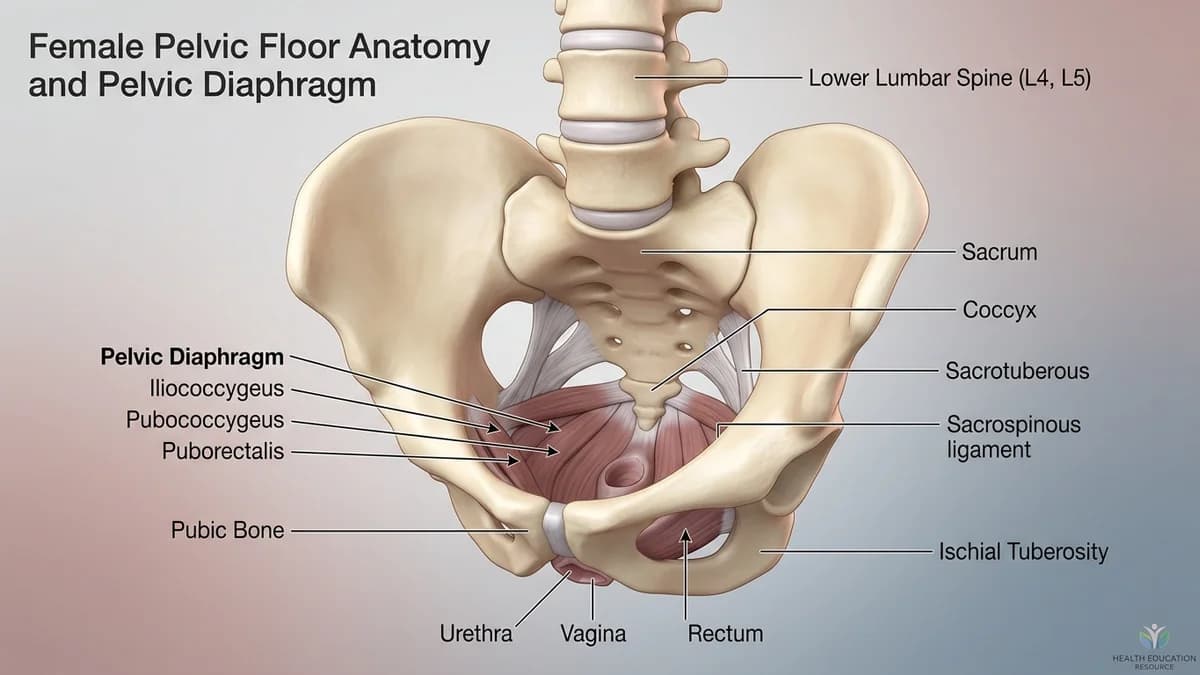
The levator ani muscle group, comprising the puborectalis, pubococcygeus, and iliococcygeus, forms a dynamic hammock supporting the pelvic viscera. In levator ani syndrome, prolonged emotional stress, past physical trauma, or habitual holding of urine and stool causes these striated muscle fibres to become chronically contracted and shortened. This constant hypertonicity leads to localized ischemia, accumulation of metabolic waste products, and the formation of exquisitely tender myofascial trigger points. A hypertonic muscle is weak not because it lacks bulk, but because it is stuck at the end of its active contraction range and cannot generate functional power or relax to allow normal bowel and bladder emptying.
2. Domestic Indian Context: Daily Chores, Ergonomics, and Privacy
In Indian society, high-stress desk jobs in tech hubs like Bengaluru, Hyderabad, and Pune combined with long commutes on congested roads encourage prolonged sitting and unconscious pelvic clenching. In addition, cultural embarrassment surrounding bowel habits leads many individuals to hold their stool for hours until they return home from work. Using traditional squat toilets with hypertonic levator muscles can be extremely painful, as the puborectalis fails to unhook the anorectal angle. Physiotherapists teach somatic down-training, breathing pacing, and stress-release strategies tailored to demanding urban lifestyles.
3. Clinical Special Tests and Physical Examination
Diagnostic criteria (Rome IV) require chronic or recurrent rectal aching lasting at least 20 minutes, with symptoms present for 3 months. Physical examination is decisive: digital rectal or vaginal examination reveals severe localized tenderness when the clinician applies gentle lateral or posterior traction to the puborectalis and pubococcygeus muscles, reproducing the patient's familiar deep rectal ache.
| Clinical Feature | Hypertonic Pelvic Floor (Levator Ani) | Hypotonic Pelvic Floor (Weakness) | Clinical Management Distinction |
|---|---|---|---|
| Primary Muscle State | Chronically clenched, shortened, spastic | Lax, stretched, deconditioned | Down-train vs strengthen |
| Common Symptoms | Rectal ache, urinary hesitancy, pain with sitting | Stress incontinence, organ prolapse | Release trigger points vs Kegel training |
| Effect of Kegel Exercises | Worsens muscle spasm and increases pain | Improves continence and structural support | Kegels strictly contraindicated in hypertonus |
| Physiotherapy Target | Myofascial release, diaphragmatic drops | Progressive overload, functional lift | Restore resting length before strength |
4. Stage-by-Stage Functional Physiotherapy Protocol
Rehabilitation centres entirely on pelvic down-training, manual internal trigger point deactivation, and neural parasympathetic calming.
Phase 1: Diaphragmatic Breathing with Conscious Pelvic Floor Drop
Objective: Use the descent of the respiratory diaphragm to mechanically stretch and relax the hypertonic levator ani.
- 1Lie on your back on a comfortable mat with your knees bent and supported by pillows, or place your lower legs up on a chair (90-90 position).
- 2Place one hand on your chest and the other hand over your lower abdomen.
- 3Inhale slowly and deeply through your nose for 4 seconds, allowing your lower abdomen and lower ribcage to expand outward.
- 4As you breathe in, consciously imagine your sit bones widening apart and your pelvic floor softening downward like an opening umbrella.
- 5Exhale gently through open lips without pushing, letting your belly sink naturally without any muscular squeezing.
Phase 2: Happy Baby Pose (Ananda Balasana) with Pelvic Expansion
Objective: Apply gentle passive myofascial stretch to the puborectalis, obturator internus, and gluteal attachments.
- 1Lie on your back and draw both knees up toward your chest.
- 2Reach your hands forward to hold onto the outside edges of your feet, shins, or ankles.
- 3Gently open your knees wider than your torso, guiding your shins perpendicular to the floor.
- 4Allow your tailbone and lower back to rest flat on the mat without curling upward.
- 5Maintain slow, steady belly breathing, focusing on complete relaxation of the rectal sphincter with each inhale.
Phase 3: Seated Pelvic Drop and Postural Re-Education
Objective: Transfer pelvic floor down-training into daily sitting environments during work hours.
- 1Sit tall on a firm office chair with your feet flat on the floor and knees slightly wider than hip-width.
- 2Check for unconscious clenching in your buttocks, thighs, or pelvic floor.
- 3Take a relaxed breath in and deliberately 'let go' of the pelvic floor, feeling your perineum drop softly toward the chair seat.
- 4Maintain this relaxed, drop sensation while continuing to type or speak without re-tightening.
- 5This breaks the habit of holding chronic tension during stressful work tasks.
Seek immediate medical evaluation if you notice: rectal bleeding, unexplained unintentional weight loss, severe constant pain that wakes you from sleep, a palpable hard rectal mass, high fever with severe perianal throbbing (indicating a perianal abscess), or sudden difficulty passing urine.
5. Clinic Consultation, Home Visits, and Transparent Fee Benchmarks
In India, under the National Commission for Allied and Healthcare Professions (NCAHP) Act 2021, patients can consult a registered pelvic health physiotherapist directly without an upfront referral, though BookPhysio.in does not ask for one. Clinical treatment for levator ani syndrome involves gentle internal myofascial trigger point release performed in a private, compassionate clinical setting. Clinic sessions across Indian metropolitan cities typically range from ₹500 to ₹1,500, with home visits ranging from ₹700 to ₹2,000 where available. Patients pay their practitioner directly at each appointment, with no platform commission.
6. Frequently Asked Questions
Why do my pelvic pain symptoms get worse whenever I try to do Kegel exercises?
Kegel exercises are designed to contract and strengthen weak, lax muscles. In levator ani syndrome, your muscles are already in a state of severe, chronic spasm. Contracting an already shortened, hypertonic muscle increases ischemia, tightens painful trigger points, and heightens nerve sensitivity, directly provoking severe rectal and pelvic pain.
How does internal myofascial trigger point release feel during physiotherapy?
A trained pelvic health physiotherapist uses a single gloved finger to apply gentle, sustained pressure to tight muscular bands inside the pelvic floor. While pressing a trigger point may briefly reproduce your familiar ache, holding the pressure for 30 to 60 seconds allows the muscle fibres to relax and soften. Most patients report a profound sense of release and reduced pressure immediately following treatment.
Related recovery guides & articles
BookPhysio.in Editorial Team
The BookPhysio.in editorial team writes and maintains this content, checking it against reliable clinical sources. Content follows our medical review policy: general information only, and no page claims a clinical review until a named registered physiotherapist has signed it off.
Read our medical review policy