
Malignant Bone Metastases: Pathological Fracture Precautions
In short
Malignant bone metastases create high fracture risks. Discover safe bedside transfer techniques, Mirels risk factors, and home precautions.
In this guide (5 sections)
Malignant metastases to the skeletal system represent a common complication of advanced breast, prostate, lung, and renal cell carcinomas. As tumor cells colonise bone marrow, they alter normal osteoclast and osteoblast signaling, causing severe focal cortical thinning. Even minimal torsional force or uncoordinated bedside pulling can precipitate a catastrophic pathological fracture. Home palliative physiotherapy introduces strict non-rotational transfer protocols, low-shear positioning aids, and clinical safety measures to protect fragile skeletal structures.
Domestic and Cultural Indian Realities
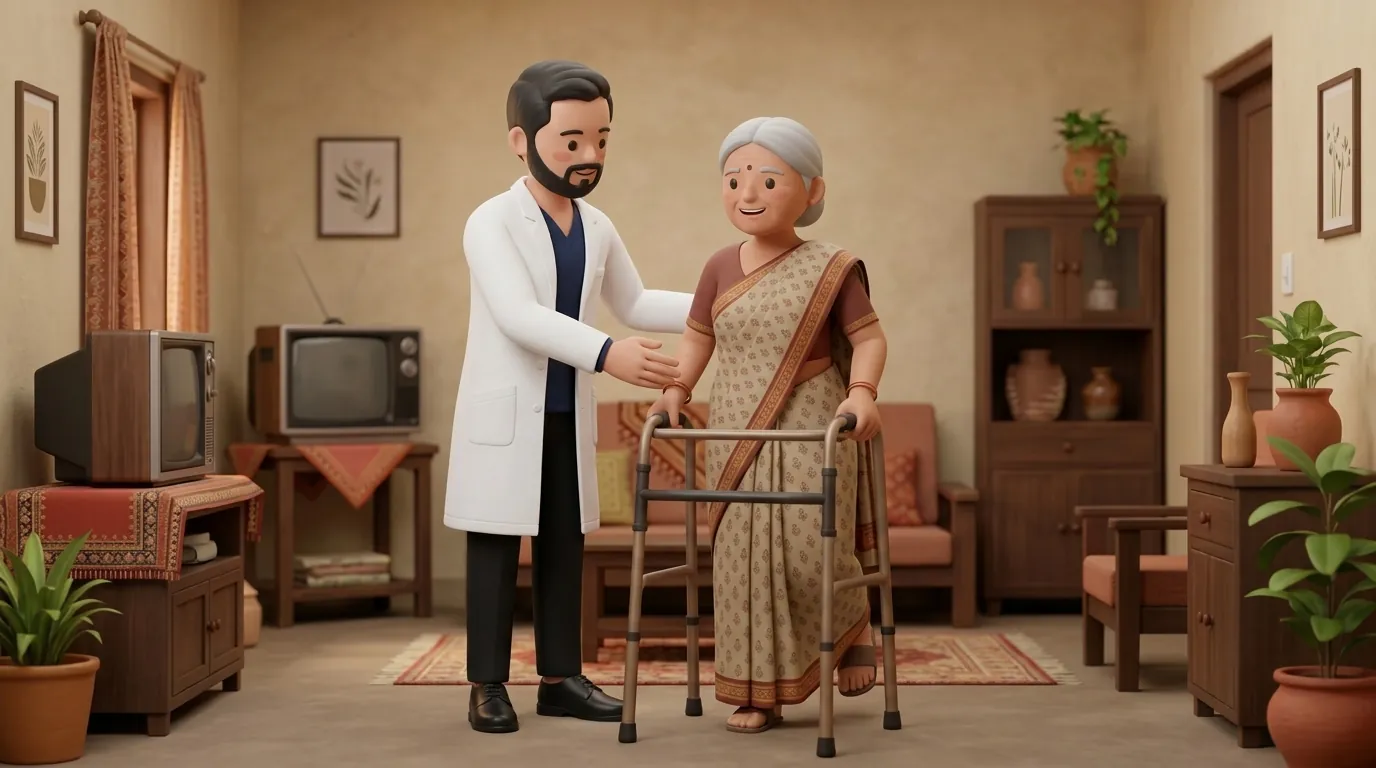
In Indian households, family members routinely assist elderly parents by pulling on their forearms, lifting them under the axillae, or assisting them out of low wooden beds. While performed with deep filial devotion, these manual lifting methods generate high torsional stresses across osteolytic ribs, humeri, and proximal femora. Low seating furniture, including sagging jute charpoys or low wooden stools (pirhis), places severe flexion and rotational torque on metastatic femoral necks. Palliative physiotherapists train family caregivers in safe bed repositioning using tubular slide sheets, eliminating dangerous manual pulling.
Biomechanics of Skeletal Fragility and Mirels Scoring
Pathological fractures occur when structural loads exceed the diminished load-bearing capacity of metastatically weakened bone. Clinicians evaluate fracture vulnerability using Mirels scoring system, which assesses lesion anatomical site, radiographic appearance (osteolytic versus osteoblastic), lesion size relative to cortical bone diameter, and pain characteristics. Lesions involving more than one-third of the cortical width in weight-bearing bones, such as the femoral shaft or subtrochanteric region, exhibit high fracture risk, requiring complete avoidance of unassisted weight-bearing.
Bedside Handling and Transfer Precautions
When moving an elder with known skeletal metastases, caregivers must never use the patient limbs as levers. All repositioning relies on whole-body log-rolling or slide sheet glides that support the head, spine, and pelvis simultaneously. When assisting the patient into a side-lying posture, a firm pillow placed between the knees prevents internal rotation and adduction stress across metastatic hips. Unilateral traction on the upper extremities during bed adjustments is strictly prohibited.
Supported Isometric Gluteal Sets for Bedside Stability
Objective: Maintain gentle pelvic muscle tone without creating joint motion or skeletal stress
- 1Lie supine on a supportive, pressure-relieving mattress with a thin pillow under the head.
- 2Place a soft foam roll or small folded blanket under the knees to maintain slight flexion.
- 3Gently tighten both buttock muscles together as if holding back a bowel movement.
- 4Hold this sub-maximal, gentle isometric contraction for 3 seconds without holding your breath.
- 5Release the contraction completely and rest for 10 seconds before the next repetition.
| Clinical Factor | High Fracture Risk Indicator | Physiotherapy Safety Adaptation |
|---|---|---|
| Anatomical Site | Peritrochanteric femur or humeral diaphysis | Zero manual limb traction; support joints proximally |
| Lesion Character | Osteolytic cortical erosion exceeding 50 percent | Non-weight-bearing bed mobility using slide sheets |
| Pain Severity | Functional pain aggravated by minimal movement | Pre-medicate with prescribed analgesia prior to turns |
| Transfer Method | Manual lifting under arms or pulling hands | Coordinated two-person sheet slide without spine twisting |
Oncological Red Flags and Specialist Escalation
Sudden, acute onset of severe localized bone pain accompanied by an audible crack, visible limb deformity, or immediate inability to move an extremity indicates an acute pathological fracture. Rapidly emerging mid-back or lower-back pain with radiation around the chest or abdomen warrants immediate emergency hospital evaluation to exclude impending spinal cord compression.
Frequently Asked Questions
Can gentle massage relieve bone metastasis pain?
Direct massage over areas of bone metastases is contraindicated because mechanical pressure risks fracturing fragile cortical bone. Palliative physiotherapists apply gentle touch and effleurage to distant, unaffected muscle groups to ease secondary tension.
Do I need a doctor referral to consult a home palliative physiotherapist?
Under the National Commission for Allied and Healthcare Professions (NCAHP) Act 2021, patients in India enjoy direct access to registered physiotherapists without requiring a mandatory doctor referral. At BookPhysio.in, you consult verified physiotherapists and pay directly per session without hidden fees or platform commissions.
Related recovery guides & articles
BookPhysio.in Editorial Team
The BookPhysio.in editorial team writes and maintains this content, checking it against reliable clinical sources. Content follows our medical review policy: general information only, and no page claims a clinical review until a named registered physiotherapist has signed it off.
Read our medical review policy