
Median Nerve Gliding in Recurrent Carpal Tunnel Syndrome
In short
Recurrent carpal tunnel symptoms often stem from perineural fibrosis. Targeted median nerve sliding sequences mobilize tethered neural tissue.
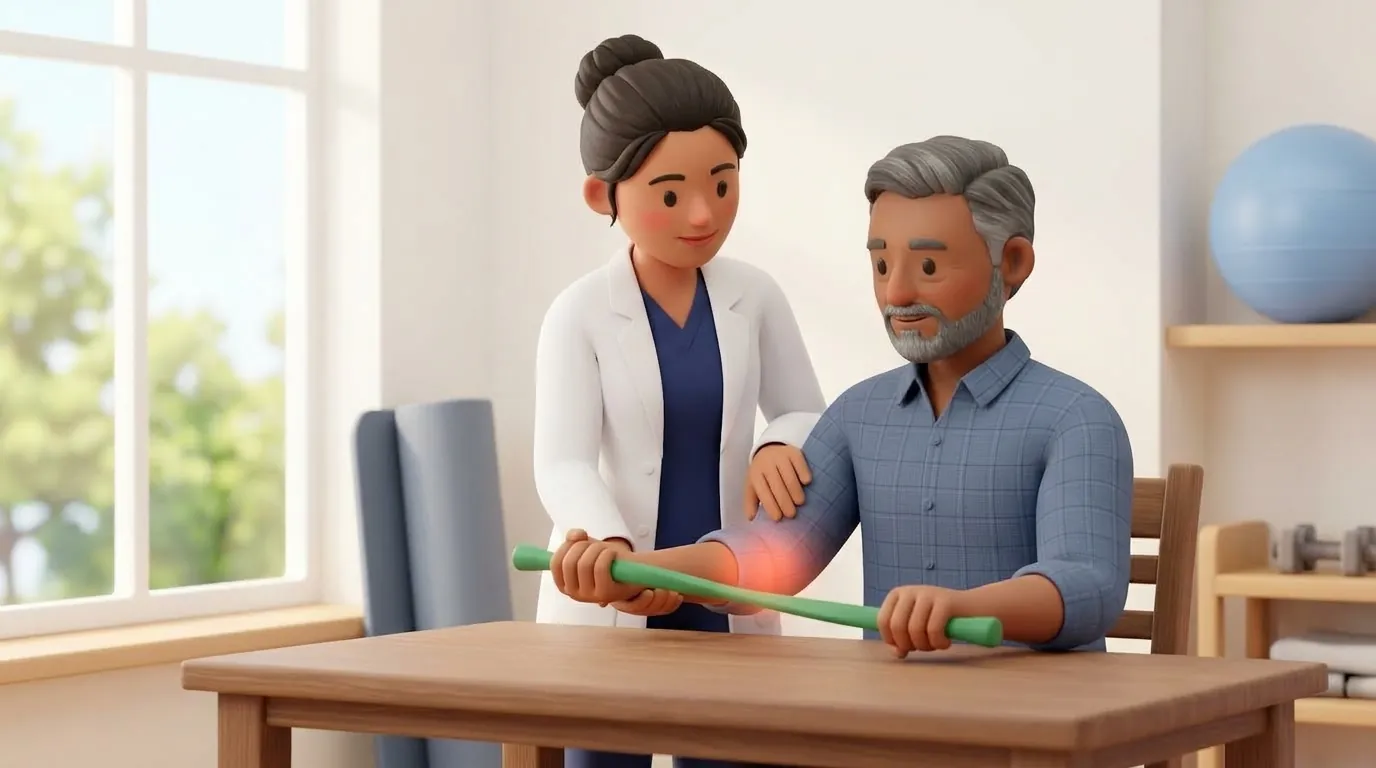
In this guide (5 sections)
Recurrent or persistent carpal tunnel syndrome after surgical decompression poses substantial diagnostic and therapeutic challenges. Rather than true mechanical re-compression by an intact transverse carpal ligament, symptom recurrence is frequently driven by dense perineural cicatrix formation, circumferential adhesive tethering, or traction neuritis. Clinical neurodynamics utilizes calibrated sliding techniques to restore longitudinal neural excursion through the fibro-osseous bed without inducing ischemic stretch injury.
Domestic and Cultural Indian Realities
In Indian households, patients experiencing recurrent median nerve symptoms often struggle with everyday domestic tasks requiring combined wrist flexion and firm fingertip pinch. Activities such as rolling chapatis with a belan, grating coconuts, peeling tough root vegetables, or gripping two-wheeler clutch levers aggravate nerve sensitivity. Hand therapy provides pragmatic ergonomic adaptations, such as utilizing foam handle enlargers and scheduling activity breaks, to preserve functional hand independence.
Surgical Pathoanatomy and Biomechanical Principles
The median nerve normally glides up to 9.6 millimetres through the carpal canal during full composite wrist and finger motion. Following surgery, dense collagenous scar tissue can anchor the epineurium to the flexor retinaculum scar or deep flexor tendons. Nerve flossing (sliding) contrasts sharply with aggressive tensioning: by flexing one adjacent joint while extending another, the nerve translates longitudinally through the canal under minimal tensile strain, clearing inflammatory exudate and reducing intraneural fluid pressure.
Postoperative Rehabilitation Phases and Splinting Protocols
Management combines night positioning in a neutral thermoplastic wrist orthosis (0 to 5 degrees extension) with daytime neurodynamic flossing. Sliding begins with gentle proximal excursion (wrist extension with finger flexion) alternating with distal translation (wrist flexion with finger extension). High-load neural tensioners are strictly avoided. Concurrently, lumbrical stretching and deep forearm flexor myofascial release alleviate antagonistic muscle hypertonicity.
Totten and Hunter Median Nerve Sliding Maneuver
Objective: Promote longitudinal nerve excursion through the carpal bed without provoking intraneural ischemia
- 1Sit upright with your shoulder relaxed, elbow bent at 90 degrees, and wrist held in neutral alignment.
- 2Gently bend your wrist backward into comfortable extension while loosely curling your fingers into a light half fist.
- 3Next, smoothly reverse the movement by bending your wrist forward into slight flexion while straightening your fingers open.
- 4Alternate smoothly between these two coordinated positions in a continuous, fluid rhythm.
- 5Ensure the movement remains comfortable and pain-free, without triggering any electric tingling or numbness.
| Neurodynamic Parameter | Neural Sliding (Flossing) | Neural Tensioning (Stretching) |
|---|---|---|
| Biomechanical Mechanism | Reciprocal joint movement; one joint flexes as adjacent extends | Simultaneous extension of multiple joints across nerve path |
| Intraneural Fluid Pressure | Remains low or neutral, promoting venous return and capillary flow | Increases substantially, risking temporary endoneurial ischemia |
| Longitudinal Excursion | High linear translation (up to 8 to 10 millimetres) | Minimal translation; maximum longitudinal tensile strain |
| Clinical Indication | Ideal for subacute, sensitive, or recurrent scarred nerves | Reserved for late-stage chronic stiffness with low irritability |
Red Flags and Specialist Escalation
Rapidly progressive thenar atrophy, persistent static sensory loss on two-point discrimination testing, or a positive Tinel sign that produces sharp electric shocks at the carpal tunnel margin suggests severe recurrent nerve entrapment or neuroma in continuity. Urgent neurosurgical or orthopaedic revision consultation with repeat electromyography is indicated.
Frequently Asked Questions
How is nerve flossing different from regular hand stretching exercises?
Regular stretching pulls the nerve taut from both ends, which can irritate sensitive healing tissue. Nerve flossing glides the nerve gently back and forth through the wrist tunnel without stretching it, helping loosen adhesions without triggering pain.
Do I need a doctor referral to consult a neurodynamic physiotherapist on BookPhysio.in?
BookPhysio.in does not ask for a doctor referral. Direct access is established by the NCAHP Act 2021. You consult licensed physiotherapists and pay directly per session without hidden fees or platform commissions.
Related recovery guides & articles
BookPhysio.in Editorial Team
The BookPhysio.in editorial team writes and maintains this content, checking it against reliable clinical sources. Content follows our medical review policy: general information only, and no page claims a clinical review until a named registered physiotherapist has signed it off.
Read our medical review policy