
Multidisciplinary Care in Rheumatology: Rheumatologist and Physiotherapist Collaboration
In short
Optimal outcomes in inflammatory arthropathies require collaborative multidisciplinary alignment between rheumatologists and physiotherapists. Master treat-to-target protocols, medication timing, and coordinated clinical care pathways.
In this guide (6 sections)
Managing chronic autoimmune rheumatic diseases, such as rheumatoid arthritis, ankylosing spondylitis, and psoriatic arthritis, demands a coordinated multidisciplinary approach. While rheumatologists provide specialised medical care through disease-modifying anti-rheumatic drugs (DMARDs) and advanced targeted biologics to suppress systemic inflammation, physiotherapists deliver biomechanical assessments, joint protection education, postural correction, and functional rehabilitation. Operating in isolation compromises patient outcomes: prescribing exercise without medical disease control risks joint damage, while suppressing inflammation without physical rehabilitation leaves patients with persistent disuse atrophy and joint contractures. Establishing synchronized communication between the medical and rehabilitation team ensures optimal long-term joint preservation.
Domestic and Cultural Indian Realities
In the Indian healthcare landscape, medical and rehabilitation services are frequently fragmented. Patients typically consult their rheumatologist in busy hospital outpatient departments every 3 to 6 months, receiving medication prescriptions with minimal time for detailed biomechanical or domestic ergonomic guidance. Conversely, patients often seek physiotherapy locally without the therapist having access to clinical blood reports, medication schedules, or radiographic cervical stability data. Patients frequently receive conflicting advice regarding whether they can exercise, lift objects, or sit on the floor. Building a structured care model, where home-visiting physiotherapists document objective metrics and coordinate directly with the treating rheumatologist, bridges this communication gap.
Clinical Biomechanics and Inflammatory Pathology
The international Treat-to-Target (T2T) strategy in rheumatology aims to achieve clinical remission or low disease activity through frequent monitoring and drug optimisation. Physiotherapists play a vital frontline role in T2T by recording objective joint metrics between rheumatology visits, detecting subtle early flares before extensive cartilage destruction occurs. Furthermore, understanding medication pharmacokinetics is vital: patients initiating biologic TNF-inhibitors often experience dramatic pain relief within weeks, creating a therapeutic window where muscle strengthening can be safely advanced. Conversely, during periods of systemic corticosteroid tapering, therapists must monitor for rebound synovitis and adjust mechanical loads accordingly.
Clinical Assessment and Functional Staging
Standardized communication utilizes shared validated clinical outcome measures: the Disease Activity Score 28 (DAS28), the Health Assessment Questionnaire Disability Index (HAQ-DI), and the Bath Ankylosing Spondylitis Functional Index (BASFI). Physiotherapists provide objective documentation of joint range of motion, swollen joint counts, and cervical spine safety measurements (occiput-to-wall distance) to the rheumatologist, facilitating informed medical decisions during follow-up consultations.
Targeted Mobility and Joint Preservation Exercises
Rehabilitation protocols must be tailored to current pharmacological staging, focusing on joint-safe active-assisted movements during active treatment transitions.
Multi-Joint Postural Alignment and Scapulo-Pelvic Reset
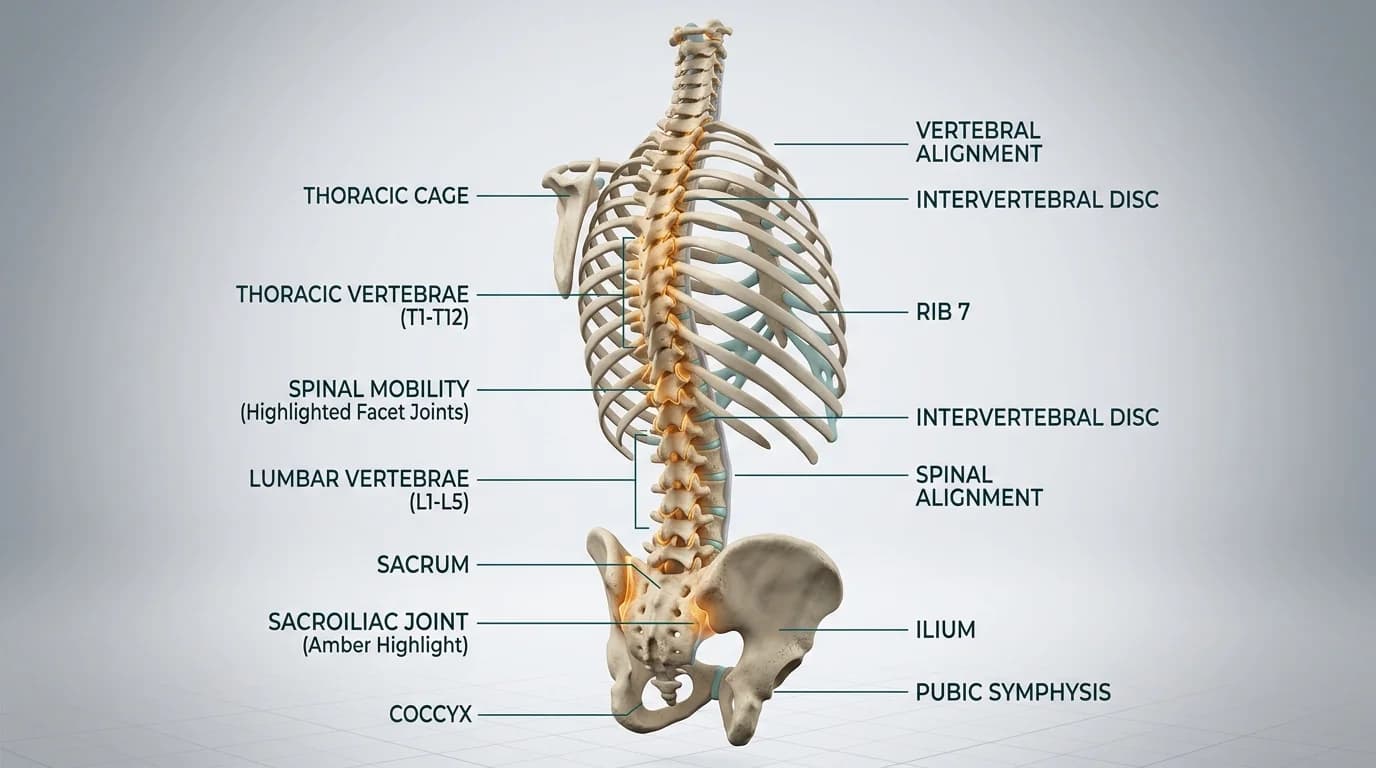
Objective: Integrate whole-body posture and neuromuscular alignment in alignment with medical disease control
- 1Stand tall facing a mirror with feet shoulder-width apart, or sit tall on a firm supportive chair.
- 2Gently draw your shoulder blades backward and downward toward your spine, opening your chest.
- 3Slightly tuck your chin to lengthen the back of your neck, aligning your ears directly over your shoulders.
- 4Take 5 slow, deep diaphragmatic breaths, maintaining this tall, balanced alignment without muscle straining.
| Clinical Responsibility | Treating Rheumatologist Role | Clinical Physiotherapist Role |
|---|---|---|
| Disease Control | Accurate diagnosis, laboratory monitoring, DMARD and biologic prescription | Monitoring physical tolerance, early flare identification, and reporting to physician |
| Joint Protection | Intra-articular steroid injections for resistant monoarthritis; surgical referral | Prescribing custom resting splints, MCR footwear, and domestic kitchen adaptations |
| Functional Rehabilitation | Setting systemic Treat-to-Target goals; assessing systemic organ involvement | Designing individualized progressive exercise, balance training, and postural routines |
| Cervical Spine Safety | Ordering dynamic flexion-extension radiographs to screen for atlantoaxial instability | Enforcing strict cervical precautions; avoiding high-velocity manual manipulation |
Red Flags and Immediate Rheumatology Escalation
Immediate escalation from the physiotherapist to the rheumatologist is required if a patient presents with sudden severe monoarticular swelling with fever (suspected septic arthritis), signs of cervical myelopathy (hand clumsiness, gait unsteadiness, hyperreflexia), new-onset shortness of breath with dry cough (interstitial lung disease or drug toxicity), or acute red eye with pain (anterior uveitis).
Frequently Asked Questions
Can physiotherapy replace the need for rheumatology consultations and biologic medications?
No. Physiotherapy cannot replace medical diagnosis, monitoring, or pharmacological disease control provided by a rheumatologist. Systemic autoimmune diseases require medical therapy to stop cartilage and bone erosion. Physiotherapy works hand-in-hand with medical treatment, helping manage morning stiffness, preventing joint contractures, and restoring physical stamina.
How do I book a registered home physiotherapist who can coordinate with my rheumatologist via BookPhysio.in?
Under the National Commission for Allied and Healthcare Professions (NCAHP) Act 2021, Indian patients enjoy direct access to registered physiotherapists without an obligatory doctor referral. On BookPhysio.in, you schedule an appointment with a verified clinician in your city who can share objective progress notes with your rheumatologist. Payment is made directly to the therapist at your home appointment via cash or UPI; BookPhysio.in does not process booking fees online.
Related recovery guides & articles
BookPhysio.in Editorial Team
The BookPhysio.in editorial team writes and maintains this content, checking it against reliable clinical sources. Content follows our medical review policy: general information only, and no page claims a clinical review until a named registered physiotherapist has signed it off.
Read our medical review policy