
Third and Fourth-Degree Perineal Tears (OASIS): Anal Sphincter Retraining and Stool Mechanics in India
In short
Severe obstetric tears involving the anal sphincter require dedicated multidisciplinary rehabilitation. Learn how anal sphincter retraining and stool mechanics restore bowel continence.
In this guide (6 sections)
Obstetric Anal Sphincter Injuries (OASIS), encompassing third-degree tears (partial or complete disruption of the external and internal anal sphincters) and fourth-degree tears (extending through the anal sphincter complex into the anorectal mucosa), represent severe complications of vaginal birth. In India, women who sustain severe perineal trauma frequently endure intense psychological trauma, fear of defecation, and anxiety over passing flatus (gas) or liquid stool uncontrollably. Because fecal and gas incontinence carry profound cultural stigma, many women suffer in silence within their marital homes. With immediate surgical repair followed by specialized pelvic health physiotherapy, the majority of women regain full anorectal continence and physical comfort.
1. Functional Biomechanics: The Anal Sphincter Complex and Defecation Mechanics
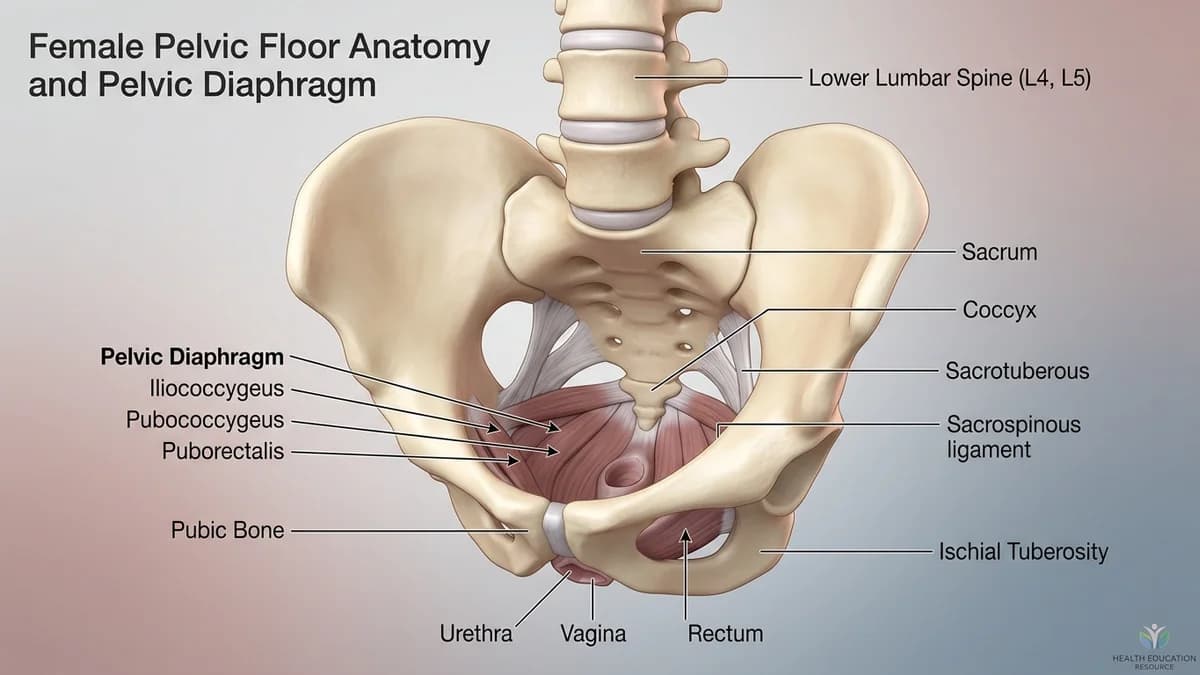
Anorectal continence depends on the coordinated integrity of the internal anal sphincter (IAS, involuntary smooth muscle providing 70-85 percent of resting anal tone) and the external anal sphincter (EAS, voluntary striated muscle providing squeeze pressure during sudden urgency). In a 3a tear, less than 50% of the EAS thickness is torn; in 3b, more than 50% is disrupted; in 3c, both EAS and IAS are torn; and in 4th-degree tears, the rectal epithelium is breached. Surgical end-to-end or overlap repair restores muscular continuity, but healing requires 8 to 12 weeks of scar maturation. Any hard stool or vigorous straining can disrupt fragile sutures, while loose, watery stool can challenge compromised sphincter closure.
2. Domestic Indian Context: Daily Chores, Ergonomics, and Privacy
Managing an OASIS injury in an Indian joint family requires careful nutritional and ergonomic coordination. Straining on traditional Indian squat toilets directly stresses healing sphincter sutures, making a western commode or raised toilet seat essential. Culturally, new mothers are often fed heavy, ghee-laden sweets (panjiri, laddoos) and low-roughage diets, which can cause severe constipation and dry, hard stools. Physiotherapists collaborate with families to ensure adequate hydration (2.5 litres daily), prescribe gentle soluble fibre (such as isabgol with plenty of water), and train mothers to avoid all pushing during bowel movements.
3. Clinical Special Tests and Physical Examination
Clinical evaluation begins at 6 to 12 weeks postpartum, assessing wound healing, perineal body thickness, and screening for rectovaginal fistula. The St. Mark's Fecal Incontinence Score evaluates gas, liquid, and solid stool control. Gentle digital examination assesses voluntary anal squeeze pressure and reflex cough closure without aggressive stretch.
| Tear Classification | Anatomical Structures Involved | Continence Risk Profile | Physiotherapy Rehabilitation Focus |
|---|---|---|---|
| Grade 3a Tear | < 50% thickness of External Anal Sphincter | Mild gas incontinence risk | Fast-twitch sphincter strength & endurance |
| Grade 3b Tear | > 50% thickness of External Anal Sphincter | Gas and occasional liquid stool leakage | Biofeedback coordination & stool mechanics |
| Grade 3c Tear | Both External and Internal Sphincters torn | Higher risk of resting seepage and urgency | Internal sphincter rest tone & sensory timing |
| Grade 4 Tear | EAS, IAS, and Anorectal Mucosa disrupted | Significant fecal urgency & leakage risk | Comprehensive multidisciplinary physio & diet |
4. Stage-by-Stage Functional Physiotherapy Protocol
Rehabilitation begins with stool softening and tissue protection, progressing to isolated anal sphincter retraining and functional pressure management.
Phase 1: Zero-Strain Stool Mechanics with Toilet Footstool
Objective: Eliminate mechanical tension across healing anal sphincter sutures during daily bowel movements.
- 1Sit on a western toilet with your feet elevated on a 7 to 9-inch footstool.
- 2Lean forward from your hips with a straight back and rest your forearms on your thighs.
- 3Keep your mouth relaxed and make a continuous 'ssss' sound as you feel stool move into the rectum.
- 4Never bear down, hold your breath, or push with your abdominal muscles.
- 5Allow the stool to pass under gentle diaphragmatic breathing; use a warm water rinse rather than wiping dry.
Phase 2: Isolated Anal Sphincter 'Wink' and Fast-Twitch Retraining
Objective: Selectively activate the external anal sphincter to restore rapid gas and stool continence reflexes.
- 1Lie in crook lying or side-lying with a pillow between your knees.
- 2Focus your mental attention strictly on your back passage (anus), keeping your buttocks and thighs relaxed.
- 3Gently squeeze the anal opening as if trying to stop passing gas, feeling the anus pull inward and tighten.
- 4Hold for 3 seconds while breathing normally, then release completely for 5 seconds.
- 5Ensure you feel a distinct sensation of release and opening between each repetition.
Phase 3: Anal Sphincter Endurance Holds with Positional Progression
Objective: Build sustained sphincter closure to withstand gravity when walking and carrying your baby.
- 1Sit upright on a firm chair with both feet flat on the floor.
- 2Contract your anal sphincter at approximately 50 to 60 percent of maximum effort.
- 3Maintain the steady squeeze for 8 seconds while counting out loud from 1 to 8 to maintain breathing.
- 4Release the squeeze fully for 10 seconds before the next hold.
- 5Progress to performing these holds in standing once comfortable in sitting.
Seek immediate gynaecological or colorectal surgical care if you experience: passing gas or stool through the vagina (indicating an obstetric rectovaginal fistula), wound dehiscence or pus discharging from the perineum, severe unremitting anal pain with fever, or complete loss of all bowel control.
5. Clinic Consultation, Home Visits, and Transparent Fee Benchmarks
Under the National Commission for Allied and Healthcare Professions (NCAHP) Act 2021, patients in India can consult a registered pelvic health physiotherapist directly without an upfront referral, though BookPhysio.in does not ask for one. Pelvic health physiotherapists use surface EMG biofeedback and gentle sensory retraining in private clinical rooms. Clinic consultations in Indian cities range between ₹500 and ₹1,500, with home visits ranging from ₹700 to ₹2,000 where available. Patients pay their physiotherapist directly at each consultation, with zero platform commission.
6. Frequently Asked Questions
Can I have a normal vaginal delivery in a future pregnancy after a 3rd or 4th-degree tear?
This depends on your recovery and current sphincter function. If you have completely healed, are fully continent, and an endoanal ultrasound confirms intact sphincters, a vaginal delivery may be considered. However, if you experience residual incontinence or sphincter defects, clinical guidelines recommend an elective caesarean delivery to prevent further trauma.
How long does it take for the anal sphincter to heal after an OASIS repair in India?
Surgical stitches dissolve within 3 to 6 weeks, but full biological collagen remodelling and tensile strength restoration take 3 to 6 months. Consistent pelvic floor physiotherapy, stool softening, and zero straining during the first 12 weeks are essential for complete long-term recovery.
Related recovery guides & articles
BookPhysio.in Editorial Team
The BookPhysio.in editorial team writes and maintains this content, checking it against reliable clinical sources. Content follows our medical review policy: general information only, and no page claims a clinical review until a named registered physiotherapist has signed it off.
Read our medical review policy