
Osgood-Schlatter & Sinding-Larsen-Johansson: Traction Apophysitis in Young Athletes
In short
Adolescent growth spurts create traction apophysitis around the patellar tendon. Learn load management, quadriceps conditioning, and return-to-sport protocols.
In this guide (4 sections)
Understanding Adolescent Knee Traction Apophysitis
During rapid adolescent growth spurts (ages 10 to 15 in boys, 8 to 13 in girls), the longitudinal growth of long bones outpaces the lengthening of attached muscles and tendons. This creates marked quadriceps muscle tightness.
Repetitive running, jumping, and kicking transmit high tensile traction forces through the patellar tendon onto immature, cartilaginous apophyses. Two distinct conditions arise depending on the exact anatomical attachment involved.
Osgood-Schlatter vs Sinding-Larsen-Johansson Comparison
Accurately identifying the anatomical site of maximal tenderness distinguishes the two apophyseal disorders.
| Clinical Feature | Osgood-Schlatter Disease (OSD) | Sinding-Larsen-Johansson Disease (SLJ) | Clinical Implication | |
|---|---|---|---|---|
| Anatomical Site | Tibial tubercle (distal patellar tendon insertion). | Inferior pole of patella (proximal patellar tendon origin). | Differentiates distal from proximal traction pathology. | |
| Typical Patient Age | 12 to 15 years (slightly older adolescents). | 10 to 13 years (slightly younger adolescents). | SLJ frequently precedes OSD chronologically. | |
| Physical Examination | Tender, enlarged, bony prominence over tibial tubercle. | Pinpoint tenderness at the inferior patellar border. | Palpation reproduces athlete specific activity pain. | |
| Radiological Findings | Fragmentation and irregular ossification of tibial apophysis. | Spur or calcification at inferior pole of patella. | Radiographs rule out avulsion fractures or bone tumors. |
Evidence-Based Load Management and Rehabilitation
Complete bed rest or rigid plaster casting is outdated and harmful, leading to rapid muscle atrophy. Modern management utilizes relative load modification based on pain monitoring.
- The Pain-Monitoring Traffic Light Model: Pain during sports must not exceed 3 to 4 out of 10 on the visual analog scale, and must settle back to baseline within 24 hours without morning stiffness. If pain exceeds this, reduce jumping volume by 30 to 50 percent.
- Isometric Quadriceps Loading: Perform isometric Spanish squats or wall sits at 45 to 60 degrees of knee flexion (5 repetitions of 45-second holds) to induce immediate tendon pain relief (analgesic effect).
- Soft Tissue Flexibility: Daily passive and active stretching of the rectus femoris, hamstrings, and gastrocnemius muscles to reduce resting mechanical tension on the extensor mechanism.
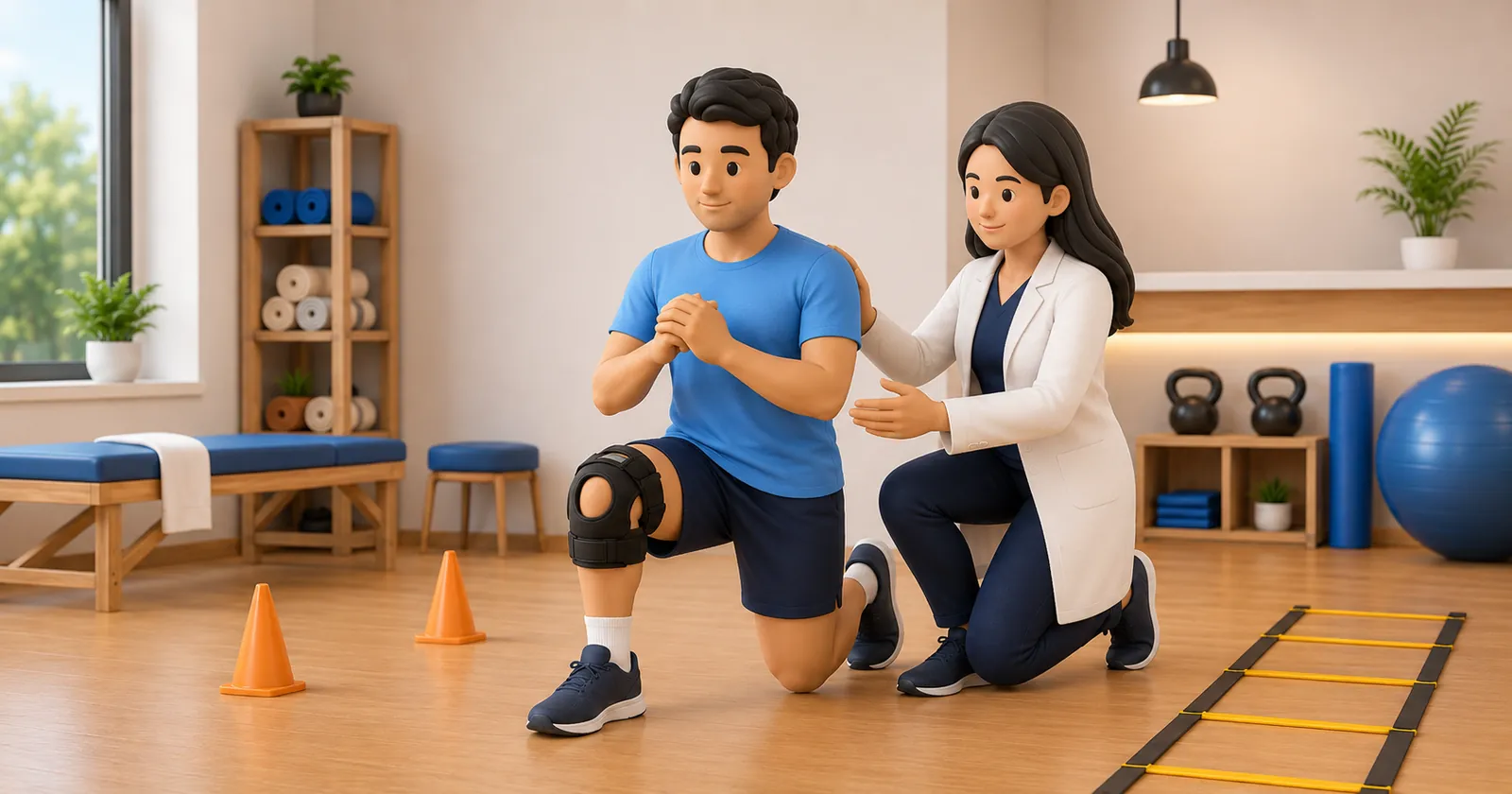
- Infrapatellar Strap (Chopat Strap): Wearing a compressive strap over the mid-patellar tendon dissipates tensile forces across a wider area, reducing focal traction at the apophysis.
Frequently Asked Questions
Will the prominent bump on the knee go away after healing?
The pain and inflammation resolve completely once the growth plate closes (skeletal maturity), but the enlarged bony bump on the tibial tubercle typically persists permanently into adulthood as a benign cosmetic feature.
Is it dangerous to play sports with Osgood-Schlatter disease?
No. Osgood-Schlatter is a self-limiting condition that does not cause permanent joint damage. Athletes can safely train and compete provided their pain remains within the mild range (<=3/10).
Are cortisone injections recommended for apophysitis in teenagers?
Strictly contraindicated. Corticosteroid injections around growing apophyses in adolescents can cause subcutaneous fat necrosis, skin depigmentation, and catastrophic patellar tendon rupture.
Related condition guides


Related recovery guides & articles
BookPhysio.in Editorial Team
The BookPhysio.in editorial team writes and maintains this content, checking it against reliable clinical sources. Content follows our medical review policy: general information only, and no page claims a clinical review until a named registered physiotherapist has signed it off.
Read our medical review policy