
Breaking the Cultural Silence on Pelvic Health in Indian Joint Families: A Landmark Guide
In short
Pelvic floor conditions affect millions across India, yet cultural modesty and joint family dynamics often keep patients suffering in silence. Discover the path to clinical recovery.
In this guide (6 sections)
Across multi-generational joint families in urban and rural India, pelvic health conditions, including urinary and fecal incontinence, pelvic organ prolapse, postpartum trauma, chronic pelvic pain, and sexual dysfunction, affect millions of women and men. Yet, despite their widespread prevalence, pelvic disorders remain shrouded in profound cultural silence, modesty, and shame. Generations of women have been taught that leaking urine after childbirth, experiencing vaginal dragging, or enduring painful intimacy are unavoidable sacrifices of motherhood and ageing. Men silently endure chronic prostatitis symptoms, fearing loss of masculinity. Breaking this silence requires recognizing that pelvic floor muscles are voluntary, striated muscles that deserve the same clinical attention as any other joint in the body.
1. Functional Biomechanics: The Musculoskeletal Reality of the Pelvic Floor
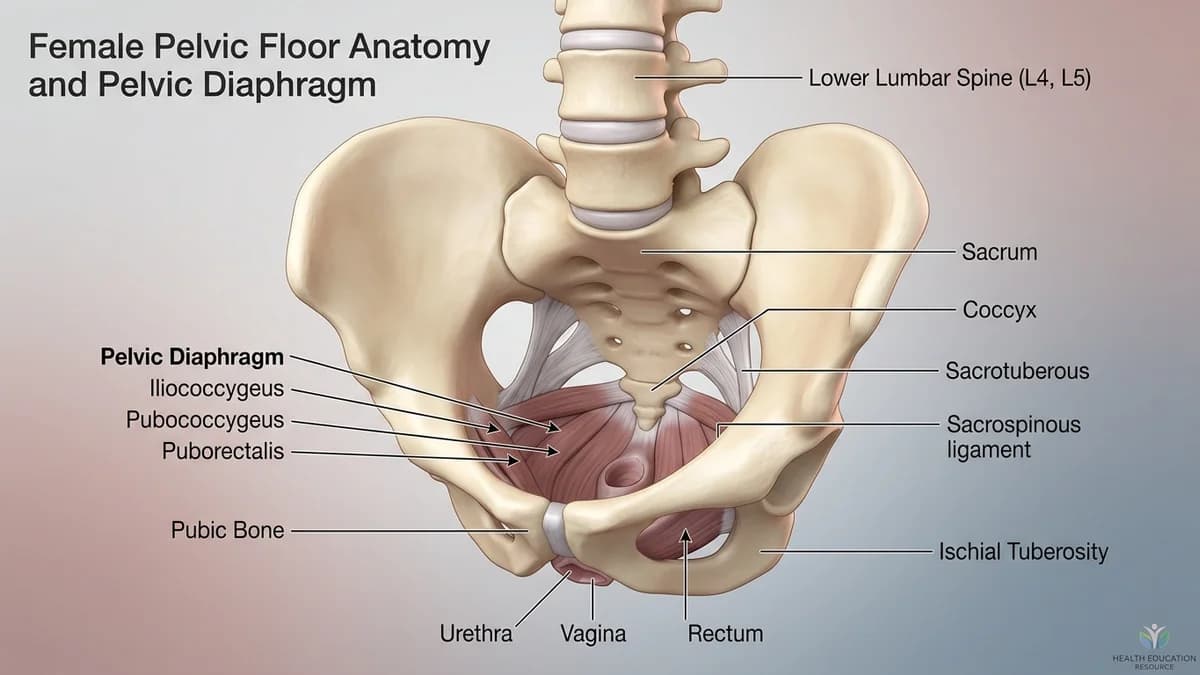
Stripping away cultural taboos begins with understanding anatomical truth: the pelvic floor is not a mysterious or shameful zone, but a striated muscular sling consisting of the levator ani, coccygeus, and perineal muscles, innervated by the somatic pudendal nerve (S2-S4). Just like the rotator cuff in the shoulder or the quadriceps in the knee, pelvic floor muscles can become torn, deconditioned, overstretched, or locked in chronic painful spasm. When a knee ligament is sprained, society encourages immediate physical rehabilitation. When the pelvic floor is strained after childbirth, surgery, or prolonged heavy lifting, the biological requirement for specialized physiotherapy is identical.
2. Domestic Indian Context: Daily Chores, Ergonomics, and Privacy
Multi-generational living in India presents unique social and physical barriers to pelvic health. Thin bedroom partitions, shared bathrooms, and constant family obligations make privacy scarce. Women often hide wet clothing, wash adult pads discreetly, or avoid laughter and social gatherings with relatives out of fear of leakage. Furthermore, family elders may dismiss a young mother's complaints, advising complete bed rest or insisting on traditional tight saree binding that worsens prolapse. Encouraging open, respectful communication transforms the joint family into a supportive care circle, where simple adaptations, like toilet footstools and private exercise time, are embraced.
3. Clinical Special Tests and Physical Examination
Comprehensive pelvic evaluation incorporates non-invasive and culturally sensitive modalities: transabdominal real-time ultrasound (RTUS) visualizing bladder elevation while fully clothed, surface EMG biofeedback, and gentle external pelvic ring screening. Internal examinations are performed only with explicit consent in dedicated private rooms, prioritizing patient comfort.
| Cultural Topic | Common Indian Cultural Myth | Biomechanical Medical Reality | Actionable Solution |
|---|---|---|---|
| Postpartum Leaks | Urine leakage is inevitable after normal birth | Mechanical sphincter failure; 80% treatable | Targeted pelvic floor muscle retraining |
| Pelvic Organ Prolapse | Surgery is the only option; endure it | Stage 1-2 prolapse managed with physio/pessaries | Conservative pelvic floor therapy & ergonomics |
| Male Pelvic Pain | Sign of recurring infection or moral failing | Muscular spasm & pudendal nerve irritation | Pelvic down-training & somatic relaxation |
| Painful Intimacy | Must endure pain in silence for marriage | Treatable vaginismus, scar tension, or dryness | Trauma-informed dilator therapy & physio |
4. Stage-by-Stage Functional Physiotherapy Protocol
Breaking the silence involves validating symptoms, educating family members, and implementing private home rehabilitation routines.
Phase 1: Validating Pelvic Anatomy and Eliminating Guilt
Objective: De-stigmatize pelvic symptoms and build confidence in seeking clinical care.
- 1Acknowledge that involuntary urine leaks, pelvic fullness, and pelvic pain are physical musculoskeletal conditions, not personal hygiene failures.
- 2Understand that pelvic muscles respond to exercise and rehabilitation just like back or shoulder muscles.
- 3Share objective medical facts with your spouse or elder family members to demystify your symptoms.
- 4Seek care from a registered, specialized pelvic health physiotherapist who understands your cultural context.
- 5Prioritize 15 minutes of quiet daily exercise as essential personal healthcare.
Phase 2: Universal Diaphragmatic Breath and Pelvic Floor Harmony
Objective: Restore natural reciprocal breathing and pelvic floor coordination in daily life.
- 1Lie comfortably on your back or sit tall on a firm chair with your hands on your lower ribs.
- 2Inhale deeply through your nose, feeling your ribs expand outward and your pelvic floor soften downward.
- 3Exhale slowly through open lips, feeling your pelvic floor naturally recoil upward without clenching.
- 4This simple breathing harmony calms the nervous system and prevents chronic pelvic tension.
- 5Practice during stressful family moments to maintain pelvic relaxation.
Phase 3: The 'Blow As You Go' Principle for Indian Domestic Life
Objective: Protect your pelvic organs and continence during heavy household chores.
- 1Whenever you lift a child, a grocery bag, or a cookware pot, never hold your breath.
- 2Inhale to prepare, then exhale smoothly through open lips as you perform the exertion.
- 3Gently pre-contract your pelvic floor on the exhalation.
- 4This distributes pressure evenly across your abdominal wall and shields your pelvic floor.
- 5Teach this protective habit to other women in your household.
Never ignore red flag symptoms due to modesty. Seek immediate medical evaluation if you experience: visible blood in your urine, bowel incontinence, sudden total loss of urinary control, severe unremitting night pain, a visible external pelvic bulge that cannot be returned, or pelvic pain accompanied by fever and unexplained weight loss.
5. Clinic Consultation, Home Visits, and Transparent Fee Benchmarks
In India, under the National Commission for Allied and Healthcare Professions (NCAHP) Act 2021, patients have the legal right to consult a registered physiotherapist directly without an upfront doctor prescription or hospital referral, though BookPhysio.in does not ask for one. Pelvic health physiotherapy is conducted in private, sterile clinical rooms that prioritize dignity, modesty, and confidentiality. In urban centres across India, outpatient clinic consultations typically range from ₹500 to ₹1,500, with home visits ranging from ₹700 to ₹2,000 where available. Patients pay their physiotherapist directly at each consultation, with zero online middleman commissions.
6. Frequently Asked Questions
How do I explain my pelvic floor problem to my mother-in-law or husband in India?
Explain it through straightforward musculoskeletal terms: just like someone can sprain their ankle or strain their back, the pelvic floor muscles supporting the bladder and uterus can become stretched, weak, or strained from birth or heavy lifting. Framing it as a muscle rehabilitation issue helps family members understand why physiotherapy is necessary.
Is pelvic health physiotherapy covered by health insurance in India?
Many comprehensive private health insurance policies and corporate outpatient department (OPD) wellness covers in India now reimburse physiotherapy consultations conducted by registered practitioners. Inquire with your insurance provider regarding outpatient physiotherapy coverage, and obtain a detailed itemized receipt directly from your treating physiotherapist.
Related recovery guides & articles
BookPhysio.in Editorial Team
The BookPhysio.in editorial team writes and maintains this content, checking it against reliable clinical sources. Content follows our medical review policy: general information only, and no page claims a clinical review until a named registered physiotherapist has signed it off.
Read our medical review policy