
Pelvic Organ Prolapse Stage I-II: Pessary Support, Pelvic Floor Training, and Conservative Care in India
In short
Stage 1 and 2 pelvic organ prolapse can be managed conservatively with pelvic floor physiotherapy and pessary support. Learn how to relieve vaginal heaviness, avoid progression, and regain daily confidence.
In this guide (6 sections)
Pelvic organ prolapse (POP), particularly cystocele (bladder descent) and rectocele (rectal wall herniation), affects millions of women across India, often following multiple childbirths, chronic constipation, or heavy manual labour. Women commonly describe a sensation of vaginal fullness, heaviness that worsens by the evening, or feeling a soft bulge when bathing. In traditional settings, women frequently endure these symptoms in silence due to modesty or fear of surgery. However, for Stage 1 and Stage 2 prolapse, conservative management combining targeted pelvic floor muscle training and supportive vaginal pessaries offers an effective, non-surgical alternative.
1. Functional Biomechanics: Levator Ani Support and Intra-Abdominal Forces
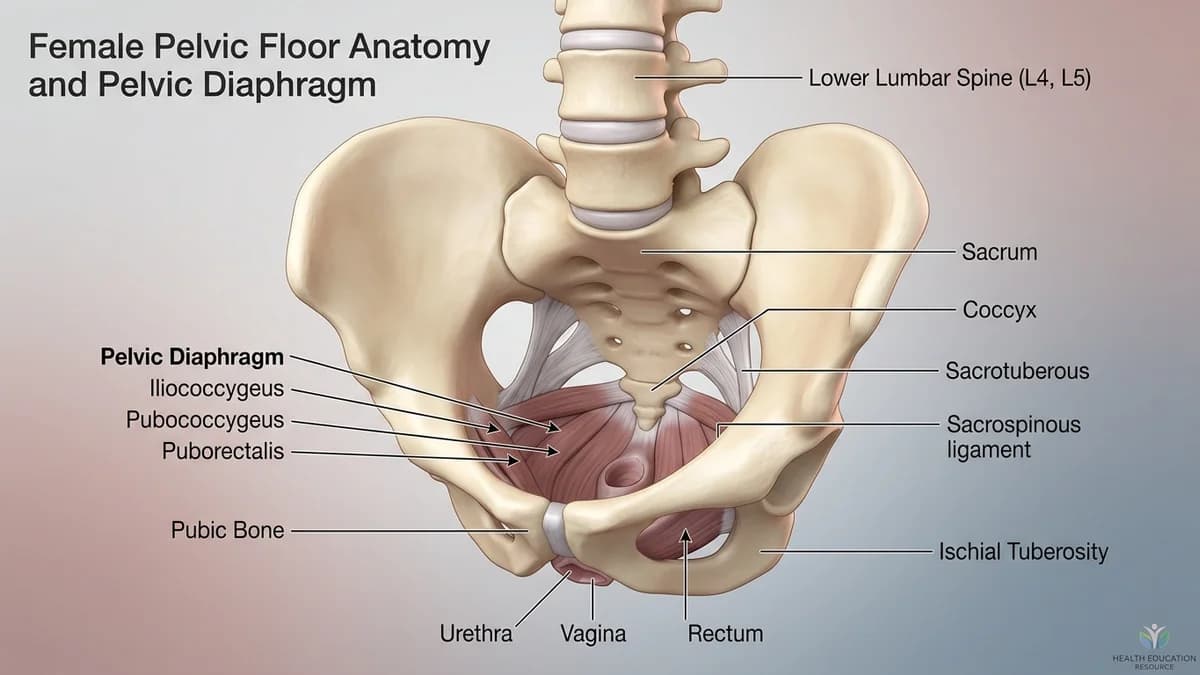
The pelvic organs are maintained within the bony pelvis by a dual support system: the endopelvic fascial ligaments (cardinal and uterosacral ligaments) and the levator ani muscular floor (pubococcygeus, puborectalis, and iliococcygeus). When levator ani resting tone is compromised or the levator hiatus is abnormally wide, downward intra-abdominal forces place continuous traction on the fibrous ligaments. Over time, these ligaments elongate, allowing the anterior vaginal wall (supporting the bladder) or posterior vaginal wall (supporting the rectum) to descend. Strengthening the levator ani elevates the pelvic floor, narrows the genital hiatus, and shields the connective tissue from excessive strain.
2. Domestic Indian Context: Daily Chores, Ergonomics, and Privacy
Indian household dynamics present specific physical challenges for women with mild to moderate prolapse. Straining on traditional squat toilets or dealing with chronic constipation from low-fibre diets increases downward pelvic pressure. Lifting 20-litre water jars, carrying heavy grocery sacks, or standing for prolonged periods during religious festivities like Diwali or Navratri can exacerbate vaginal dragging sensations. Practical adaptations include using a toilet footstool on western commodes, dividing domestic lifting into smaller portions, and resting with elevated hips for 15 minutes in the late afternoon.
3. Clinical Special Tests and Physical Examination
Clinical staging uses the Pelvic Organ Prolapse Quantification (POP-Q) system or the Baden-Walker halfway system. In Stage 1, the leading edge of the prolapse remains more than 1 centimetre above the hymenal ring; in Stage 2, it extends between 1 centimetre above and 1 centimetre below the hymen. Physical examination evaluates resting muscle tone, voluntary lift strength on the Modified Oxford Scale, and whether bearing down produces descent.
| Clinical Feature | Stage 1 (Mild) | Stage 2 (Moderate) | Stage 3-4 (Advanced) |
|---|---|---|---|
| Anatomical Position | More than 1 cm above hymenal ring | Within 1 cm above or below hymen | Protrudes greater than 1 cm past hymen |
| Typical Symptoms | Often asymptomatic or mild ache | Vaginal fullness, dragging sensation | Visible external bulge, ulceration risk |
| Conservative Approach | Pelvic floor muscle training alone | Pelvic floor rehab plus pessary trial | Pessary management or surgical consult |
| Long-Term Goal | Prevent further structural descent | Symptom resolution and functional support | Restoring organ position and comfort |
4. Stage-by-Stage Functional Physiotherapy Protocol
A structured pelvic floor rehabilitation programme trains both rapid reflex contractions and sustained endurance to withstand increases in intra-abdominal pressure.
Phase 1: Supine Pelvic Floor Elevation with Breath Synchronisation
Objective: Build proprioceptive awareness and isolate the levator ani without substituting gluteal or adductor muscles.
- 1Lie on your back with knees bent and feet resting flat on a comfortable surface.
- 2Inhale gently through your nose, allowing your belly and pelvic floor to relax completely.
- 3As you exhale slowly through pursed lips, imagine gently closing the openings around your urethra and anus and drawing them upward toward your navel.
- 4Maintain the upward squeeze for 5 seconds without holding your breath or clenching your buttocks.
- 5Release the contraction fully for 5 seconds before the next repetition to ensure muscle relaxation.
Phase 2: Pelvic Floor Endurance Holds in Seated Posture
Objective: Train the levator ani to sustain upward tone against gravity during upright sitting.
- 1Sit upright on a firm chair with both feet flat on the floor and your hands resting on your thighs.
- 2Lengthen your spine and maintain a relaxed, natural breathing pattern.
- 3On an exhalation, perform an inward and upward squeeze of the pelvic floor, lifting away from the chair seat.
- 4Hold the contraction for 8 seconds while continuing to breathe in and out smoothly.
- 5Gently let go of the contraction and rest for 10 seconds before initiating the next hold.
Phase 3: The Knack Maneuver During Functional Squatting
Objective: Coordinate pre-contraction of the pelvic floor prior to downward intra-abdominal pressure during daily chores.
- 1Stand with your feet shoulder-width apart in front of a supportive chair or kitchen counter.
- 2Inhale to prepare. Before you begin bending your knees, consciously engage and lift your pelvic floor.
- 3Maintain the pelvic lift as you lower into a partial squat of about 45 degrees.
- 4Press through your heels to stand back up, releasing the pelvic floor contraction at the top.
- 5Perform this pre-contraction consistently before any lifting, coughing, or bending in daily life.
Seek immediate gynaecological care if you develop: complete inability to pass urine (acute urinary retention), foul-smelling vaginal bleeding or discharge from tissue ulceration, sudden severe pelvic pain, or a high fever accompanied by pelvic tenderness.
5. Clinic Consultation, Home Visits, and Transparent Fee Benchmarks
In India, under the National Commission for Allied and Healthcare Professions (NCAHP) Act 2021, patients can consult a registered pelvic health physiotherapist directly without an upfront referral, though BookPhysio.in does not ask for one. Women with mobility limitations or privacy concerns at home often benefit from clinic sessions where biofeedback apparatus is available. Outpatient clinic appointments in metropolitan areas typically range between ₹500 and ₹1,500, while home visits range from ₹700 to ₹2,000 per consultation. Fees are settled directly with the treating practitioner at each appointment.
6. Frequently Asked Questions
Can a vaginal pessary fall out during bowel movements?
A properly fitted vaginal pessary should remain securely in place during walking, coughing, and light daily activities. However, heavy straining during bowel movements on a western or squat toilet can occasionally dislodge it. Using a footstool to relax the puborectalis muscle and managing stool consistency with adequate water and fibre helps keep the pessary in place.
Is surgery always required for Stage 2 pelvic organ prolapse?
No, surgery is not mandatory for Stage 2 prolapse. Clinical guidelines recommend an initial 3 to 6-month trial of conservative therapy, including pelvic floor muscle training and supportive ring or silicone pessaries. Many women experience complete symptom relief and halt further descent through conservative physiotherapy alone.
Related recovery guides & articles
BookPhysio.in Editorial Team
The BookPhysio.in editorial team writes and maintains this content, checking it against reliable clinical sources. Content follows our medical review policy: general information only, and no page claims a clinical review until a named registered physiotherapist has signed it off.
Read our medical review policy