
Post-Hysterectomy Pelvic Vault Prolapse: Prevention, Lifting Limits, and Recovery in India
In short
Undergoing a hysterectomy alters the anatomical roof of the pelvis. Learn why pelvic vault prolapse occurs and how early lifting limits and physiotherapy protect your recovery.
In this guide (6 sections)
Hysterectomy (surgical removal of the uterus), performed vaginally, abdominally, or via laparoscopy, is one of the most frequently performed major surgeries among women in India. Often undertaken to treat fibroids, severe menorrhagia, or adenomyosis, the procedure resolves uterine bleeding but permanently alters pelvic architecture. Removal of the cervix and uterus disconnects the primary apical suspension system: the uterosacral and cardinal ligaments. When these ligaments are severed, the top of the vagina (the vaginal vault) becomes vulnerable to descent under gravity and intra-abdominal pressure, a condition known as pelvic vault prolapse. Implementing strict post-operative lifting limits and specialized pelvic physiotherapy protects the vaginal cuff and preserves lifelong pelvic health.
1. Functional Biomechanics: Loss of Apical Suspension and the Peritoneal Wedge Effect
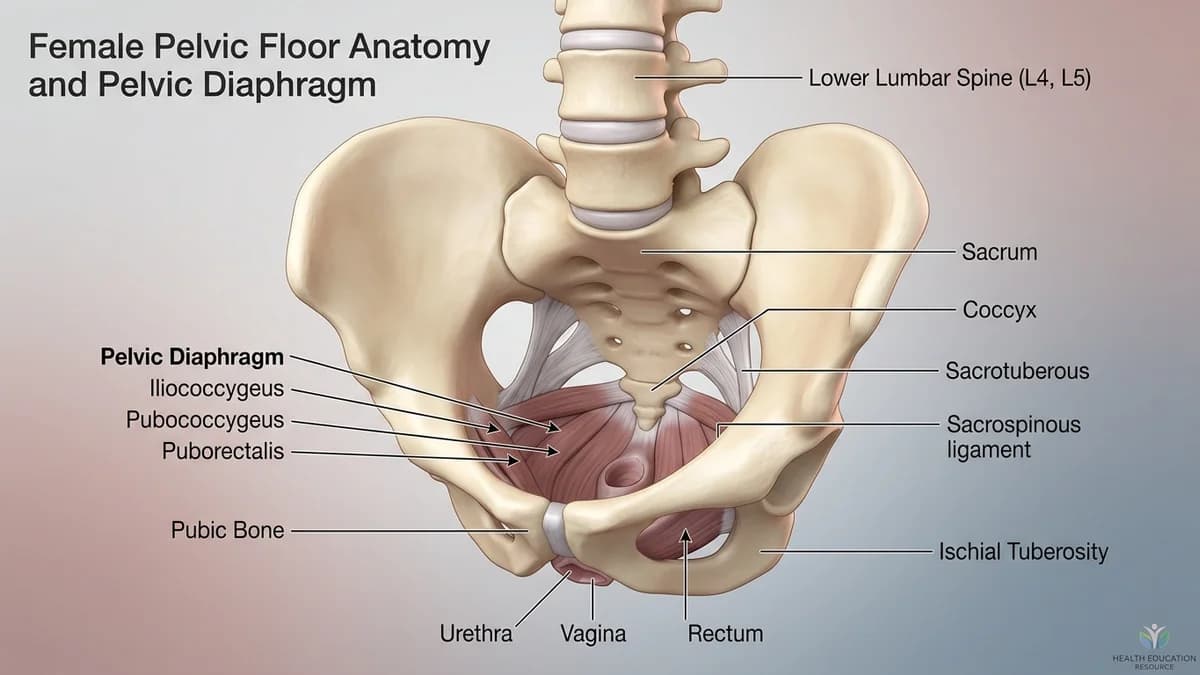
The uterus normally acts as a central keystone within the pelvic ring, distributing downward intra-abdominal forces laterally across the uterosacral-cardinal ligament complex. During a total hysterectomy, the surgeon attaches the vaginal vault to the remnants of the uterosacral ligaments (apical culdoplasty or McCall stitch). However, the vaginal apex is now subjected directly to peritoneal visceral pressure. If the levator ani muscular floor below is deconditioned or lax, the small bowel and peritoneum (enterocele) act as a mechanical wedge, pushing the apex of the vagina downward into the vaginal canal. Preserving apical height requires strong, dynamic levator ani resting tone to close the genital hiatus from below.
2. Domestic Indian Context: Daily Chores, Ergonomics, and Privacy
In Indian family life, women recovering from hysterectomy face intense domestic expectations. Once surgical incisions heal at 4 to 6 weeks, family members often assume the patient is 'fully cured' and can resume lifting heavy brass cookware, carrying laundry up flights of stairs, or managing grandchildren. Furthermore, squatting on traditional Indian toilets during the early post-operative period places destructive tensile stress on the healing vaginal cuff sutures. Physiotherapists provide clear, written lifting restrictions for the patient and family, enforce western commode use, and guide gradual, safe resumption of household duties.
3. Clinical Special Tests and Physical Examination
Assessment begins at the 6 to 8-week post-surgical check. Clinical examination utilizes the POP-Q system to measure point C (vaginal vault position relative to the hymen during Valsalva). Digital examination verifies that the vaginal cuff incision is fully healed, checks for granulation tissue, and evaluates levator ani squeeze strength on the Oxford scale.
| Post-Surgical Timeline | Allowable Physical Load | Permitted Domestic Activities | Physiotherapy Rehabilitation Focus |
|---|---|---|---|
| Weeks 0 to 6 | Strictly < 3 kg (light kettle) | Light walking, gentle self-care | Diaphragmatic breathing, no straining |
| Weeks 6 to 12 | Max 5 to 7 kg (small bag) | Light cooking, short market trips | Gentle pelvic floor activation, hip hinges |
| Months 3 to 6 | Up to 10 kg with core brace | Full household routine, light chores | Progressive kinetic chain & gluteal loading |
| Long-Term Lifestyle | Sensible limits (avoid 20 kg cans) | Lifelong functional ergonomics | Lifelong 'Knack' habit before every lift |
4. Stage-by-Stage Functional Physiotherapy Protocol
Rehabilitation begins with post-surgical tissue protection, advancing to isolated levator ani elevation and functional lifting re-education.
Phase 1: Inverted Pelvic Offload Bridge with Diaphragmatic Breath
Objective: Use gravity to decompress the healing vaginal vault and encourage gentle pelvic floor relaxation.
- 1Lie flat on your back on a firm bed with your knees bent and feet flat on the mattress.
- 2Slide a folded cotton blanket or yoga block under your sacrum to elevate your pelvis slightly above your chest.
- 3Place your hands over your lower ribs and take slow, deep breaths through your nose.
- 4Feel the abdominal viscera slide naturally upward toward your diaphragm, taking all tension off the healing vaginal vault.
- 5Remain in this restful position for several minutes before gently rolling onto your side to stand up.
Phase 2: Seated Isolated Levator Ani Lift (Week 6 Onward)
Objective: Build muscular floor tone beneath the vaginal apex to close the genital hiatus.
- 1Sit upright on a firm, supportive chair with your feet flat on the floor.
- 2Inhale gently to prepare. As you exhale slowly, gently squeeze and elevate your pelvic floor inward and upward.
- 3Imagine drawing the vaginal vault up toward your heart.
- 4Hold the contraction for 5 seconds while breathing smoothly, without clenching your buttocks.
- 5Release completely for 5 seconds before the next repetition.
Phase 3: The Functional Hip Hinge and Expiratory Lift
Objective: Protect the vaginal apex when lifting household objects by engaging the posterior chain.
- 1Stand with feet shoulder-width apart, holding the load close to your chest.
- 2Pre-contract your pelvic floor muscles on an exhalation.
- 3Hinge back from your hips with a straight, neutral spine, pushing your hips rearward.
- 4Drive through your heels to stand tall, releasing the contraction at the top.
- 5Never lift with rounded back and held breath.
Contact your gynaecological surgeon immediately if you experience: sudden bright red vaginal bleeding soaking more than one pad per hour, foul-smelling vaginal discharge with high fever, severe acute pelvic pain, watery fluid gushing from the vagina (suggesting vaginal cuff dehiscence), or inability to urinate.
5. Clinic Consultation, Home Visits, and Transparent Fee Benchmarks
Under the National Commission for Allied and Healthcare Professions (NCAHP) Act 2021, patients in India can consult a registered pelvic health physiotherapist directly without an upfront referral, though BookPhysio.in does not ask for one. Pelvic health physiotherapists guide post-hysterectomy recovery in outpatient clinics or provide domiciliary home visits for women recovering from major surgery. Clinic consultations in Indian cities range between ₹500 and ₹1,500, with home visits ranging from ₹700 to ₹2,000 where available. Patients pay their physiotherapist directly at each consultation, with zero platform commission.
6. Frequently Asked Questions
Can I get a prolapse if I don't have a uterus anymore?
Yes. While uterine prolapse is no longer possible, the top of the vagina itself (the vaginal vault) can prolapse, as can the bladder (cystocele) or bowel (enterocele/rectocele). Without the uterus anchoring the upper pelvis, maintaining strong pelvic floor muscles is more important than ever to prevent descent.
Can I use an Indian squat toilet after having a hysterectomy?
Deep squatting on an Indian toilet should be strictly avoided for the first 8 to 12 weeks following a hysterectomy. Full squatting places extreme stretching tension across the healing vaginal cuff sutures. Use a western commode or fit a raised commode chair over the Indian pan during recovery.
Related recovery guides & articles
BookPhysio.in Editorial Team
The BookPhysio.in editorial team writes and maintains this content, checking it against reliable clinical sources. Content follows our medical review policy: general information only, and no page claims a clinical review until a named registered physiotherapist has signed it off.
Read our medical review policy