
Postpartum Return to Running: 12-Week Clinical Readiness Battery and Impact Screening in India
In short
Returning to running too early after childbirth can trigger urinary leaks, pelvic organ prolapse, and joint pain. Discover the 12-week clinical readiness screening battery.
In this guide (6 sections)
Running is an accessible and time-efficient form of exercise for new mothers in India seeking to rebuild cardiovascular fitness, manage postpartum mood, and regain personal vitality. However, resuming high-impact running too soon after childbirth, whether vaginal or caesarean, carries substantial clinical risks. Running generates ground reaction forces of 1.6 to 2.5 times body weight with every stride, forces that must be absorbed dynamically by the pelvic floor, abdominal wall, and lower limb joints. Returning to running before connective tissues have remodelled and muscles have regained load capacity can provoke stress urinary incontinence, pelvic organ prolapse, and long-term pelvic girdle instability. The international 12-week clinical readiness screening battery provides an objective, evidence-based roadmap.
1. Functional Biomechanics: Ground Reaction Forces and Pelvic Load Absorption
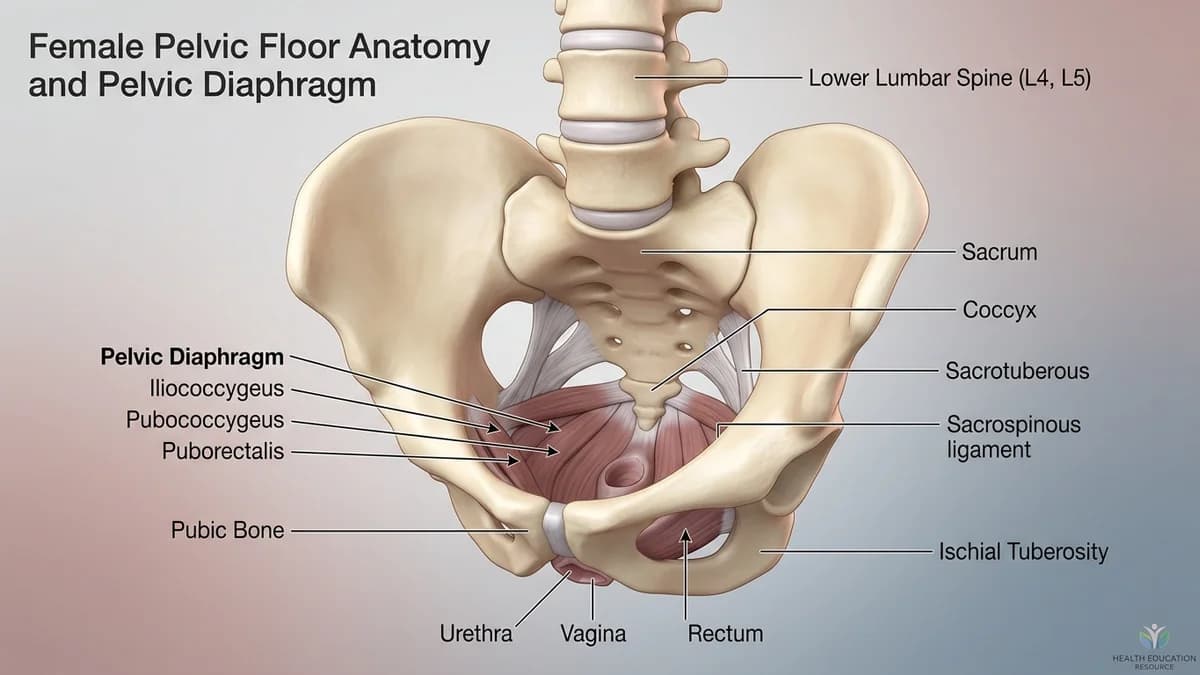
During running, each foot strike transmits an upward shockwave through the calcaneus, tibia, femur, and sacroiliac joints, met from above by downward visceral displacement from intra-abdominal pressure. The levator ani muscle complex must dynamically co-contract with the transversus abdominis to support the bladder base, uterus, and rectum, shielding the endopelvic fascia from overstretching. International postpartum guidelines (Goom, Donnelly, and Brockwell, 2019) emphasize that full biological collagen remodeling in the pelvic ligaments and abdominal fascia takes at least 12 weeks to 6 months post-delivery. Running prior to 12 weeks postpartum is therefore clinically contraindicated, regardless of delivery type.
2. Domestic Indian Context: Daily Chores, Ergonomics, and Privacy
Indian mothers returning to running face unique systemic challenges: chronic sleep deprivation from nighttime infant care, uneven footpaths and high pollution in Indian cities, nutrient deficiencies (particularly low vitamin D and ferritin common in vegetarian diets), and domestic responsibilities. Many women feel pressure to shed 'baby weight' rapidly to fit back into traditional festive wear for family functions. Physiotherapists emphasize that running is a high-load milestone that must be earned through progressive strength training so mothers are physically prepared before pounding the pavement.
3. Clinical Special Tests and Physical Examination
The 12-Week Postpartum Running Readiness Battery evaluates three distinct tiers: (1) Pelvic Floor Health (zero heaviness, zero leaks, Modified Oxford strength grade 3 or higher with 10 endurance repetitions), (2) Load Tolerance (30-minute continuous brisk walk, single-leg balance for 30 seconds), and (3) Dynamic Impact Screening (20 single-leg calf raises, 20 single-leg bridge repetitions, 20 single-leg sit-to-stands, and 1 minute of continuous running on the spot without pain or leakage).
| Screening Battery Domain | Objective Clinical Benchmark | Pass Criterion | Red Flag / Fail Sign |
|---|---|---|---|
| 1. Pelvic Health Screen | Digital muscle test / symptom inventory | No leaks, no vaginal bulge, Oxford Grade 3+ | Urinary leak or heaviness during testing |
| 2. Load Tolerance Screen | 30-minute brisk walk on flat ground | Completed comfortably with zero pelvic ache | Sacroiliac, pubic, or lumbar pain |
| 3. Single-Leg Strength | 20 single-leg calf raises & single-leg bridges | Symmetrical completion without compensation | Cramping, severe pelvic tilt, or failure <15 |
| 4. Impact Tolerance | 1-minute single-leg hops (each side) | Absorbs impact cleanly, zero leaks | Any urine loss or pelvic dragging sensation |
4. Stage-by-Stage Functional Physiotherapy Protocol
Progression follows a graded continuum from low-impact strength building to walk-run intervals, advancing only when impact tests are passed cleanly.
Phase 1: Single-Leg Calf Raise and Achilles Spring Loading
Objective: Build gastrocnemius and soleus load capacity to absorb impact forces during running foot strike.
- 1Stand on one foot near a wall for light balance support, keeping your torso tall.
- 2Slowly rise up onto the ball of your foot as high as possible over 2 seconds.
- 3Pause at the top peak contraction for 1 second.
- 4Lower your heel back down under controlled eccentric braking over 3 seconds.
- 5Complete all repetitions on one leg before switching, aiming for 20 continuous repetitions per side.
Phase 2: Single-Leg Gluteal Bridge with Pelvic Level Control
Objective: Strengthen posterior kinetic chain and stabilize the pelvic ring against rotational shear.
- 1Lie on your back with knees bent at 90 degrees and feet flat on the floor.
- 2Extend your left leg straight out in line with your right thigh.
- 3Drive through your right heel to lift your hips toward the ceiling until thighs and torso align.
- 4Ensure your left hip bone stays level with your right, without dropping toward the mat.
- 5Lower under control over 3 seconds and repeat before switching legs.
Phase 3: Graded Walk-to-Run Interval Progression
Objective: Safely reintroduce running impact in structured, manageable intervals on flat surfaces.
- 1Begin with a 5-minute brisk walking warm-up.
- 2Run at a comfortable, conversational jog for 1 minute.
- 3Walk for 2 minutes to allow your pelvic floor and joints to recover.
- 4Repeat the 1-minute run and 2-minute walk cycle 5 times (total 15 minutes of intervals).
- 5Monitor for any leaks, heaviness, or joint pain during the next 24 hours before increasing running time.
Discontinue running immediately and consult a pelvic physiotherapist or gynaecologist if you experience: any involuntary leakage of urine or stool while running, a sensation of vaginal heaviness or dragging during or after exercise, bleeding after running, or sharp localized pain in your pubic bone or groin.
5. Clinic Consultation, Home Visits, and Transparent Fee Benchmarks
Under the National Commission for Allied and Healthcare Professions (NCAHP) Act 2021, patients in India can consult a registered pelvic health physiotherapist directly without an upfront referral, though BookPhysio.in does not ask for one. Sports pelvic physiotherapists perform formal 12-week running readiness assessments, including video treadmill gait analysis and pelvic floor evaluation. Clinic consultations in Indian cities range between ₹500 and ₹1,500, with home visits ranging from ₹700 to ₹2,000 where available. Patients pay their physiotherapist directly at each consultation, with zero platform commission.
6. Frequently Asked Questions
Can I start running at 6 weeks postpartum if my obstetrician said I am cleared?
A routine 6-week obstetric check-up confirms that your uterus has involuted and surgical scars have healed, but it does not evaluate muscular readiness, joint stability, or impact absorption. International pelvic health guidelines recommend waiting a minimum of 12 weeks post-delivery before attempting running, using the first 12 weeks for progressive walking and pelvic strength training.
Does running with a supportive sports bra or pelvic belt protect my pelvic floor?
A supportive sports bra is essential to protect breast tissue during lactation, but external belts cannot shield your pelvic floor from internal impact forces. The only effective protection against prolapse and leaks is building active muscular strength in your levator ani, gluteals, and core before returning to running.
Related recovery guides & articles
BookPhysio.in Editorial Team
The BookPhysio.in editorial team writes and maintains this content, checking it against reliable clinical sources. Content follows our medical review policy: general information only, and no page claims a clinical review until a named registered physiotherapist has signed it off.
Read our medical review policy