
Pregnancy Sciatica: Piriformis Syndrome vs Lumbar Disc Herniation Positioning Guide in India
In short
Sharp, shooting pain from your buttock down your leg during pregnancy can stem from piriformis spasm or a lumbar disc. Discover safe positioning and physiotherapy relief.
In this guide (6 sections)
Sharp, radiating pain traveling from the lower back or buttock down the back of the thigh and leg, commonly called 'sciatica', is a frequent complaint during the second and third trimesters of pregnancy in India. Expectant mothers are often told by relatives that nerve pain is an unavoidable part of pregnancy and that they must endure it until delivery. However, true lumbar disc herniation is actually rare in pregnancy (occurring in less than 1 percent of cases). In over 90 percent of pregnant women with leg pain, the true culprit is pseudo-sciatica caused by hypertonic spasm of the piriformis muscle, pelvic girdle instability, or sacroiliac joint laxity. Accurate physical differentiation guides safe maternal sleeping postures and gentle, targeted physiotherapy.
1. Functional Biomechanics: The Sciatic Notch, Piriformis Compression, and Lordotic Shift
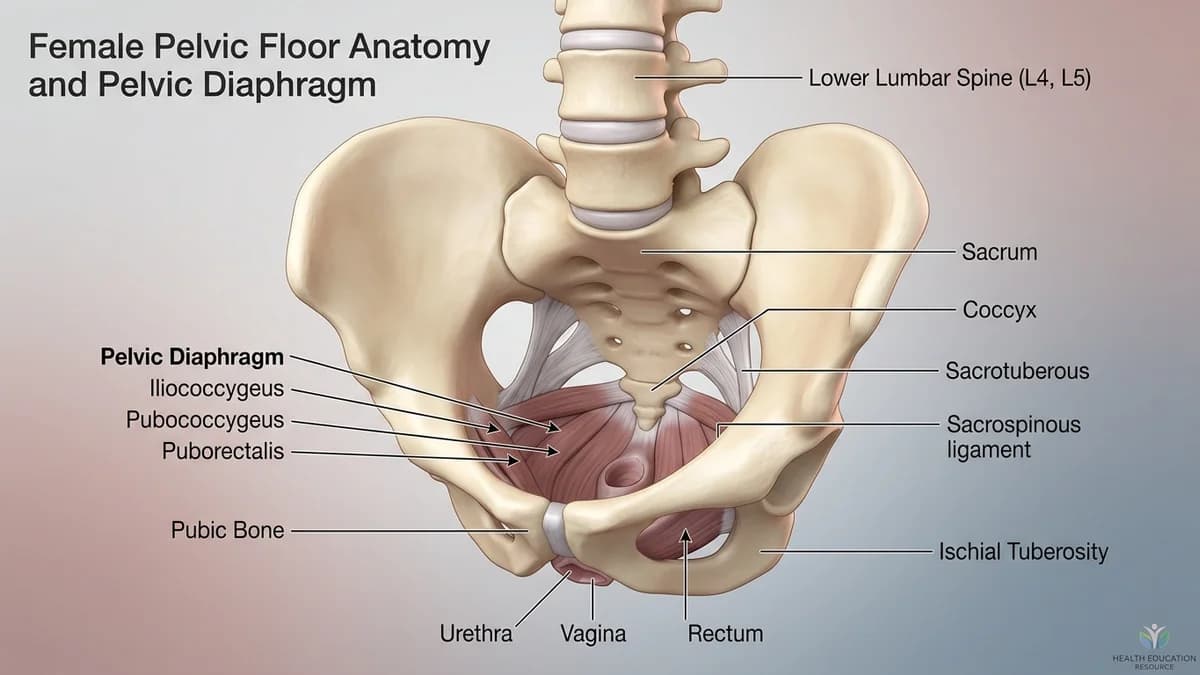
As pregnancy progresses, anterior uterine expansion and breast enlargement shift the maternal centre of gravity forward. To prevent falling forward, the expectant mother compensates with an exaggerated lumbar lordosis, anterior pelvic tilt, and compensatory external rotation of the hips (the classic 'pregnancy waddle'). This posture places the piriformis muscle, a flat lateral rotator originating from the anterior sacrum and inserting into the greater trochanter, under sustained, shortened contraction. The thick sciatic nerve exits the pelvis through the greater sciatic foramen directly beneath (or occasionally piercing through) the piriformis muscle. Chronic spasm of this muscle mechanically compresses the nerve, causing searing buttock and posterior thigh pain without true spinal nerve root compression.
2. Domestic Indian Context: Daily Chores, Ergonomics, and Privacy
In Indian homes, pregnant women frequently sleep on soft, sagging mattresses or firm cotton floor bedding (gadda) without proper body pillows, causing the pelvis to twist into extreme asymmetrical rotation when side-sleeping. Furthermore, getting up from low seating, climbing stairs in multi-story houses, and prolonged cooking while standing shift body weight onto one hip. Physiotherapists teach safe, symmetrical side-sleeping setups using standard Indian bolsters or pillows between the knees, log-roll bed transfers, and gentle piriformis stretches that accommodate a growing belly.
3. Clinical Special Tests and Physical Examination
Clinical evaluation carefully differentiates piriformis syndrome from true lumbar disc radiculopathy. In piriformis syndrome, the Straight Leg Raise (SLR) is typically negative or produces only localized buttock tightness, while the FAIR test (Flexion, Adduction, Internal Rotation) and direct deep palpation of the piriformis in the greater sciatic notch accurately reproduce familiar leg symptoms. In true lumbar disc radiculopathy, pain radiates below the knee to the foot, accompanied by neurological sensory blunting or reflex changes.
| Clinical Feature | Piriformis Syndrome (Pseudo-Sciatica) | True Lumbar Disc Herniation | Physiotherapy Strategy |
|---|---|---|---|
| Pain Radiation Zone | Buttock and posterior thigh, rarely past knee | Radiates past knee into calf, ankle, toes | Local muscle release vs nerve root care |
| Spinal Exam Findings | Full lumbar range of motion, no back pain | Restricted lumbar flexion, central back pain | Pelvic alignment vs directional preference |
| Palpation Hallmark | Exquisite tenderness over sciatic notch | Pain over lumbar spinous processes / discs | Targeted piriformis myofascial release |
| Prevalence in Pregnancy | High (>90% of pregnancy nerve pain) | Extremely rare (<1% of pregnancies) | Reassure mother regarding fetal safety |
4. Stage-by-Stage Functional Physiotherapy Protocol
Rehabilitation centres on ergonomic side-lying positioning, gentle piriformis myofascial release, and restoring pelvic ring stability.
Phase 1: Ergonomic Maternal Side-Sleeping Alignment Protocol
Objective: Eliminate nocturnal pelvic torsion and take mechanical compression off the sciatic nerve.
- 1Lie on your comfortable side (ideally the left side to optimize placental blood flow).
- 2Place a full-length body pillow or firm cotton bolster between your knees and ankles so your legs remain completely parallel.
- 3Do not allow your top knee to slide forward onto the bed, as this twists the pelvis and stretches the piriformis tightly.
- 4Place a small folded towel under your abdomen to support your belly and keep your spine straight.
- 5When turning over, log-roll with knees squeezed together.
Phase 2: Seated Figure-4 Piriformis Gentle Release
Objective: Gently stretch the contracted piriformis muscle without compressing the pregnant abdomen.
- 1Sit upright on the edge of a sturdy dining chair with your feet flat on the floor.
- 2Cross your affected right ankle over your opposite left knee, creating a figure-4 shape.
- 3Sit tall, lengthening your spine toward the ceiling.
- 4Without rounding your back, gently hinge forward from your hips until you feel a deep, pleasant stretch in your right outer buttock.
- 5Hold for 30 seconds while breathing smoothly into your belly, then release and repeat on the other side.
Phase 3: Standing Hip Circles and Pelvic Rocking
Objective: Mobilize the sacroiliac joints and promote balanced pelvic force distribution during weight-bearing.
- 1Stand with your feet wider than shoulder-width apart, holding onto a kitchen counter for support.
- 2Keep your knees soft and gently circle your hips in large, smooth circles as if rotating a hula hoop.
- 3Perform 10 slow circles clockwise, then reverse and perform 10 counter-clockwise.
- 4Breathe calmly, allowing your pelvic muscles to soften and release tension accumulated during standing.
Seek immediate emergency obstetric or neurosurgical care if you experience: sudden progressive weakness in your leg or foot (foot drop), numbness in your saddle area (groin and buttocks), sudden loss of bladder or bowel sensation, or severe unrelenting pain accompanied by vaginal bleeding or contractions.
5. Clinic Consultation, Home Visits, and Transparent Fee Benchmarks
Under the National Commission for Allied and Healthcare Professions (NCAHP) Act 2021, patients in India can consult a registered physiotherapist directly without an upfront referral, though BookPhysio.in does not ask for one. Prenatal physiotherapists provide gentle hands-on therapy, posture screening, and safe exercises in private clinical rooms. Clinic visits across Indian cities typically range between ₹500 and ₹1,500, with home visits ranging from ₹700 to ₹2,000 where available. Patients pay their physiotherapist directly at each consultation, with zero platform commission.
6. Frequently Asked Questions
Can pregnancy sciatica harm my baby in India?
No. Sciatica and piriformis syndrome are maternal musculoskeletal conditions involving nerve compression in the mother's pelvis. They do not pose any risk to your developing baby or affect fetal health. Proper physiotherapy relieves your pain safely without medication.
Will my sciatica disappear immediately after delivery?
For most women, pregnancy sciatica caused by piriformis spasm improves substantially within days of childbirth as the forward gravitational pull of the baby is removed. Continuing gentle pelvic stretches and practicing proper infant lifting mechanics ensures complete, lasting recovery.
Related recovery guides & articles
BookPhysio.in Editorial Team
The BookPhysio.in editorial team writes and maintains this content, checking it against reliable clinical sources. Content follows our medical review policy: general information only, and no page claims a clinical review until a named registered physiotherapist has signed it off.
Read our medical review policy