
Reactive Arthritis Post-Infection: Effusion Management and Quadriceps Activation
In short
Reactive arthritis follows gastrointestinal or urogenital infections, driving acute large-joint effusion and severe arthrogenic quadriceps inhibition. Discover evidence-based effusion management, neuromuscular activation, and progressive rehabilitation.
In this guide (6 sections)
Reactive arthritis is an acute, sterile, autoimmune spondyloarthritis that develops 1 to 4 weeks following an antecedent gastrointestinal infection (caused by Salmonella, Shigella, Yersinia, or Campylobacter) or a urogenital infection (predominantly Chlamydia trachomatis). The clinical presentation is classically an asymmetrical oligoarthritis predominantly targeting large weight-bearing joints of the lower extremities, with the knee joint being the most frequently involved. Persistent high-volume synovial effusion distends the joint capsule, generating severe resting pain and triggering profound arthrogenic muscle inhibition (AMI) of the quadriceps extensor mechanism. Unless active neuromuscular intervention is initiated early, rapid vastus medialis atrophy occurs within days, severely compromising gait stability.
Domestic and Cultural Indian Realities
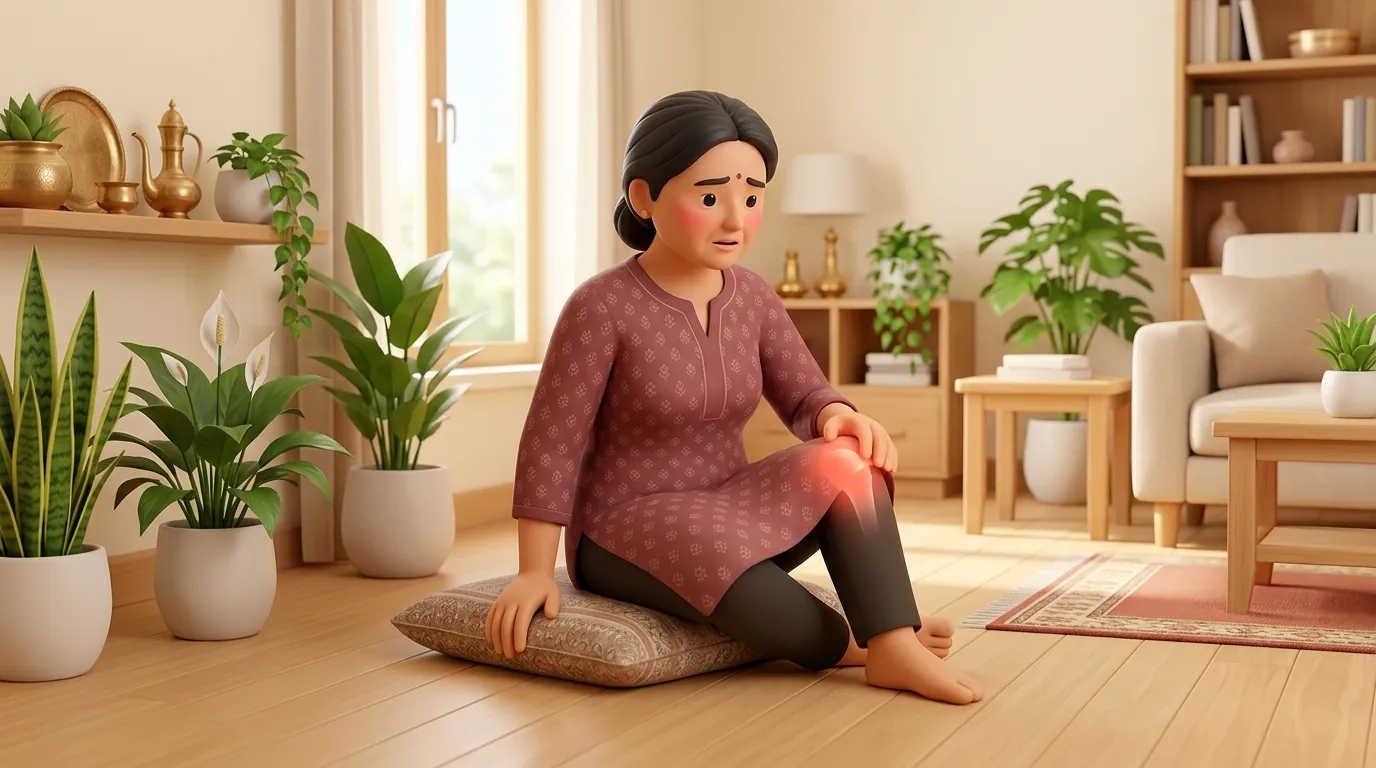
In India, episodes of acute infectious gastroenteritis (frequently contracted from contaminated food or street water during monsoon months) are common. When a young adult subsequently develops an intensely swollen, hot knee several weeks later, families frequently misattribute the joint swelling to an acute physical sprain or dietary uric acid excess. Traditional healers or masseurs often apply scalding herbal pastes or perform vigorous joint cracking, which exacerbates synovial capillary leakage and increases joint distension. Patients cannot bend the knee to use Indian squat commodes or climb residential stairs. Families must provide an over-toilet commode chair, apply cold packs rather than heat, and seek urgent clinical evaluation to initiate proper medical and physiotherapy care.
Clinical Biomechanics and Inflammatory Pathology
Reactive arthritis is driven by cross-reactive autoimmune molecular mimicry in HLA-B27 positive individuals, where bacterial lipopolysaccharides and antigens stimulate immune complex deposition in synovial and entheseal tissues. The resulting exudative synovitis produces rapid intra-articular fluid accumulation. As intra-articular pressure rises, Group II joint afferents fire continuously, reflexively inhibiting the alpha-motor neuron pool supplying the quadriceps muscle in the spinal cord. This neural shutdown prevents voluntary quadriceps contraction even when the patient tries with maximal effort. Non-weight bearing isometric contractions and neuromuscular electrical stimulation (NMES) bypass this reflex inhibition, restoring quadriceps firing without joint shear.
Clinical Assessment and Functional Staging
Clinical evaluation begins by confirming the temporal relationship between a prior diarrhoeal or dysenteric illness and joint onset. Joint effusion is quantified using the stroke test and patellar tap test. Extrarticular manifestations are systematically surveyed, including painless oral aphthous ulcers, circinate balanitis, keratoderma blennorrhagica on the soles, and conjunctivitis. Arthrocentesis is mandatory to confirm high leukocyte counts while demonstrating sterile cultures, ruling out septic arthritis. Quadriceps lag is measured during active straight leg raising.
Targeted Mobility and Joint Preservation Exercises
Rehabilitation emphasizes sub-maximal isometric quadriceps setting in slight flexion (20 to 30 degrees), avoiding full terminal knee extension under heavy load.
Supported Isometric Vastus Medialis Setting with Biofeedback
Objective: Overcome arthrogenic muscle inhibition and activate the quadriceps without compressing inflamed retropatellar cartilage
- 1Lie flat on your back on a firm bed with a rolled towel placed beneath your knee, supporting it in approximately 20 degrees of comfortable flexion.
- 2Place your fingers directly over your inner thigh muscle (vastus medialis oblique) just above the kneecap.
- 3Focus on tightening your thigh muscle, pressing the back of your knee gently into the towel until you feel the muscle firm up under your fingers.
- 4Hold the static contraction steadily for 5 seconds while breathing smoothly, then relax completely for 5 seconds.
| Recovery Stage | Acute Effusion & Inhibition Stage | Post-Inflammatory Functional Stage |
|---|---|---|
| Effusion Control | Cryotherapy (cold packs for 15 min), compression bandage, and elevation | Active muscle pump contractions and retrograde lymphatic drainage |
| Quadriceps Training | Sub-maximal isometric setting at 20 degrees flexion and straight leg raises with zero lag | Progressive closed-chain leg presses, mini-squats, and step-ups |
| Weight-Bearing Status | Partial weight-bearing with two elbow crutches to shield inflamed knee | Full unassisted ambulation with progressive gait retraining and balance drills |
| Contraindicated Actions | Deep squatting, forced passive knee flexion stretches, and deep tissue massage | High-impact jumping or ballistic sports before full quadriceps symmetry is regained |
Red Flags and Immediate Rheumatology Escalation
An acutely swollen, intensely painful, hot knee joint accompanied by high spiking fever, shaking chills, or progressive delirium demands emergency hospital admission to rule out acute bacterial septic arthritis. The presence of acute ocular redness, deep eye pain, and blurred vision indicates reactive anterior uveitis, requiring immediate ophthalmological evaluation.
Frequently Asked Questions
Can physiotherapy exercises reverse reactive arthritis?
No. Physiotherapy cannot eradicate the autoimmune response or treat underlying bacterial infections; medical management by a physician or rheumatologist is required. However, physiotherapy provides essential clinical support by evacuating joint effusion, overcoming quadriceps muscle shutdown, preventing joint contractures, and restoring normal walking function.
How do I book a qualified home physiotherapist for knee rehabilitation via BookPhysio.in?
Under the National Commission for Allied and Healthcare Professions (NCAHP) Act 2021, Indian patients enjoy direct access to registered physiotherapists without an obligatory doctor referral. On BookPhysio.in, you schedule an appointment with a verified clinician in your city. Payment is made directly to the therapist at your home appointment via cash or UPI; BookPhysio.in does not process booking fees online.
Related recovery guides & articles
BookPhysio.in Editorial Team
The BookPhysio.in editorial team writes and maintains this content, checking it against reliable clinical sources. Content follows our medical review policy: general information only, and no page claims a clinical review until a named registered physiotherapist has signed it off.
Read our medical review policy