
Safe Pranayama for Ankylosing Spondylitis: Expanding Rigid Thoracic Cages
In short
Costovertebral and costotransverse enthesopathy in ankylosing spondylitis severely restricts ribcage expansion, driving restrictive pulmonary impairment. Master clinical pranayama, lateral basal rib breathing, and thoracic mobility protocols.
In this guide (6 sections)
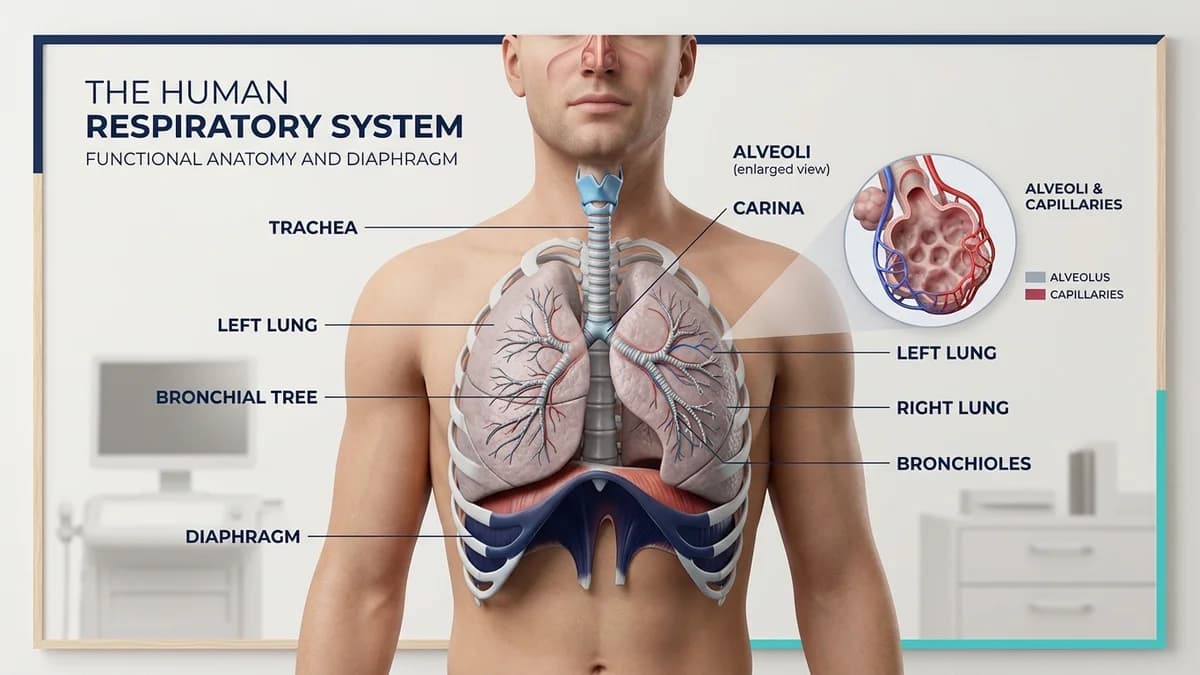
In ankylosing spondylitis, inflammatory enthesopathy frequently attacks the thoracic cage, targeting the costovertebral, costotransverse, and manubriosternal articulations. As inflammation gives way to syndesmophyte bridging and bony ankylosis, the ribcage becomes an unyielding rigid ring. Chest expansion, normally exceeding 4 to 5 cm during deep inspiration, can drop below 1 to 2 cm, creating an extrapulmonary restrictive ventilatory defect. Patients become entirely dependent on diaphragmatic excursion for ventilation, leaving upper and lateral pulmonary lobes poorly ventilated and significantly elevating the risk of atelectasis, respiratory fatigue, and chronic hypoxemia. Prescribing safe, structured pranayama and lateral thoracic expansion exercises is essential to preserve vital lung capacity.
Domestic and Cultural Indian Realities
Pranayama is widely practiced in Indian daily routines, often learned informally through media or community groups. However, certain aggressive breathing techniques, such as forceful hyperventilation (Kapalabhati) or prolonged breath-holding under high thoracic pressure (Kumbhaka), can provoke severe chest wall pleurodynia, costochondral inflammation, or cardiac strain in an individual with rigid costovertebral joints. Patients should replace forceful abdominal pumping with slow, rhythmic Sectional Breathing (Vibhagiya Pranayama) and gentle alternate nostril breathing (Anulom Vilom), focusing on expanding the lower lateral ribs while seated comfortably on an upright chair rather than slumping on the floor.
Clinical Biomechanics and Inflammatory Pathology
Normal inspiration involves a combination of bucket-handle motion (increasing transverse thoracic diameter) and pump-handle motion (increasing anterior-posterior diameter). In axial spondyloarthritis, ossification of the radiating costovertebral ligaments and anterior longitudinal ligament locks the ribs in an expiratory position. With the ribcage immobilized, the diaphragm must descend further into the abdominal cavity to generate adequate negative intrathoracic pressure. Physiotherapy exercises that combine deep inspiratory pacing with bilateral upper limb elevation stretch the intercostal musculature and mobilize the residual joint play in unfused costal facets, delaying chest wall ankylosis.
Clinical Assessment and Functional Staging
Physiotherapists monitor chest expansion circumferentially using a flexible measuring tape placed at the level of the fourth intercostal space in men, or immediately sub-mammary in women. The patient performs a maximal expiration followed by a maximal inspiration; an excursion of less than 2.5 cm indicates significant thoracic restriction. Pulmonary function testing characteristically demonstrates a reduced forced vital capacity (FVC) with a normal or elevated FEV1/FVC ratio. Clinicians also record peak expiratory flow rate (PEFR) and assess thoracic kyphosis angle.
Targeted Mobility and Joint Preservation Exercises
Breathing exercises must emphasize lateral and posterior ribcage expansion combined with gentle thoracic spine extension.
Lateral Basal Expansion with Resistance Band Feedback
Objective: Direct inspiratory airflow into the lower pulmonary lobes and preserve bucket-handle ribcage excursion
- 1Sit tall on a sturdy chair and wrap a wide elastic resistance band or cotton scarf snugly around your lower ribcage, crossing the ends in front of your chest.
- 2Hold the crossed ends lightly to maintain mild baseline tension across the ribs.
- 3Inhale slowly and deeply through your nose, actively focusing on expanding your lower ribs outward against the elastic resistance.
- 4Exhale slowly through pursed lips, feeling the band gently guide the ribs back inward.
| Pranayama Technique | Recommended Modification | Precautionary / Contraindicated Practice |
|---|---|---|
| Breathing Rhythm | Slow, smooth, controlled tidal cycles (Anulom Vilom) with 4-second inhalation and 6-second exhalation | Rapid, explosive abdominal pumping (Kapalabhati) causing sudden thoracic cage shearing |
| Breath Retention | Zero breath-holding; continuous, fluid transition between inspiration and expiration | Prolonged internal Kumbhaka spiking intra-thoracic pressure against rigid costal rings |
| Seated Posture | Upright chair with supportive lumbar roll and elevated sternal chest position | Slumped cross-legged floor sitting that compresses the abdomen and restricts diaphragm descent |
| Arm Elevation Sync | Coordinating bilateral shoulder abduction and external rotation with slow inspiration | Forced unilateral twisting while attempting maximal inspiratory breath holds |
Red Flags and Immediate Rheumatology Escalation
Sudden onset of sharp, stabbing chest pain radiating to the back, accompanied by acute shortness of breath and coughing up blood (haemoptysis), requires immediate emergency medical evaluation to rule out spontaneous pneumothorax or apical pulmonary fibrocystic disease, recognized complications of long-standing ankylosing spondylitis.
Frequently Asked Questions
Can pranayama reverse ribcage fusion once the costovertebral joints have fused?
No. Pranayama cannot dissolve mature bony syndesmophytes or reopen fused costovertebral joints. However, regular therapeutic breathing exercises help manage morning stiffness, optimise diaphragmatic breathing mechanics, and preserve vital lung volume, protecting respiratory function.
How do I book a specialised respiratory and musculoskeletal home physiotherapist via BookPhysio.in?
Under the National Commission for Allied and Healthcare Professions (NCAHP) Act 2021, Indian patients enjoy direct access to registered physiotherapists without an obligatory doctor referral. On BookPhysio.in, you schedule an appointment with a verified home-care clinician in your city. Payment is made directly to the therapist at your home appointment via cash or UPI; BookPhysio.in does not process booking fees online.
Related recovery guides & articles
BookPhysio.in Editorial Team
The BookPhysio.in editorial team writes and maintains this content, checking it against reliable clinical sources. Content follows our medical review policy: general information only, and no page claims a clinical review until a named registered physiotherapist has signed it off.
Read our medical review policy