
Neuromuscular Scoliosis in Paediatric SCI: Scoliometer Monitoring and Seating
In short
Early scoliometer screening and custom supportive wheelchair seating prevent severe neuromuscular spinal deformities in growing paediatric and adolescent SCI patients.
In this guide (6 sections)
Paediatric and adolescent spinal cord injury presents a unique developmental challenge: the interaction between neuromuscular paralysis and rapid skeletal growth. In children who sustain a spinal cord injury prior to the adolescent growth spurt, the incidence of progressive neuromuscular scoliosis approaches an alarming 90 to 100 percent. The denervation of paraspinal extensors and abdominal stabilizers, combined with prolonged unsupported wheelchair sitting, allows gravitational forces to warp the immature cartilaginous spine into severe C-shaped curves. Unmonitored, progressive scoliosis induces severe pelvic obliquity, leads to recurrent pressure ulcers over the depressed ischium, and severely compromises pulmonary vital capacity.
Domestic and Cultural Indian Realities
In India, paediatric wheelchair users often rely on adult-sized folding wheelchairs or basic domestic chairs that lack postural support. A small child seated in a wide, adult-sized wheelchair with a sagging vinyl sling seat inevitably leans to one side to find armrest support. This chronic asymmetric posture cements collapsing spinal curves within months. Furthermore, families often do not recognize early spinal curvature because clothing conceals the trunk. Establishing routine scoliometer screening and fitting modular, growth-adjustable pediatric seating systems ensures that children develop healthy, balanced spinal alignment as they grow.
Clinical Biomechanics and Neurological Recovery
Neuromuscular scoliosis in spinal trauma is biomechanically characterized by long, collapsing, sweeping C-shaped curves extending from the upper thoracic spine down to the sacrum, accompanied by severe axial pelvic obliquity. When trunk musculature fails to provide active tension, the spine acts as a flexible column under axial load. Gravity compresses the concavity of the curve, suppressing epiphyseal growth on the compressed side while accelerating growth on the tensile convexity (the Heuter-Volkmann principle). As the curve stiffens, the pelvis tilts, causing one ischial tuberosity to bear up to 80 percent of body weight.
Functional Movement Analysis and Clinical Assessment
Clinical screening utilizes the scoliometer, an inclinometer placed across the spine during forward sitting flexion (Adam sitting test) to measure the Angle of Trunk Rotation (ATR). An ATR measurement exceeding 5 to 7 degrees warrants full-spine standing or sitting radiodiagnostic radiographs to measure the Cobb angle. Pelvic obliquity is assessed by palpating both anterior superior iliac spines relative to the horizontal sitting plane. Flexibility of the curve is categorized as flexible (correctable with gentle manual traction) or structural (rigid and non-correctable).
Targeted Rehabilitation and Functional Independence Protocol
Management integrates custom postural seating with rigid orthotic bracing. Wheelchairs must be configured with a rigid seat insert, a contoured solid backrest, and a three-point biomechanical support system: two lateral thoracic pads positioned on opposite sides of the curve convexity and an opposing pelvic stabilizer pad. For growing children with flexible curves between 20 and 40 degrees, a custom-molded Thoracolumbosacral Orthosis (TLSO, or spinal body jacket) is worn during all upright sitting hours. When Cobb angles exceed 40 to 50 degrees with persistent progression, surgical posterior spinal fusion is evaluated.
Seated Lateral Trunk Elongation and Active Derotation Drill
Objective: Promote active spinal elongation and stretch shortened concavity structures in flexible curves
- 1Sit the child upright in their supportive wheelchair with pelvis level and feet strapped on footplates.
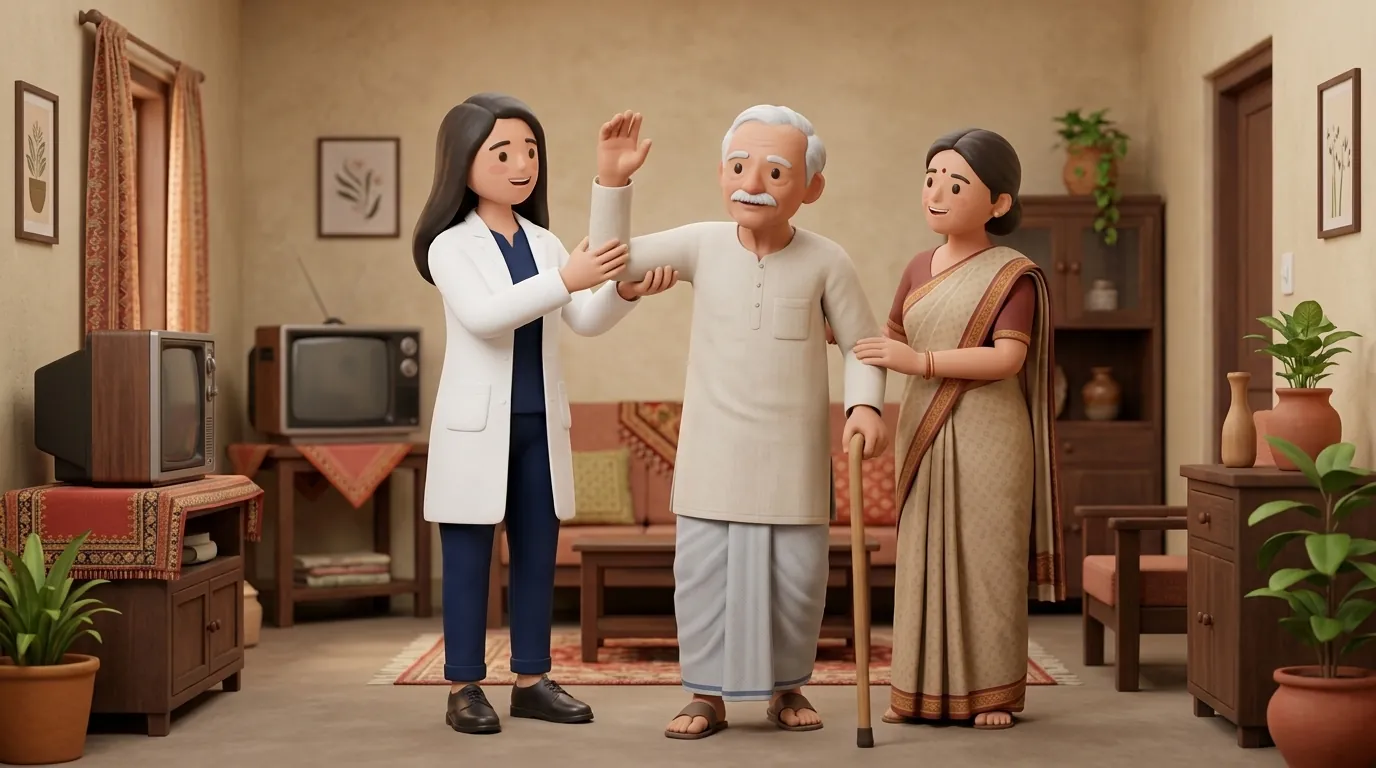
- 2Instruct the child to reach their arm on the side of the spinal concavity upward toward the ceiling.
- 3The therapist or caregiver applies gentle, upward manual elongation under the child armpit.
- 4Have the child inhale deeply, expanding the collapsed ribs on the concave side of the curve.
- 5Hold the elongated, symmetric upright posture for 5 seconds without leaning backward.
- 6Gently lower the arm, rest for 5 seconds, and repeat.
| Intervention Level | Biomechanical Impact | Clinical Indications and Limits |
|---|---|---|
| Modular Wheelchair Three-Point Seating | Lateral thoracic and pelvic pads apply corrective counter-forces | Indicated for all seated children; slows curve progression; promotes balance |
| Custom Rigid TLSO (Body Jacket) | Molded plastic shell holds spine upright during daytime sitting | Indicated for flexible curves 20-40°; does not eliminate need for surgery |
| Surgical Spinal Fusion with Instrumentation | Rigid metal rods and pedicle screws fuse spine to pelvis | Indicated when curve exceeds 40-50°; performed near skeletal maturity |
| Unmodified Adult Wheelchair Sling Seating | Zero lateral support; allows gravity to collapse spinal curves | Strictly contraindicated; leads to rapid, irreversible spinal deformity |
Red Flags and Emergency Escalation
Inspect the child skin twice daily over the rib hump, iliac crests, and spinous processes: rigid TLSO braces and lateral wheelchair pads can cause rapid pressure necrosis on growing, insensate skin. In addition, monitor respiratory status closely: rapid progression of a high thoracic curve distorts the rib cage, leading to restrictive pulmonary decline and diminished vital capacity. Any acute fever, respiratory distress, or severe localized skin ulceration warrants immediate orthopaedic review.
Frequently Asked Questions
Can a plastic spinal brace (TLSO) straighten scoliosis in a child with spinal cord injury?
No. A rigid TLSO brace cannot permanently reverse neuromuscular scoliosis because the underlying muscle paralysis remains. However, wearing the brace delays curve progression, supports the child to sit upright with hands free, prevents severe pelvic obliquity, and helps postpone surgery until the child spine has reached greater skeletal maturity.
How do I arrange a home scoliometer screening with a paediatric neuro-physiotherapist?
Under the NCAHP Act 2021, registered physiotherapists in India conduct community spinal screenings and postural seating evaluations. On BookPhysio.in, you can book an experienced paediatric physiotherapist who will perform scoliometer measurements, audit wheelchair seating, and fit supportive orthoses in your home. Fees are paid directly to the clinician at your home appointment.
Related recovery guides & articles
BookPhysio.in Editorial Team
The BookPhysio.in editorial team writes and maintains this content, checking it against reliable clinical sources. Content follows our medical review policy: general information only, and no page claims a clinical review until a named registered physiotherapist has signed it off.
Read our medical review policy