
Sensory Comfort in Palliative Care: Sponging and Gentle Massage
In short
Sensory comfort calms terminal agitation and pain. Discover gentle warm water sponging, tactile effleurage, and aromatherapy in home palliative care.
In this guide (5 sections)
In the advanced stages of terminal illness, sensory input often becomes chaotic, overwhelming, or severely deprived. Patients endure clinical hospital smells, continuous alarm sounds, and sterile medical interventions. Palliative physiotherapy harnesses therapeutic sensory modulation to restore bodily tranquility and emotional peace. Through warm water sponging, light tactile effleurage, and subtle natural aromatherapy, clinicians and caregivers activate soothing parasympathetic pathways, easing muscle rigidity, reducing breathlessness, and providing compassionate comfort.
Domestic and Cultural Indian Realities
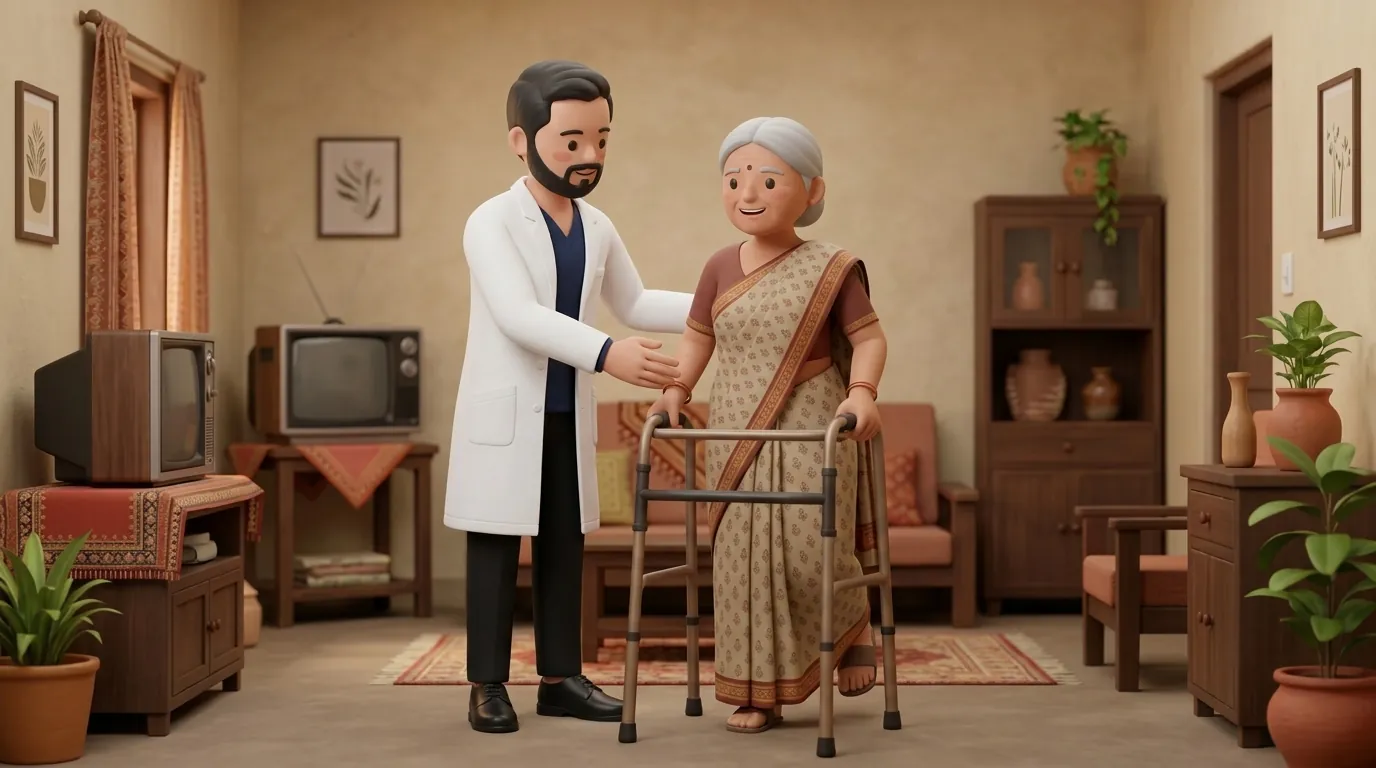
Indian households possess rich sensory traditions that can be integrated into palliative comfort care. Natural floral waters, such as rose water (gulab jal), vetiver (khus), and subtle sandalwood (chandan), have soothed fevered brows and calmed anxious minds for generations. Family members find comfort in performing warm sponging for an ailing parent, viewing it as a gentle, loving act of care. Physiotherapists guide families to avoid synthetic, overpowering fragrances, teaching them how to prepare gentle warm floral compresses and slow, rhythmic hand massages that promote deep relaxation.
Neurobiology of Tactile Sensory Modulation
Slow, light tactile stroking (at a speed of 1 to 5 centimetres per second) selectively activates low-threshold, unmyelinated C-tactile (CT) afferent nerve fibers located in hairy skin. These CT afferents project directly to the posterior insular cortex, bypassing classical sensory-discriminative pathways to activate emotional and autonomic regulation centres. This activation stimulates the release of endogenous oxytocin, decreases salivary cortisol levels, and reduces sympathetic autonomic arousal, producing measurable drops in heart rate and respiratory tension.
Warm Water Sponging and Touch Protocols
Warm water sponging is conducted with soft cotton cloths wrung out in warm, pure water (approximately 38 degrees Celsius) infused with a few drops of pure rose water. The caregiver wipes the forehead, neck, and forearms with broad, continuous strokes, keeping the rest of the body covered with warm blankets to prevent shivering. Hand massage follows, using warm natural coconut or almond oil applied in slow circular motions around the thenar and hypothenar eminences.
Calming C-Tactile Forearm and Hand Stroke
Objective: Activate soothing parasympathetic pathways to calm terminal restlessness and pain
- 1Warm a few drops of pure coconut or almond oil between your hands, sitting quietly beside the bed.
- 2Gently support the elder wrist with one hand, resting the forearm on a soft cushion.
- 3Using the broad flat surface of your other palm, stroke slowly from the wrist up to the elbow over 5 seconds.
- 4Maintain light, feather-soft continuous contact, moving at an unhurried, rhythmic pace.
- 5Transition softly to the palm, applying gentle circular thumb pressure across the base of the thumb.
| Modality | Physiological Mechanism | Clinical Practical Application |
|---|---|---|
| Warm Water Sponging | Promotes vasodilation and cutaneous thermal comfort | Gentle wiping of forehead, neck, and arms at 38°C |
| Rose Water Compress | Familiar olfactory soothing; cools facial skin | Moist cotton pad over closed eyes and temple area |
| C-Tactile Hand Massage | Stimulates CT afferents; releases oxytocin | Slow, light stroking of dorsal forearms and palms |
| Gentle Scalp Stroking | Reduces cranial tension and autonomic guarding | Soft finger glides from hairline back to crown |
Oncological Red Flags and Specialist Escalation
Aromatherapy and massage must be discontinued immediately if the patient displays signs of contact dermatitis, skin redness, or respiratory irritation such as coughing or wheezing. In patients with severe neutropenia or fragile skin metastases, avoid essential oils completely and use only sterile warm water sponging.
Frequently Asked Questions
Can strong synthetic essential oils be used for palliative aromatherapy?
Strong synthetic essential oils must be avoided. Many terminally ill patients suffer from heightened olfactory sensitivity and nausea. Use only subtle, natural traditional waters like mild rose water or plain warm water.
Do I need a doctor referral to consult a home palliative physiotherapist?
Under the National Commission for Allied and Healthcare Professions (NCAHP) Act 2021, patients in India enjoy direct access to registered physiotherapists without requiring a mandatory doctor referral. At BookPhysio.in, you consult verified physiotherapists and pay directly per session without hidden fees or platform commissions.
Related recovery guides & articles
BookPhysio.in Editorial Team
The BookPhysio.in editorial team writes and maintains this content, checking it against reliable clinical sources. Content follows our medical review policy: general information only, and no page claims a clinical review until a named registered physiotherapist has signed it off.
Read our medical review policy