
Severe Pelvic Organ Prolapse (Stage III-IV): Pre- and Post-Surgical Rehabilitation in India
In short
When pelvic organ prolapse advances past the vaginal entrance, surgery is often needed. Learn how pre- and post-operative physiotherapy protects your surgical repair.
In this guide (6 sections)
Stage III and Stage IV pelvic organ prolapse, where the bladder, uterus, or vaginal vault protrudes significantly past the hymenal ring, forming a visible external bulge (procidentia), represents severe pelvic floor connective tissue failure. Common among post-menopausal women and grand multiparas in India, advanced prolapse can cause tissue chafing, ulceration, urinary obstruction, and severe difficulty walking. While conservative pessaries provide valuable relief for non-surgical candidates, many women opt for surgical repair (such as sacrocolpopexy, vaginal hysterectomy with vault suspension, or colporrhaphy). Surgery alone, however, fixes anatomy without correcting faulty pressure habits; without dedicated pre- and post-surgical physiotherapy, surgical recurrence rates can reach 30 percent.
1. Functional Biomechanics: Why Surgical Repairs Fail Without Pressure Management
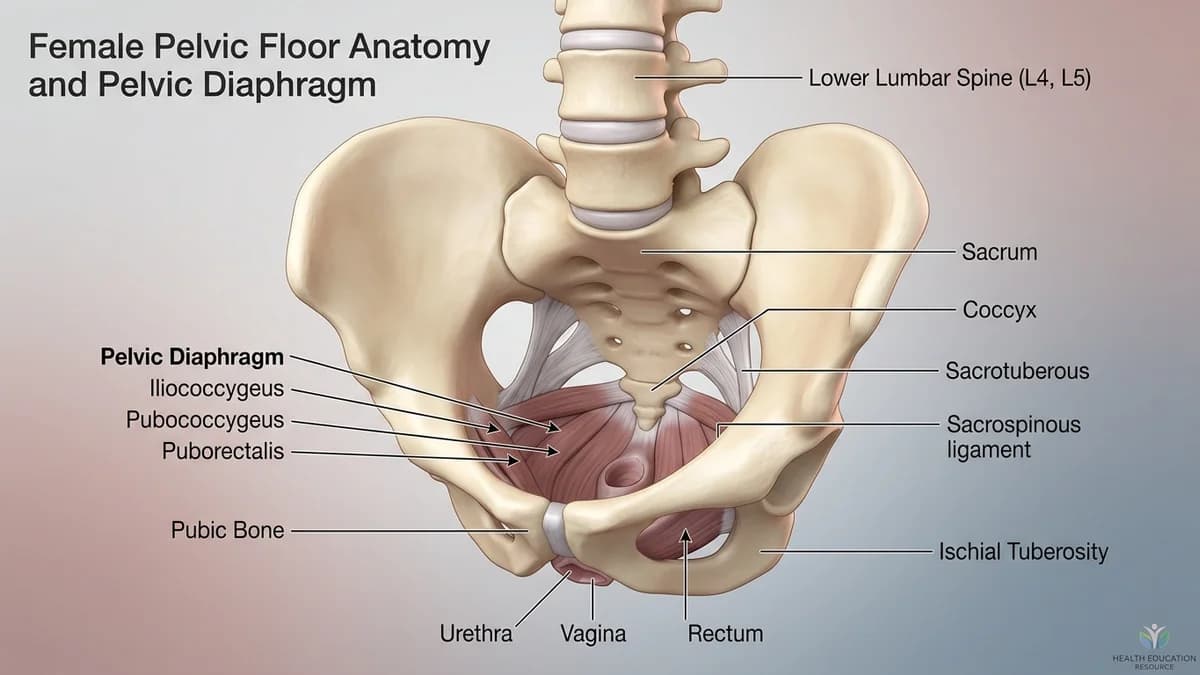
Surgical prolapse repair uses native tissue plication or synthetic mesh suspension to anchor descended organs to pelvic ligaments (such as the sacrospinous ligament or anterior sacral promontory). However, surgical sutures and native tissues require 12 weeks to develop mature tensile collagen strength. If a patient returns home and continues habitual breath-holding, straining during constipation, or lifting heavy domestic loads, repetitive intra-abdominal pressure spikes pull directly on fresh surgical anchor points. Pre-operative physiotherapy conditions the levator ani and teaches safe movement habits, while post-operative rehabilitation guides progressive, safe functional loading.
2. Domestic Indian Context: Daily Chores, Ergonomics, and Privacy
Post-surgical recovery in an Indian joint family requires strict activity discipline that can be challenging to maintain. Elders and extended family often expect the matriarch to resume kitchen supervision, lifting heavy brass cookware, or caring for grandchildren within weeks of surgery. Furthermore, using traditional Indian squat toilets during the first 6 weeks post-surgery places severe destructive strain on vaginal suture lines. Physiotherapists provide clear, written lifting restrictions for the patient and family, mandate western commode or raised toilet seat use, and guide gradual resumption of domestic duties.
3. Clinical Special Tests and Physical Examination
Pre-operative assessment documents the exact Pelvic Organ Prolapse Quantification (POP-Q) coordinates and screens for occult stress incontinence (unmasked when prolapse is manually reduced). Post-operative assessment (commencing at 6 to 8 weeks post-surgery) evaluates vaginal tissue healing, pelvic floor activation, and functional breathing coordination during sit-to-stand transitions.
| Post-Surgical Phase | Allowable Physical Activity | Weight Lifting Limit | Physiotherapy Rehabilitation Focus |
|---|---|---|---|
| Weeks 0 to 6 | Light walking, gentle household pacing | Strictly < 3 to 5 kilograms | Diaphragmatic breathing, circulation, no strain |
| Weeks 6 to 12 | Normal walking, light domestic cooking | Graduated 5 to 8 kilograms | Gentle pelvic floor activation & hip hinges |
| Months 3 to 6 | Full household management, low-impact exercise | Up to 10 to 12 kilograms with brace | Progressive kinetic chain & core loading |
| Beyond 6 Months | Unrestricted functional daily living | Sensible ergonomic limits for life | Lifelong 'Knack' pre-contraction habits |
4. Stage-by-Stage Functional Physiotherapy Protocol
Rehabilitation bridges pre-surgical preparation, early post-operative protection, and long-term functional integration.
Phase 1: Pre-Operative 'Log-Roll' and Pressure-Free Bed Mobility
Objective: Master non-straining movement patterns before surgery so they become second nature during recovery.
- 1Lie on your back on a firm bed.
- 2Bend your knees, keeping them gently pressed together.
- 3Roll your shoulders, ribs, and pelvis simultaneously as a single log onto your side without twisting your spine.
- 4Swing your lower legs off the bed edge while pressing down with your hands to sit up smoothly.
- 5Exhale through pursed lips throughout the movement without holding your breath.
Phase 2: Post-Surgical Gentle Pelvic Floor Awakening (Week 6 Onward)
Objective: Re-educate the levator ani to provide active upward support without pulling on healing surgical anchors.
- 1Lie in crook lying with knees bent and lower back comfortably supported.
- 2Inhale deeply into your lower ribs and belly.
- 3On a soft, slow exhalation, gently squeeze and elevate your pelvic floor at 30 percent effort.
- 4Hold for 3 seconds without tightening your gluteals, thighs, or upper abdomen.
- 5Release completely for 6 seconds, confirming that no pain or pulling is felt at the surgical site.
Phase 3: Standing Hip Hinge with Expiratory Pelvic Brace
Objective: Safely resume light household lifting while shielding the surgical suspension repair.
- 1Stand with feet shoulder-width apart in front of a chair.
- 2Pre-contract your pelvic floor muscles gently on an exhale.
- 3Hinge forward from your hip joints with a straight spine, pushing your hips backward as if reaching for a chair behind you.
- 4Keep the load close to your body and drive through your heels to return to standing.
- 5Maintain this biomechanical pattern whenever lifting groceries, laundry, or domestic cookware.
Contact your urogynecological surgeon immediately if you notice: heavy bright red vaginal bleeding soaking more than one pad per hour, foul-smelling vaginal discharge, severe pelvic or calf pain with high fever, inability to urinate for more than 6 hours, or a sudden recurrent bulge protruding through the vaginal opening.
5. Clinic Consultation, Home Visits, and Transparent Fee Benchmarks
Under the National Commission for Allied and Healthcare Professions (NCAHP) Act 2021, patients in India can consult a registered pelvic health physiotherapist directly without an upfront referral, though BookPhysio.in does not ask for one. Pelvic health physiotherapists guide pre- and post-surgical recovery in specialized outpatient clinics or via home visits for recovering patients. Clinic consultations in Indian cities range between ₹500 and ₹1,500, with home visits ranging from ₹700 to ₹2,000 where available. Patients pay their physiotherapist directly at each consultation, with zero platform commission.
6. Frequently Asked Questions
Can pelvic floor exercises prevent prolapse from coming back after surgery?
Yes. Clinical studies demonstrate that post-surgical pelvic floor physiotherapy significantly reduces the risk of prolapse recurrence. Strengthening the levator ani provides active muscular support beneath the surgical repair, preventing intra-abdominal pressure from placing all strain on surgical mesh or ligaments.
How long do I need to avoid heavy lifting after pelvic prolapse surgery in India?
Strictly avoid lifting anything heavier than 3 to 5 kilograms (such as a full kettle or light grocery bag) for the first 6 weeks. Between weeks 6 and 12, loads may gradually increase to 8 kilograms with proper hip hinge mechanics. Avoid lifting heavy water buckets (balti) or 20-litre cans permanently to protect your surgical repair long term.
Related recovery guides & articles
BookPhysio.in Editorial Team
The BookPhysio.in editorial team writes and maintains this content, checking it against reliable clinical sources. Content follows our medical review policy: general information only, and no page claims a clinical review until a named registered physiotherapist has signed it off.
Read our medical review policy