
Shoulder Rotohygienics in Rheumatoid Disease: Preventing Secondary Adhesive Capsulitis
In short
Glenohumeral synovitis in rheumatoid arthritis frequently precipitates secondary adhesive capsulitis, creating severe multi-plane shoulder restriction. Master clinical shoulder rotohygienics, gentle pendulum glides, and capsular preservation protocols.
In this guide (6 sections)
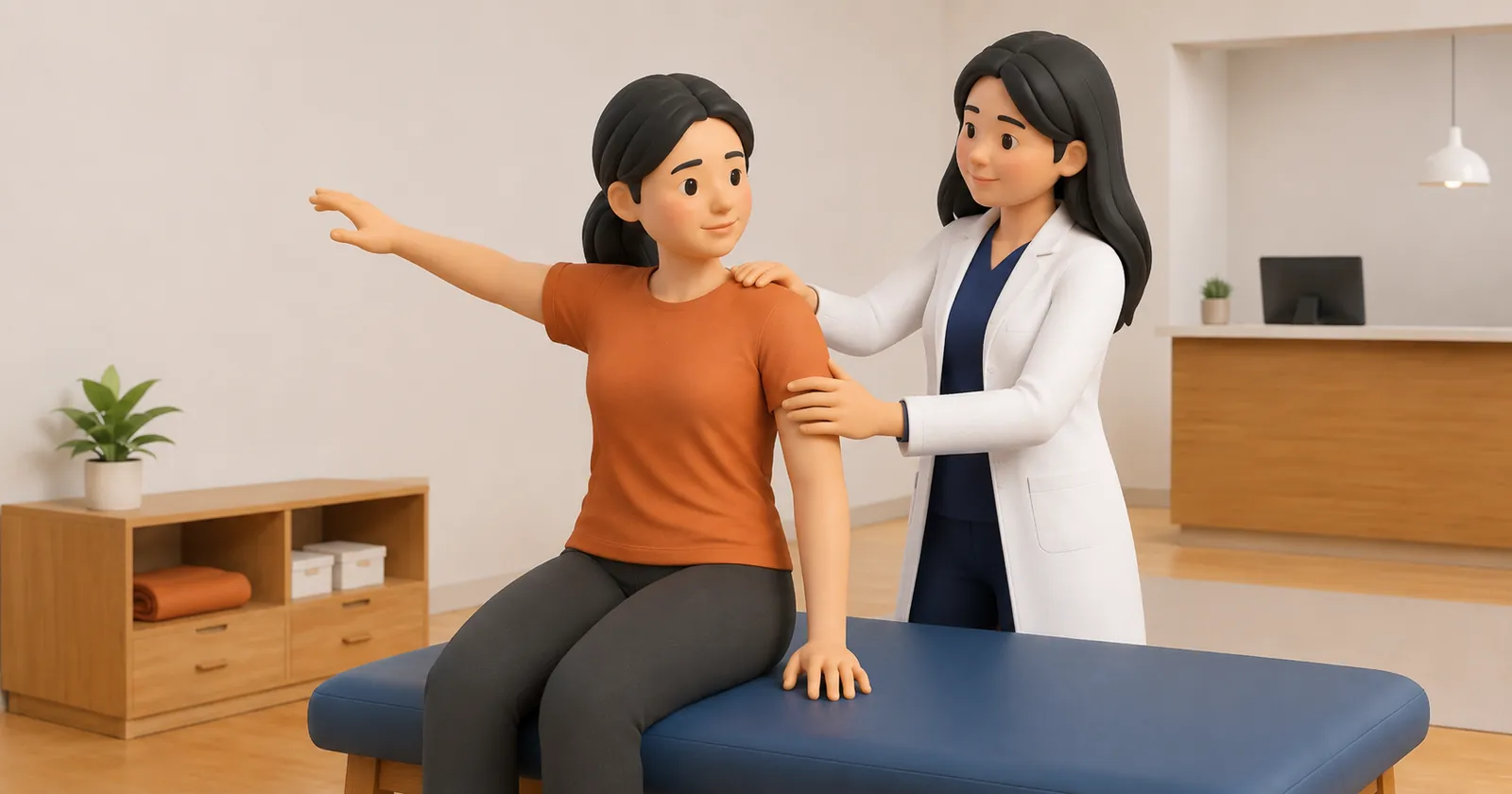
Shoulder involvement affects over 50 percent of individuals living with chronic rheumatoid arthritis, often developing insidiously. Persistent synovitis within the glenohumeral joint, subacromial-subdeltoid bursa, and acromioclavicular articulation induces pain-mediated muscle inhibition. In response to pain, patients instinctively immobilize the upper limb, keeping the arm held tight against the chest wall in adduction and internal rotation. This prolonged immobility triggers rapid secondary capsular thickening, shortening of the coracohumeral ligament, and obliteration of the axillary recess, culminating in secondary adhesive capsulitis (frozen shoulder). Implementing a proactive daily regimen of shoulder rotohygienics, combining non-weight bearing pendulum motions with active-assisted capsular glides, is vital to prevent permanent shoulder freezing.
Domestic and Cultural Indian Realities
In Indian domestic life, shoulder stiffness severely impairs essential self-care and cultural dressing rituals. Fastening a saree blouse behind the back, wrapping six yards of saree fabric around the torso, or tucking in a dhoti requires full glenohumeral internal rotation and horizontal adduction. In the bathroom, washing hair with a bucket and mug (dabba) requires comfortable overhead shoulder elevation. When shoulders freeze, patients endure excruciating pain or abandon independent dressing, often relying on family members. Families must introduce front-buttoning kurtas, install elevated shower heads or long-handled bath sponges, and support the patient in performing daily shoulder rotohygienics to maintain capsular volume.
Clinical Biomechanics and Inflammatory Pathology
The glenohumeral joint features the greatest mobility of any joint in the human body, relying on a loose, redundant inferior capsular fold (axillary pouch) to permit full overhead elevation. In rheumatoid synovitis, chronic cytokine release promotes fibroblastic proliferation and collagen cross-linking within the capsule. When the arm is held in dependent adduction, the dependent folds of the axillary pouch adhere to one another, drastically reducing total capsular volume from 25-30 ml down to less than 5 ml. Secondary adhesive capsulitis characteristically restricts external rotation first, followed by abduction and internal rotation (capsular pattern). Shoulder rotohygienics applies continuous, oscillatory passive movements to circulate synovial fluid and prevent intra-articular capsular adhesions.
Clinical Assessment and Functional Staging
Clinical evaluation requires precise goniometric measurement of glenohumeral external rotation with the elbow tucked to the side, comparing active against passive range of motion. A marked loss of passive external rotation confirms capsular restriction, distinguishing adhesive capsulitis from isolated rotator cuff tendinopathy. Scapulohumeral rhythm is observed from behind; early scapular hiking during arm elevation indicates glenohumeral stiffness. Clinicians assess shoulder function using the Constant-Murley Score and the Shoulder Pain and Disability Index (SPADI).
Targeted Mobility and Joint Preservation Exercises
Exercises must be performed without activating the inflamed rotator cuff under load, utilizing gravity-eliminated positions and active-assisted tools.
Modified Codman Pendulum Decompression Swings
Objective: Utilize passive gravity traction to mobilize the inferior glenohumeral capsule without muscle contraction
- 1Stand beside a sturdy table, resting your unaffected arm and forehead on the surface for support, bending forward at the hips.
- 2Allow your affected arm to hang completely loose and limp toward the floor like a relaxed pendulum.
- 3Gently rock your body weight forward and backward from your hips, allowing the momentum to sway your relaxed arm in small, smooth circles.
- 4Do not use your shoulder muscles to lift or swing the arm; let passive momentum create a gentle circle (approximately 15 cm diameter).
| Clinical Aspect | Acute Rheumatoid Synovitis Stage | Secondary Adhesive Capsulitis Stage |
|---|---|---|
| Primary Pathology | Intense synovial effusion, vascular pannus, and pain on movement | Dense capsular fibrosis, contracture of axillary pouch, and mechanical block |
| Mobility Objective | Gentle mid-range unresisted movement to circulate fluid and prevent adhesions | Sustained low-load end-range stretching to remodel shortened capsular collagen |
| Exercise Tool | Passive Codman pendulum swings and supported supine wand glides | Overhead pulley systems, wall walks, and sleeper internal rotation stretches |
| Contraindicated Actions | Aggressive end-range overpressure, heavy dumbbell presses, and forced stretching | Complete immobilization in a sling, which permanently consolidates capsular contracture |
Red Flags and Immediate Rheumatology Escalation
Sudden, severe monoarticular shoulder swelling with extreme skin heat, severe resting pain, and high systemic fever indicates acute septic arthritis of the glenohumeral joint, demanding emergency hospital admission and surgical drainage. Furthermore, sudden inability to initiate arm abduction accompanied by severe weakness indicates an acute massive rotator cuff tear, requiring prompt orthopaedic evaluation.
Frequently Asked Questions
Can shoulder rotohygienics reverse advanced joint erosion in rheumatoid arthritis?
No. Exercise cannot regrow eroded cartilage or reverse advanced osseous destruction of the humeral head. However, daily shoulder rotohygienics helps manage morning stiffness, prevents secondary adhesive capsulitis, preserves functional capsular volume, and maintains independence in dressing and personal care.
How do I book a qualified home physiotherapist for shoulder rehabilitation via BookPhysio.in?
Under the National Commission for Allied and Healthcare Professions (NCAHP) Act 2021, Indian patients enjoy direct access to registered physiotherapists without an obligatory doctor referral. On BookPhysio.in, you schedule an appointment with a verified home-care clinician in your city. Payment is made directly to the therapist at your home appointment via cash or UPI; BookPhysio.in does not process booking fees online.
Related recovery guides & articles
BookPhysio.in Editorial Team
The BookPhysio.in editorial team writes and maintains this content, checking it against reliable clinical sources. Content follows our medical review policy: general information only, and no page claims a clinical review until a named registered physiotherapist has signed it off.
Read our medical review policy