
Sitting Cross-Legged (Sukhasana) in Diabetes: Peroneal Nerve Palsy and Malleolar Ulcers
In short
Prolonged cross-legged sitting compresses the peroneal nerve and lateral malleolus against hard floors. Discover biomechanical risks and safe seating alternatives for diabetes.
In this guide (6 sections)
Sitting cross-legged on the floor (sukhasana or palthi) is a deeply rooted posture in Indian daily life, utilized for dining, social gatherings, meditation, and religious worship. However, in individuals with diabetes mellitus, prolonged cross-legged floor sitting introduces two distinct neuromuscular hazards. First, the superficial anatomical course of the common peroneal (fibular) nerve as it winds around the fibular neck makes it vulnerable to external compressive ischaemia, resulting in acute peroneal nerve palsy (foot drop). Second, direct unbuffered pressure between the lateral malleolus and the hard floor surface creates localized microvascular occlusion, leading to deep, non-healing lateral malleolar pressure ulcers. Transitioning to elevated seating modifications preserves cultural participation while protecting vulnerable nerves and bony prominences.
Domestic and Cultural Indian Realities
In Indian joint families, elders often sit on thin cotton mats (dhurries) or bare marble floors for hours during family satsangs, pooja ceremonies, or meal times. When a person with diabetic neuropathy sits cross-legged, the outer ankle bone (lateral malleolus) of the bottom leg presses directly into the rigid floor beneath the entire weight of the crossed legs. Because sensory neuropathy blunts the warning pain of tissue ischaemia, the patient remains seated for hours without shifting position. Upon standing, they discover that their foot feels completely numb or that the toes drag along the floor (foot drop). Over several weeks, a dark, painless necrotic pressure sore develops directly over the lateral malleolus. Families must provide an elevated wooden prayer chowki measuring at least 18 inches high or a comfortable armchair.
Clinical Biomechanics and Neuropathic Breakdown
The common peroneal nerve branches from the sciatic nerve and travels superficially around the lateral aspect of the fibular neck, covered only by skin and thin subcutaneous fascia. In the cross-legged posture, the fibular neck of the uppermost leg is pressed firmly against the medial femoral condyle or hard surface of the lower leg. Sustained pressure exceeding 30 mmHg occludes endoneurial capillary blood flow, causing acute conduction block (neuropraxia). If sustained, axonal degeneration occurs, paralyzing the tibialis anterior and extensor digitorum longus and causing foot drop. Concurrently, the lateral malleolus bears focal pressure exceeding 200 mmHg, causing tissue necrosis over the fibular tip that rapidly ulcerates through thin overlying skin.
Clinical Assessment and Neuropathy Screening
Assessment begins with manual muscle testing (MMT) of active ankle dorsiflexion and toe extension, evaluating for weakness in the tibialis anterior, extensor hallucis longus, and extensor digitorum longus. Sensation is tested using 10g monofilaments over the first dorsal web space (deep peroneal distribution) and dorsal foot (superficial peroneal distribution). The lateral malleoli and base of the fifth metatarsals are inspected for non-blanching erythema, bogginess, or hyperkeratotic pressure rings. Deep tendon reflexes (patellar and Achilles) are tested to rule out lumbar radiculopathy.
Targeted Offloading and Intrinsic Foot Conditioning
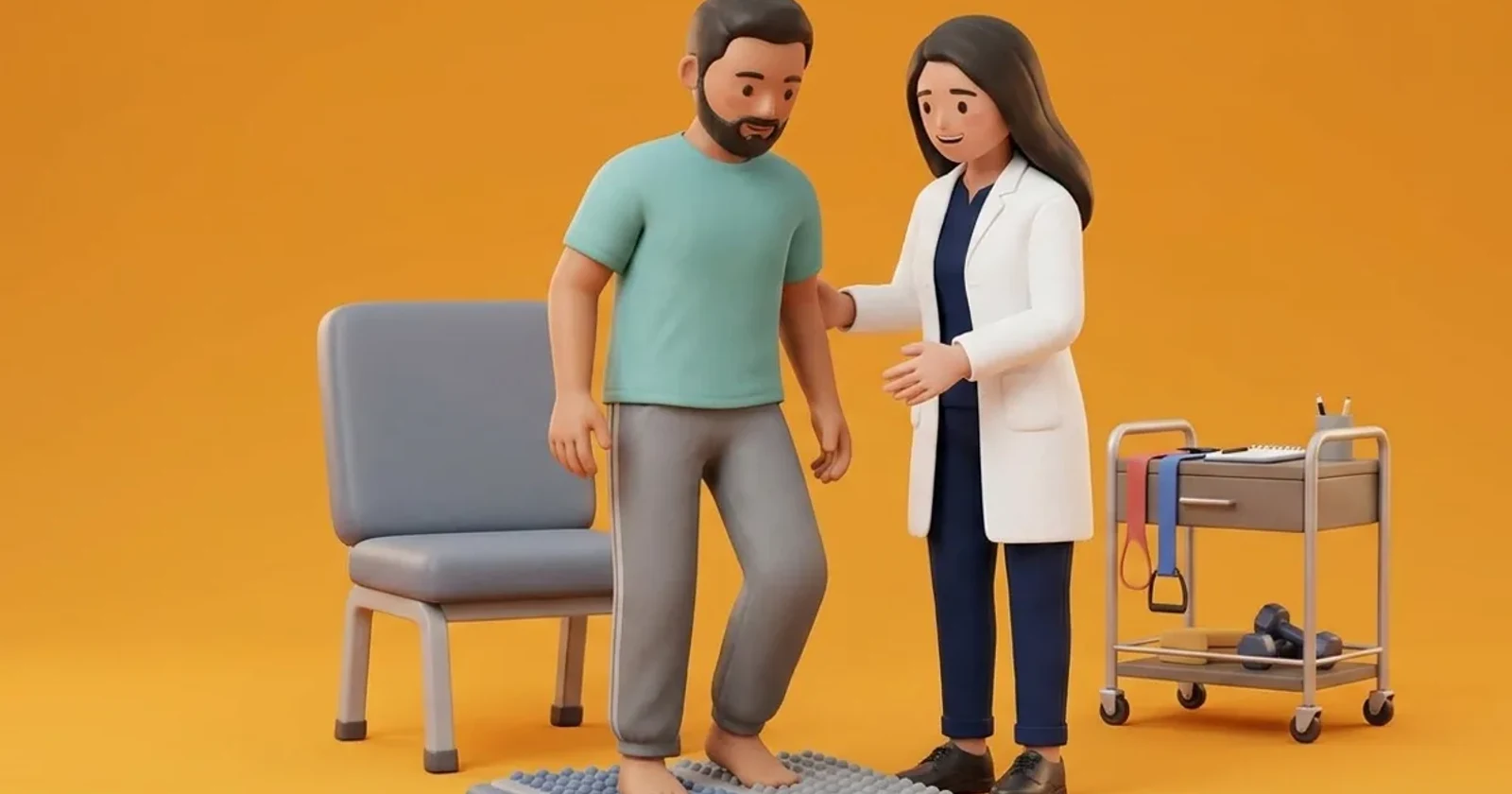
Management requires immediate modification of floor sitting habits. Patients must not sit directly on hard floors for extended periods. If floor sitting is unavoidable during brief rituals, the patient must place a thick (at least 3-inch) high-density memory foam cushion beneath the ankles and knees, shifting position every 15 minutes. For those who develop peroneal nerve weakness, a lightweight thermoplastic ankle-foot orthosis (AFO) is prescribed to prevent toe dragging during walking, combined with active dorsiflexion strengthening drills.
Seated Active Resisted Ankle Dorsiflexion Drill
Objective: Strengthen tibialis anterior and promote peroneal nerve recovery while safely seated
- 1Sit upright in a sturdy chair with feet resting flat on the floor.
- 2Place your unaffected foot over the top of the affected foot to act as gentle resistance.
- 3Slowly pull the toes and foot of the lower leg upward against the gentle downward pressure of the top foot.
- 4Hold the active dorsiflexion contraction for 5 seconds while breathing smoothly.
- 5Slowly lower the foot back to the floor and rest for 3 seconds.
- 6Repeat the resisted upward movement smoothly.
| Anatomical Structure at Risk | Mechanical Compression Mechanism | Prescribed Clinical Adaptation |
|---|---|---|
| Common Peroneal Nerve (Fibular Neck) | Direct external pressure causing conduction block and foot drop | Avoid crossing knees; use elevated chair or wooden prayer chowki |
| Lateral Malleolus (Outer Ankle) | High focal pressure against hard floor causing deep pressure sores | Place 3-inch high-density foam cushion under lateral ankles |
| Popliteal Artery & Tibial Nerve | Deep knee flexion constricts arterial inflow and venous outflow | Limit knee flexion angle to under 90 degrees; raise legs frequently |
| Lateral Base of Fifth Metatarsal | Direct floor contact shear during sitting and rising transfers | Wear indoor cushioned MCR footwear during domestic floor activities |
Red Flags and Urgent Diabetic Foot Escalation
Immediate neurological or podiatric review is necessary if a patient experiences sudden inability to lift the front of the foot (foot drop), causing tripping or scuffing of the toes. The appearance of a dark purple spot, blister, or open skin breakdown over the lateral ankle bone constitutes an urgent pressure ulcer risk requiring immediate offloading.
Frequently Asked Questions
Why does my foot feel completely numb and weak after sitting on the floor for pooja?
Sitting cross-legged presses the nerve on the outer side of your knee (the peroneal nerve) against the hard floor or your other leg. This pressure pinches the nerve, cutting off its blood supply and causing temporary numbness and foot weakness. If this happens repeatedly, the nerve damage can become permanent, causing permanent foot drop.
Is it acceptable to sit on a chair during family religious ceremonies?
Yes. Most religious and family traditions encourage caring for the physical body. Sitting on a sturdy chair or an elevated wooden stool (chowki) allows you to participate fully in spiritual ceremonies without placing destructive pressure on your nerves and ankle bones.
Related recovery guides & articles
BookPhysio.in Editorial Team
The BookPhysio.in editorial team writes and maintains this content, checking it against reliable clinical sources. Content follows our medical review policy: general information only, and no page claims a clinical review until a named registered physiotherapist has signed it off.
Read our medical review policy