
Sleep Hygiene and Firm Mattress Selection for Axial Spondyloarthritis
In short
Nocturnal inflammatory back pain severely disrupts sleep architecture in axial spondyloarthritis, driving progressive spinal flexion. Master mattress selection, sleeping posture alignment, and bedtime mobility routines.
In this guide (6 sections)
Nocturnal inflammatory back pain is a defining clinical hallmark of axial spondyloarthritis and ankylosing spondylitis. Patients characteristically awaken during the second half of the night, around 2:00 to 4:00 AM, with severe lumbar and sacroiliac pain and unyielding stiffness that compels them to get out of bed and walk around. During prolonged nocturnal recumbency, lack of movement allows inflammatory exudates and pro-inflammatory cytokines to accumulate within rigid sacroiliac and discovertebral joints. Furthermore, sleeping on improper, sagging sleep surfaces or curling into a flexed foetal posture allows ossifying syndesmophytes to consolidate in kyphotic deformity. Implementing rigorous sleep hygiene, selecting firm orthopedic sleep surfaces, and adopting extension-preserving sleep postures are vital components of long-term spinal care.
Domestic and Cultural Indian Realities
In Indian households, traditional sleeping surfaces vary widely, from sagging cotton rope charpoys and soft cotton mattresses (gaddas) to overly dense coir beds. A sagging rope charpoy is particularly hazardous for spondylitis: under body weight, the bed sags into a deep trough, forcing the pelvis into posterior tilt, rounding the thoracic spine, and curling the neck forward. Furthermore, patients often place multiple thick cotton pillows beneath their head and knees to relieve acute back pain, unwittingly promoting permanent hip flexion and cervical kyphosis contractures. Patients must sleep on a firm wooden cot reinforced with a 12 mm marine plywood sheet beneath a medium-firm high-density foam or natural latex mattress, using only a single thin contour pillow beneath the neck.
Clinical Biomechanics and Inflammatory Pathology
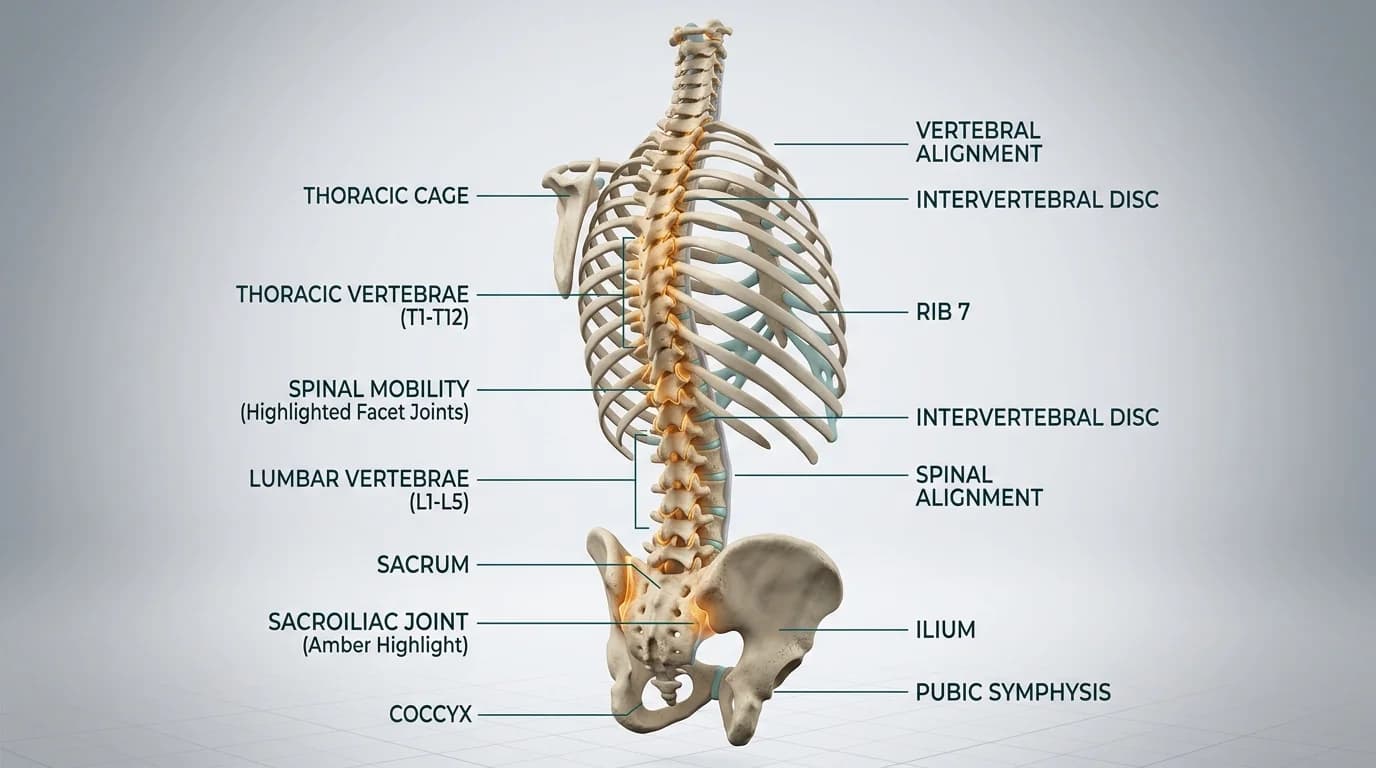
The biomechanics of nocturnal spinal positioning dictate how developing syndesmophytes align during bone remodeling. When a patient spends 7 to 8 hours nightly in spinal flexion, the anterior longitudinal ligament and anterior annulus fibrosus remain in a compressed, shortened state, while posterior entheses experience constant tensile strain. Over years, this accelerates anterior vertebral bridging in a fixed kyphotic curvature. Conversely, sleeping supine on a firm, supportive mattress maintains neutral sagittal curves, distributing intradiscal pressure evenly and elongating anterior soft tissue restraints. Incorporating 20 to 30 minutes of prone resting prior to nocturnal sleep counteracts daytime flexion creep.
Clinical Assessment and Functional Staging
Clinical evaluation assesses sleep quality and nocturnal inflammatory disease activity using the Pittsburgh Sleep Quality Index (PSQI) and question 2 of the BASDAI (evaluating spinal pain at night). Physiotherapists inspect spinal sagittal balance, measuring tragus-to-wall and occiput-to-wall distances. Patients are asked to demonstrate their habitual sleeping posture and pillow configuration on an examination plinth, identifying biomechanical faults that promote spinal flexion.
Targeted Mobility and Joint Preservation Exercises
Bedtime routines should conclude with gentle unresisted axial elongation and prone positioning to relax hypertonic paraspinal musculature before sleep.
Prone Lying Static Extension Relaxation
Objective: Lengthen the anterior longitudinal ligament and decompress anterior vertebral bodies prior to sleep
- 1Lie flat on your stomach on your firm bed, placing your arms comfortably by your sides or resting your forehead on your hands.
- 2Do not place any pillows under your head or chest; if lower back discomfort occurs, place a thin flat pillow beneath your pelvis.
- 3Focus on slow, deep diaphragmatic breathing, allowing your lower back to settle completely flat with gravity.
- 4Remain in this relaxed, supported prone posture continuously for 15 minutes before rolling into your primary sleep position.
| Sleep Parameter | Spine-Preserving Optimal Practice | Deforming High-Risk Practice |
|---|---|---|
| Mattress Foundation | Firm wooden cot with solid 12 mm plywood base supporting a medium-firm mattress | Sagging rope charpoy or spring mattress that bows under body weight |
| Head & Neck Support | Single thin cervical contour pillow supporting the natural neck lordosis | Multiple thick fluffy pillows propping the head forward into acute flexion |
| Lower Extremity Alignment | Legs extended straight in neutral alignment; prone sleeping encouraged | Sleeping curled in a tight foetal ball with thick bolsters placed beneath flexed knees |
| Nocturnal Waking Care | Gentle bedside active ankle pumps and deep breathing before rising to walk | Lying rigidly in bed enduring agonizing pain without gentle movement |
Red Flags and Immediate Rheumatology Escalation
Severe unremitting nocturnal spinal pain that prevents any sleep despite medication, accompanied by drenching night sweats, unexplained weight loss, or localized spinal tenderness, indicates spinal infection (discitis or vertebral osteomyelitis) requiring emergency MRI imaging and infectious disease consultation. Any sudden onset of numbness in the groin (saddle anaesthesia) or urinary retention indicates cauda equina syndrome, an emergency requiring immediate surgical decompression.
Frequently Asked Questions
Can a firm mattress reverse spinal fusion in ankylosing spondylitis?
No. A mattress cannot reverse mature ossified syndesmophytes or reopen fused vertebral joints. However, choosing a firm mattress and maintaining proper sleep posture helps manage morning stiffness, prevents the spine from fusing in a disabling hunched posture, and significantly improves sleep quality.
How do I book a qualified home physiotherapist for spinal ergonomics via BookPhysio.in?
Under the National Commission for Allied and Healthcare Professions (NCAHP) Act 2021, Indian patients enjoy direct access to registered physiotherapists without an obligatory doctor referral. On BookPhysio.in, you schedule an appointment with a verified home-care clinician in your city. Payment is made directly to the therapist at your home appointment via cash or UPI; BookPhysio.in does not process booking fees online.
Related recovery guides & articles
BookPhysio.in Editorial Team
The BookPhysio.in editorial team writes and maintains this content, checking it against reliable clinical sources. Content follows our medical review policy: general information only, and no page claims a clinical review until a named registered physiotherapist has signed it off.
Read our medical review policy