
Undifferentiated Spondyloarthritis: Early Postural Intervention and Joint Care
In short
Undifferentiated spondyloarthritis represents the essential pre-radiographic window before irreversible spinal fusion occurs. Master early postural screening, daily wall-alignment checks, and targeted extension routines to halt kyphotic decline.
In this guide (6 sections)
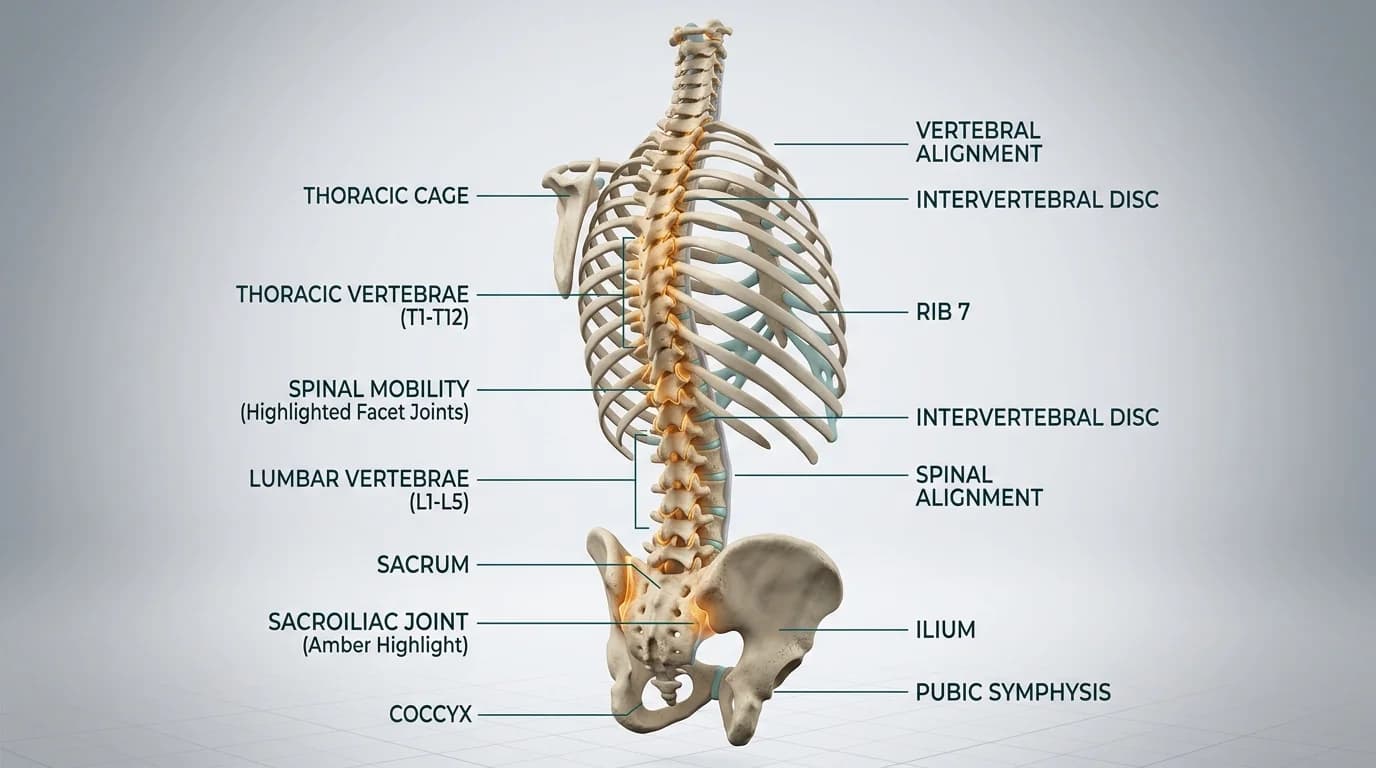
Undifferentiated spondyloarthritis (uSpA) encompasses clinical presentations that fulfill classification criteria for spondyloarthritis but lack defining diagnostic features of a specific entity such as ankylosing spondylitis, psoriatic arthritis, or reactive arthritis. Patients, frequently young adults, present with chronic inflammatory back pain, alternating buttock aching, asymmetric peripheral oligoarthritis, or isolated heel enthesitis, yet conventional radiographs show no definitive sacroiliac joint erosions (non-radiographic axial spondyloarthritis). This clinical phase represents an invaluable window of therapeutic opportunity: because structural osseous bridging has not yet occurred, proactive postural education, deep extensor strengthening, and ergonomic retraining can preserve normal spinal biomechanics and prevent future structural kyphosis.
Domestic and Cultural Indian Realities
In India, young adults in their twenties and thirties developing early undifferentiated spondyloarthritis frequently work demanding sedentary jobs in corporate or IT sectors. Prolonged slumping over laptops for 10 to 12 hours daily, combined with long commutes on crowded two-wheelers over poorly maintained roads, places repetitive mechanical stress across inflamed sacroiliac and costovertebral joints. Patients often dismiss alternating buttock pain as simple muscle fatigue or sciatica, delaying medical evaluation until morning stiffness becomes debilitating. Workstations must be upgraded with external monitors at eye level, ergonomic chairs with lumbar support, and standing stretch breaks scheduled every 45 minutes.
Clinical Biomechanics and Inflammatory Pathology
In undifferentiated spondyloarthritis, subclinical enthesitis involves cellular infiltration of the fibrocartilaginous insertions of the annulus fibrosus into vertebral endplates. High-sensitivity magnetic resonance imaging (MRI) reveals active bone marrow oedema (osteitis) long before plain radiographs demonstrate sclerosis or syndesmophytes. Habitual forward-slumped sitting forces the thoracic spine into persistent flexion, creating continuous tensile strain across posterior entheses. This mechanical tension upregulates local cytokine release and accelerates fibroblastic metaplasia. Daily axial extension exercises counteract this mechanical stress, promoting healthy disc hydration and maintaining sagittal spinal balance.
Clinical Assessment and Functional Staging
Clinical screening evaluates inflammatory back pain characteristics using the ASAS (Assessment of SpondyloArthritis international Society) criteria: age of onset under 40 years, insidious onset, improvement with exercise, no improvement with rest, and nocturnal pain. Baseline spinal metrology includes the modified Schober test, lateral lumbar flexion, and cervical rotation. Physiotherapists evaluate static posture using the standing wall-alignment test: assessing whether the occiput, scapulae, buttocks, and heels can contact a flat vertical wall simultaneously without forward head poking.
Targeted Mobility and Joint Preservation Exercises
Rehabilitation focuses on active spinal elongation, thoracic extension over a foam roll, and strengthening the deep scapular retractors and back extensors.
Standing Back-to-Wall Postural Self-Correction and Scapular Pinch
Objective: Calibrate postural proprioception and recruit deep thoracic extensors to resist forward kyphotic collapse
- 1Stand with your back against a flat, smooth wall, positioning your heels 2 to 3 inches away from the baseboard.
- 2Ensure your buttocks and upper back make firm contact with the wall surface.
- 3Gently draw your chin backward (chin tuck) until the back of your head contacts the wall, looking straight forward at eye level.
- 4Flatten your lower back slightly toward the wall and gently pinch your shoulder blades together, holding the tall posture for 10 seconds while breathing smoothly.
| Clinical Parameter | Early Undifferentiated SpA (Pre-Radiographic) | Advanced Fused Spondyloarthritis |
|---|---|---|
| Spinal Reversibility | High potential for full postural self-correction and normal spinal excursion | Irreversible osseous fusion; focus is strictly on compensation and preventing further kyphosis |
| Exercise Intensity | Dynamic multi-plane strengthening, postural endurance, and aerobic conditioning | Gentle supported axial positioning, low-load unresisted mobility, and respiratory care |
| Workstation Focus | Active sit-stand desks, dynamic ergonomic chair setups, and frequent movement | Specialised adapted seating, raised reading stands, and rigid neck supports |
| Diagnostic Imaging | MRI pelvis with STIR sequences showing active sacroiliac bone marrow oedema | Plain radiographs demonstrating mature syndesmophytes and continuous bamboo spine |
Red Flags and Immediate Rheumatology Escalation
Immediate medical escalation is necessary if a patient develops sudden red eye with intense aching and photophobia, indicating acute anterior uveitis. Severe unremitting nocturnal thoracic spine pain accompanied by systemic weight loss and low-grade fever warrants urgent imaging to exclude spinal tuberculosis (Pott disease) or infectious discitis, which are prevalent in the Indian subcontinent.
Frequently Asked Questions
Can early posture exercises prevent ankylosing spondylitis from developing?
Exercise alone cannot alter the underlying genetic or immunological mechanisms of spondyloarthritis. However, initiating early postural intervention during the pre-radiographic phase helps manage morning stiffness, prevents soft tissue contractures, and ensures that if osseous changes occur, the spine remains in an upright, functional alignment.
How do I book a specialised postural physiotherapy assessment at home via BookPhysio.in?
Under the National Commission for Allied and Healthcare Professions (NCAHP) Act 2021, Indian patients enjoy direct access to registered physiotherapists without an obligatory doctor referral. On BookPhysio.in, you schedule an appointment with a verified home-care clinician in your city. Payment is made directly to the therapist at your home appointment via cash or UPI; BookPhysio.in does not process booking fees online.
Related recovery guides & articles
BookPhysio.in Editorial Team
The BookPhysio.in editorial team writes and maintains this content, checking it against reliable clinical sources. Content follows our medical review policy: general information only, and no page claims a clinical review until a named registered physiotherapist has signed it off.
Read our medical review policy