
Urge Incontinence and Overactive Bladder: Bladder Retraining, Timed Voiding, and Chai Triggers in India
In short
Sudden, uncontrollable urges to urinate can disrupt daily work and family life. Learn evidence-based bladder retraining, urge suppression techniques, and dietary modifications for lasting control.
In this guide (6 sections)
Urge urinary incontinence (UUI), commonly manifesting as part of overactive bladder (OAB) syndrome, is characterised by a sudden, compelling desire to urinate that is difficult to defer, often leading to involuntary leakage before reaching the toilet. In India, where daily routines involve frequent commuting on congested public transport and shared family bathrooms, living with bladder urgency creates severe social anxiety. Patients often map every public restroom along their route or rush to the toilet every 30 minutes 'just in case'. Over time, this behavioural pattern trains the bladder to tolerate progressively smaller volumes of urine, worsening urgency and frequency.
1. Functional Biomechanics: Detrusor Overactivity and Neural Inhibitory Reflexes
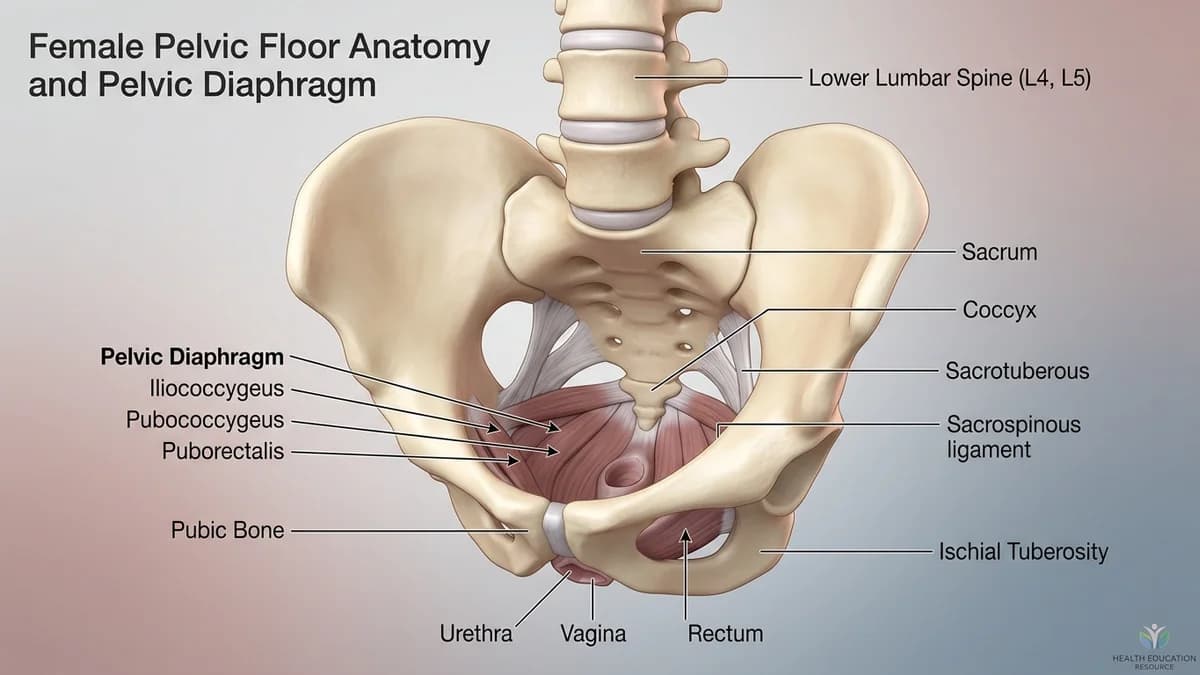
The urinary bladder wall is composed of the detrusor smooth muscle, which relaxes during filling and contracts during voluntary voiding under parasympathetic control (S2-S4). In overactive bladder, inappropriate detrusor muscle spasms occur at low bladder volumes, sending urgent sensory signals to the brainstem. Physiotherapy utilises the perineobulbar inhibitory reflex: contracting the striated pelvic floor muscles stimulates pudendal nerve afferents, which reflexively inhibit efferent parasympathetic firing to the detrusor muscle, calming the bladder spasm.
2. Domestic Indian Context: Daily Chores, Ergonomics, and Privacy
Dietary habits in Indian households play a major role in bladder irritability. Drinking 3 to 4 cups of hot spiced milk tea (masala chai) daily, consuming caffeine-rich coffee, and eating highly spiced curries directly irritates the bladder urothelium. In multi-generational joint families, sharing a single bathroom creates panic when urgency strikes suddenly, prompting individuals to run to the commode. Running increases intra-abdominal pressure and stimulates panic pathways that trigger full bladder emptying. Physiotherapists teach patients to stand still, breathe deeply, and perform gentle pelvic floor pulses to ride out the urge safely.
3. Clinical Special Tests and Physical Examination
The diagnostic cornerstone is a 3-day Bladder Diary documenting fluid intake (volume and beverage type), voiding frequency, urgency ratings (scale 1 to 5), and leakage episodes. Physical examination assesses pelvic floor resting tone, rules out pelvic floor muscle hypertonicity (which can mimic urgency), and checks post-void residual urine volume to ensure complete bladder emptying.
| Rehabilitation Stage | Baseline Interval | Target Voiding Frequency | Behavioural Focus |
|---|---|---|---|
| Stage 1 (Weeks 1-2) | Every 45 to 60 minutes | Void on schedule, suppress urges | Urge freeze technique and chai reduction |
| Stage 2 (Weeks 3-4) | Every 90 to 120 minutes | Gradual 15-30 minute extension | Diaphragmatic breathing and pelvic pulses |
| Stage 3 (Weeks 5-8) | Every 2.5 to 3.5 hours | Normalized functional capacity | Maintain fluid intake, confidence in transit |
| Maintenance | Every 3 to 4 hours (5-7 times/day) | Complete bladder control without leaks | Sustained lifestyle and pelvic health habits |
4. Stage-by-Stage Functional Physiotherapy Protocol
Rehabilitation centres on active bladder retraining, progressive interval expansion, and somatic urge suppression techniques.
Phase 1: The 'Freeze and Breathe' Urge Suppression Technique
Objective: Inhibit involuntary detrusor contractions through sympathetic activation and somatic calming.
- 1Stop moving immediately. Do not rush to the bathroom, as running increases sensory stimulation to the bladder.
- 2Sit down if possible, or stand still with your feet firmly grounded and hold onto a table.
- 3Take 5 slow, deep diaphragmatic breaths through your nose, letting your belly expand and your shoulders drop.
- 4Perform 5 to 6 quick, gentle pulses of your pelvic floor muscles (squeezing and releasing rapidly) to activate the bladder-inhibiting reflex.
- 5Distract your mind by counting backward from 100 by sevens or naming Indian cities alphabetically.
- 6Once the wave of urgency subsides, walk calmly to the bathroom at a normal, controlled pace.
Phase 2: Timed Voiding Protocol with Interval Expansion
Objective: Re-establish cortical control over the micturition reflex and increase functional bladder capacity.
- 1Based on your baseline diary, set a timer for your starting void interval (for example, every 1 hour and 15 minutes).
- 2Urinate only when the timer rings, even if you do not feel an urgent need, to keep the bladder calm.
- 3If an urge occurs before the timer rings, execute the 'Freeze and Breathe' technique to suppress it until the scheduled time.
- 4Once you maintain your schedule without leaks for 4 consecutive days, extend the interval by 15 minutes.
- 5Gradually progress until you comfortably reach 2.5 to 3.5 hours between daytime voids.
Phase 3: Deep Calcaneal Nerve Mobilisation and Posterior Tibial Stimulation Prep
Objective: Modulate sacral nerve outflow to the bladder via peripheral neuromodulation pathways.
- 1Sit comfortably with your ankle crossed over your opposite knee.
- 2Locate the space behind your inner ankle bone (medial malleolus), where the posterior tibial nerve travels.
- 3Apply gentle circular thumb pressure along this zone for 2 minutes while taking calm breaths.
- 4Perform 15 slow ankle circles in each direction to stimulate peripheral mechanoreceptors.
- 5Repeat on the opposite ankle to support central nervous system autonomic down-regulation.
Seek medical consultation promptly if you experience: painful urination with fever, visible blood in your urine, involuntary loss of bowel control, progressive lower limb weakness, or urinary incontinence that developed suddenly following spinal trauma or epidural anaesthesia.
5. Clinic Consultation, Home Visits, and Transparent Fee Benchmarks
In India, under the National Commission for Allied and Healthcare Professions (NCAHP) Act 2021, patients can consult a registered pelvic health physiotherapist directly without an upfront referral, though BookPhysio.in does not ask for one. Individuals dealing with severe urgency often prefer initial home visits to assess bathroom access and environmental triggers before transitioning to clinic sessions. In Indian cities, clinic consultations typically cost between ₹500 and ₹1,500, while home sessions range from ₹700 to ₹2,000. Fees are paid directly to the treating physiotherapist at each appointment.
6. Frequently Asked Questions
Does cutting down on Indian masala chai really help with bladder urgency?
Yes. Black tea, green tea, and coffee contain caffeine, which acts as a direct bladder irritant and mild diuretic, stimulating detrusor muscle contractions. In addition, acidic spices like ginger, black pepper, and clove can irritate a sensitive bladder lining. Reducing your chai consumption to one mild cup per day or switching to warm water with roasted fennel seeds often reduces urgency symptoms within 1 to 2 weeks.
How long does bladder retraining take to show results?
Most patients notice a meaningful decrease in urinary urgency and frequency within 2 to 4 weeks of consistent bladder retraining and urge suppression practice. Achieving a normalised voiding interval of 3 to 4 hours typically takes between 6 and 12 weeks of structured progression.
Related recovery guides & articles
BookPhysio.in Editorial Team
The BookPhysio.in editorial team writes and maintains this content, checking it against reliable clinical sources. Content follows our medical review policy: general information only, and no page claims a clinical review until a named registered physiotherapist has signed it off.
Read our medical review policy