
Uterine Prolapse in the Indian Home: Domestic Adaptations, Floor Sitting, and Safe Lifting Ergonomics
In short
Managing uterine prolapse in an Indian joint family requires practical ergonomic modifications. Learn how to adapt floor sitting for pooja, modify squat toilet use, and lift domestic loads safely.
In this guide (6 sections)
Uterine prolapse is a widespread yet under-discussed health concern among women across urban and rural India. The physical architecture of traditional Indian households, characterised by low floor seating for meals, cross-legged sitting during pooja, washing clothes in low tubs, and lifting heavy steel water buckets (balti), places recurring downward stress on the pelvic floor. When uterine support structures weaken, daily domestic tasks can provoke severe pelvic dragging, lower back fatigue, and distress. Rather than discontinuing essential family activities, women can implement evidence-based biomechanical adaptations to protect their pelvic organs.
1. Functional Biomechanics: The Impact of Floor Sitting and Heavy Lifting
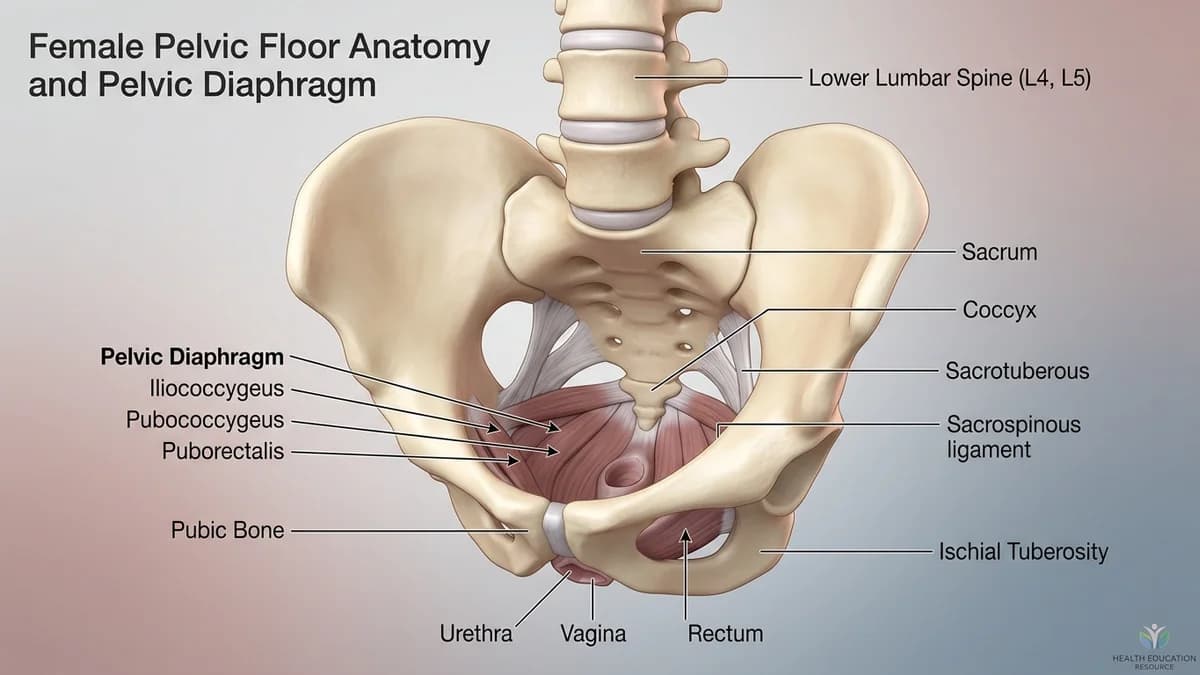
The uterus is suspended in the pelvis by the uterosacral and cardinal ligament complex, counterbalanced from below by the levator ani muscular shelf. When an individual bends forward with straight legs to lift a 15-kilogram water bucket while holding their breath, intra-abdominal pressure can spike above 100 centimetres of water. This force drives the uterus downward through the genital hiatus like a piston. Similarly, prolonged floor sitting in deep flexion rounds the lumbar spine, flattening the sacral angle and directing abdominal forces directly onto the vaginal vault rather than dissipating them through the pubic bones.
2. Domestic Indian Context: Daily Chores, Ergonomics, and Privacy
Navigating domestic duties in a joint family often leaves little room to show physical vulnerability. Preparing rotis while seated on low wooden planks (patla), grinding spices on stones, or lifting heavy 20-litre water cans are daily realities. To protect pelvic health, physiotherapists recommend replacing low floor patlas with dining-height chairs during kitchen prep, using a 6-inch stool during floor prayers, and splitting water bucket loads into two half-filled containers to balance bilateral pelvic loading.
3. Clinical Special Tests and Physical Examination
Assessment includes evaluating apical uterine descent during a controlled Valsalva manoeuvre in standing and supine positions. The physiotherapist assesses pelvic floor endurance, checks for concurrent rectocele or cystocele, and evaluates hip internal rotation and thoracic mobility to identify compensatory movement patterns during lifting.
| Domestic Activity | High-Risk Habit | Biomechanical Hazard | Ergonomic Physio Adaptation |
|---|---|---|---|
| Lifting Water Bucket (Balti) | Bending at waist with breath held | Extreme downward visceral pressure | Hip hinge, exhale on exertion, half loads |
| Floor Sitting for Pooja | Deep cross-legged sitting for hours | Posterior pelvic tilt straining vault | Sit on 6-inch wooden patla or firm cushion |
| Indian Squat Toilet Use | Prolonged deep squatting with straining | Hiatal expansion and tissue descent | Use raised toilet seat or footstool angle |
| Kitchen Food Preparation | Squatting on low stool for chopping | Sustained intra-abdominal compression | Work at counter height on an upright chair |
4. Stage-by-Stage Functional Physiotherapy Protocol
Conservative management combines posture re-education, pelvic floor muscle endurance, and functional lifting drills tailored to the Indian home.
Phase 1: Inverted Pelvic Offloading Bridge with Diaphragmatic Breath
Objective: Use gravity to passively decompress the pelvic organs while restoring gentle levator ani awareness.
- 1Lie on your back on a firm bed or floor mat with your knees bent and feet flat.
- 2Slide a firm yoga block or folded cotton blanket beneath your sacrum so your pelvis is elevated slightly above your chest.
- 3Place your hands over your lower ribs and take slow, deep breaths, allowing your belly to rise softly.
- 4As you exhale, imagine your pelvic organs sliding naturally upward toward your ribcage.
- 5Remain in this restful position for several minutes to relieve evening pelvic heaviness.
Phase 2: Seated Pelvic Lift with Hip Hinge Mechanics
Objective: Build pelvic floor endurance while learning to hinge forward without rounding the lower back.
- 1Sit on the edge of a sturdy chair with your feet flat on the floor and your back straight.
- 2Engage your pelvic floor muscles gently on an exhalation, lifting inward and upward.
- 3While maintaining the pelvic lift, hinge forward from your hips by 20 degrees, keeping your chest open.
- 4Return to the upright seated position smoothly and release the pelvic contraction.
- 5Repeat while maintaining steady, continuous breathing.
Phase 3: Functional Step-Up with Expiratory Pelvic Brace
Objective: Prepare the pelvic floor to withstand stair climbing and household stepping without visceral descent.
- 1Stand facing the first step of a household staircase or a sturdy low step.
- 2Inhale to prepare. As you begin exhaling, pre-contract your pelvic floor muscles.
- 3Step firmly onto the platform with your right foot, pressing through your heel to stand tall.
- 4Step down smoothly under control, releasing the pelvic contraction at the bottom.
- 5Alternate leading legs while maintaining the breath-assisted pelvic contraction on each ascent.
Seek immediate medical evaluation if you notice: visible external uterine protrusion that cannot be gently returned, vaginal ulceration or bleeding from friction against clothing, inability to pass urine for over 8 hours, or severe sharp pelvic pain.
5. Clinic Consultation, Home Visits, and Transparent Fee Benchmarks
Under the National Commission for Allied and Healthcare Professions (NCAHP) Act 2021, patients in India can consult a registered physiotherapist directly without an upfront referral, though BookPhysio.in does not ask for one. For women experiencing mobility limitations or managing joint family duties, domiciliary home visits offer ergonomic assessments directly within your living environment. Consultation fees in Indian cities typically range from ₹500 to ₹1,500 for clinic sessions and ₹700 to ₹2,000 for home visits. Patients pay the physiotherapist directly at each session with zero online middleman charges.
6. Frequently Asked Questions
Can I continue sitting on the floor for pooja rituals with uterine prolapse?
Sitting directly on a hard floor in a deep cross-legged posture for extended periods can increase pelvic dragging. You can continue participating fully in religious ceremonies by sitting on a low 6-inch wooden stool (patla) or a firm meditation cushion with your hips slightly elevated above your knees. This maintains a neutral pelvis and reduces downward pressure on the uterus.
Does carrying grandchildren worsen uterine prolapse?
Carrying a child continuously on one hip forces the pelvis into an asymmetrical tilt and increases intra-abdominal pressure. You can minimise strain by using a supportive ergonomic baby carrier that distributes weight evenly across your shoulders and waist, carrying the child for shorter intervals, and engaging your pelvic floor before lifting.
Related recovery guides & articles
BookPhysio.in Editorial Team
The BookPhysio.in editorial team writes and maintains this content, checking it against reliable clinical sources. Content follows our medical review policy: general information only, and no page claims a clinical review until a named registered physiotherapist has signed it off.
Read our medical review policy