
Acromioclavicular and Sternocleidomastoid-Scapular Pull on Jaw Posture
In short
Shoulder girdle posture dictates jaw resting alignment. Explore how the sternocleidomastoid and omohyoid muscles transfer shoulder strain to your TMJ.

In this guide (4 sections)
The human shoulder girdle and the temporomandibular joint are intimately linked through extensive myofascial and bony kinetic chains. Far from being an isolated craniomandibular problem, jaw posture is profoundly influenced by the spatial orientation of the scapula, clavicle, and sternum. The sternocleidomastoid (SCM) muscle anchors directly to the mastoid process adjacent to the TMJ, while the omohyoid muscle originates from the superior border of the scapula and traverses the anterior neck to insert into the hyoid bone. When abnormal scapular positioning occurs, such as scapular depression, anterior tilting, or acromioclavicular joint strain, these muscular connections transfer continuous mechanical tensile forces straight into the hyoid-mandibular complex, pulling the mandible into posterior retrusion and overloading the temporomandibular joint.
Domestic Realities and Daily Functional Loading in India
In modern Indian urban environments, shoulder girdle postural strain is nearly universal. Millions of daily office commuters carry heavy, asymmetrical single-strap laptop bags, backpacks, or heavy grocery totes over one shoulder while navigating public transport or walking home. This asymmetrical loading causes the ipsilateral shoulder to drop into severe depression and downward rotation. Furthermore, long hours sitting at un-ergonomic home workstations without forearm armrests force the weight of the arms to hang unsupported, placing continuous passive downward traction on the scapulocervical musculature. In response, patients unconsciously brace their neck and clench their teeth to stabilize their head. Physiotherapists evaluate the complete scapulo-mandibular kinetic chain, restoring shoulder girdle elevation and stability to offload the jaw.
The Omohyoid Link, Scapular Depression, and Hyoid Retraction
The key anatomical bridge connecting the shoulder girdle directly to the jaw is the omohyoid muscle. Composed of an inferior belly originating from the upper scapular notch and a superior belly inserting into the hyoid bone, the two bellies are united by an intermediate tendon bound to the clavicle by deep cervical fascia. When the scapula is pulled into persistent depression and anterior tilt (as occurs in poor computer posture or carrying heavy loads), the distance between the scapula and the hyoid bone increases. This spatial elongation exerts continuous downward and posterior traction on the hyoid bone. The hyoid, in turn, pulls the mandible downward and backward via the suprahyoid muscles, driving the condyle into the sensitive retrodiscal bilaminar zone.
Scapular Repositioning, SCM Myofascial Release, and Postural Offloading
Rehabilitation addresses the shoulder girdle to permanently alleviate mandibular compression. The clinician releases taut myofascial trigger points in the sternocleidomastoid and upper trapezius, which frequently refer pain across the jaw, cheek, and temple. Scapular motor control training focuses on activating the middle and lower trapezius and serratus anterior, restoring optimal resting scapular elevation and upward rotation. When the scapulae are supported correctly on the thoracic cage, passive tensile strain on the omohyoid muscle drops immediately, releasing the downward anchor on the hyoid and allowing the mandible to settle comfortably into its physiological resting position.
Scapular Retraction-Depression with Hyoid Unloading Reset
Objective: Realign the shoulder girdle to release passive omohyoid traction on the hyoid bone and jaw
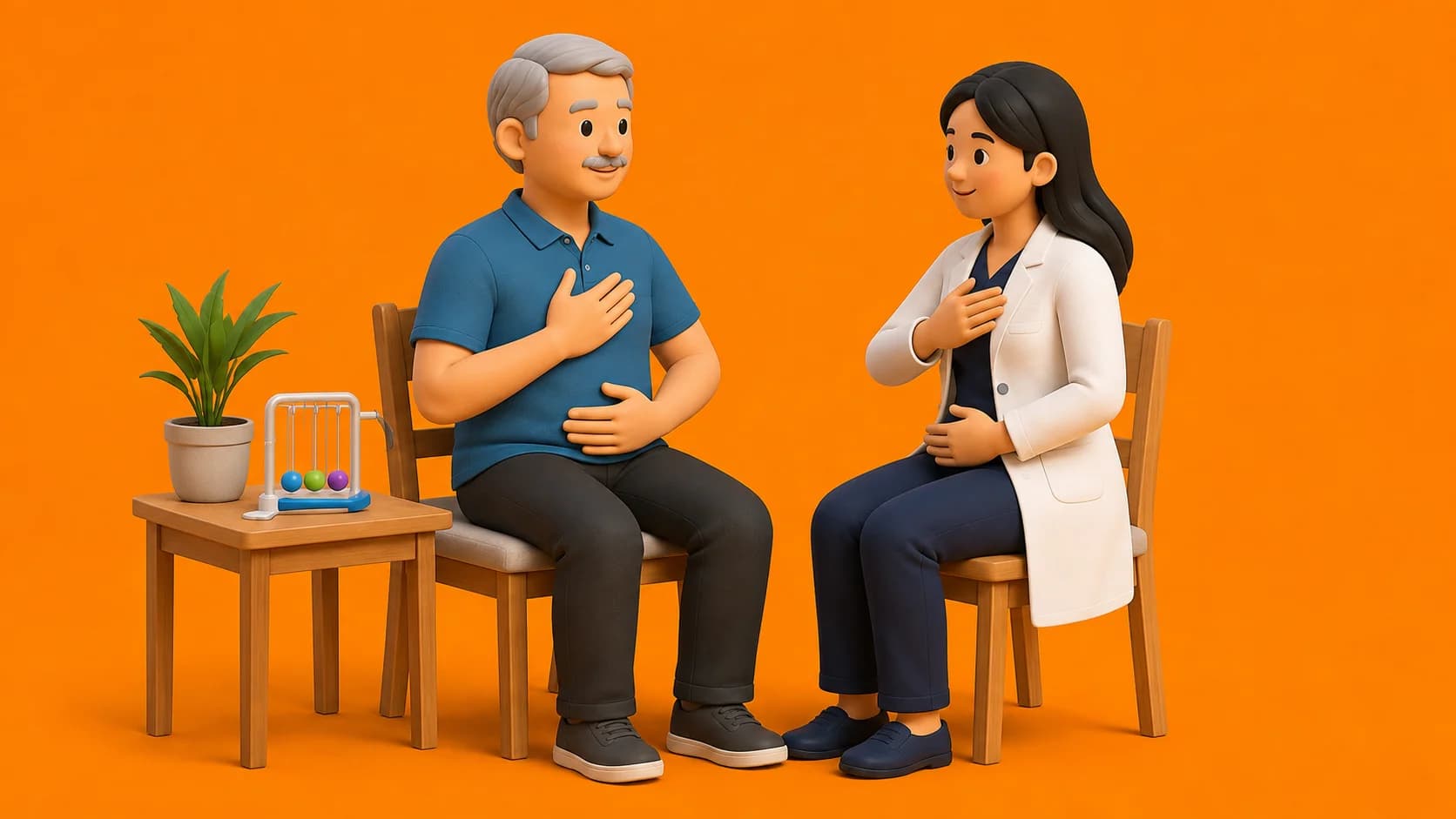
- 1Sit tall on a firm chair with your spine elongated, feet flat on the floor, and arms resting naturally at your sides.
- 2Place the broad tip of your tongue gently against the roof of your mouth, keeping your teeth slightly separated.
- 3Inhale slowly through your nose while rolling your shoulders gently up, backward, and then smoothly downward.
- 4Gently squeeze the lower tips of your shoulder blades together and downward toward your back pockets.
- 5Hold this open, supported shoulder posture for 5 seconds while breathing calmly, feeling your neck lengthen, then relax.
| Muscular Linkage | Anatomical Attachments | Postural Distortion Vector | Biomechanical TMJ Consequence |
|---|---|---|---|
| Omohyoid Muscle | Superior scapular border to hyoid bone body | Tension increases with scapular depression/protraction | Pulls hyoid down and back; secondary mandibular retrusion |
| Sternocleidomastoid (SCM) | Manubrium/clavicle to mastoid process and occiput | Hyperactivity in forward head posture; anterior head poke | Alters cranial tilt; masseter contracts reflexively to brace jaw |
| Lower Trapezius / Serratus | Thoracic vertebrae / ribs to scapular spine and margin | Weakness allows shoulder to drop and tilt forward | Loss of scapular platform magnifies tensile neck loading |
Sudden onset of severe, deep aching in the left shoulder, left clavicle, or jaw, accompanied by chest tightness, shortness of breath, unexplained diaphoresis (cold sweats), or nausea, represents potential acute coronary syndrome (myocardial infarction). Emergency medical triage must be initiated immediately.
Frequently Asked Questions
Can carrying a heavy shoulder bag cause jaw pain?
Yes. Carrying a heavy bag pulls your shoulder blade downward, which stretches a long neck muscle called the omohyoid. This muscle pulls on your hyoid bone, which in turn yanks your lower jaw backward, compressing the sensitive nerves and blood vessels at the back of your jaw joint.
Do I need an ENT or dental referral before consulting a TMJ physiotherapist on BookPhysio.in?
BookPhysio.in does not ask for a doctor referral. Under the National Commission for Allied and Healthcare Professions (NCAHP) Act 2021, Indian patients hold direct first-contact access to registered physiotherapists. On BookPhysio.in, you schedule directly and pay your clinician per session, with zero advance package traps, mandatory block bookings, or platform commission fees.
Related condition guides


Related recovery guides & articles
BookPhysio.in Editorial Team
The BookPhysio.in editorial team writes and maintains this content, checking it against reliable clinical sources. Content follows our medical review policy: general information only, and no page claims a clinical review until a named registered physiotherapist has signed it off.
Read our medical review policy