
Adolescent Ischial Apophysitis and Traction Injuries in Track and Field Athletes
In short
Examine the unique vulnerability of the open ischial apophysis in adolescent track athletes and learn how to manage traction apophysitis safely.
In this guide (4 sections)
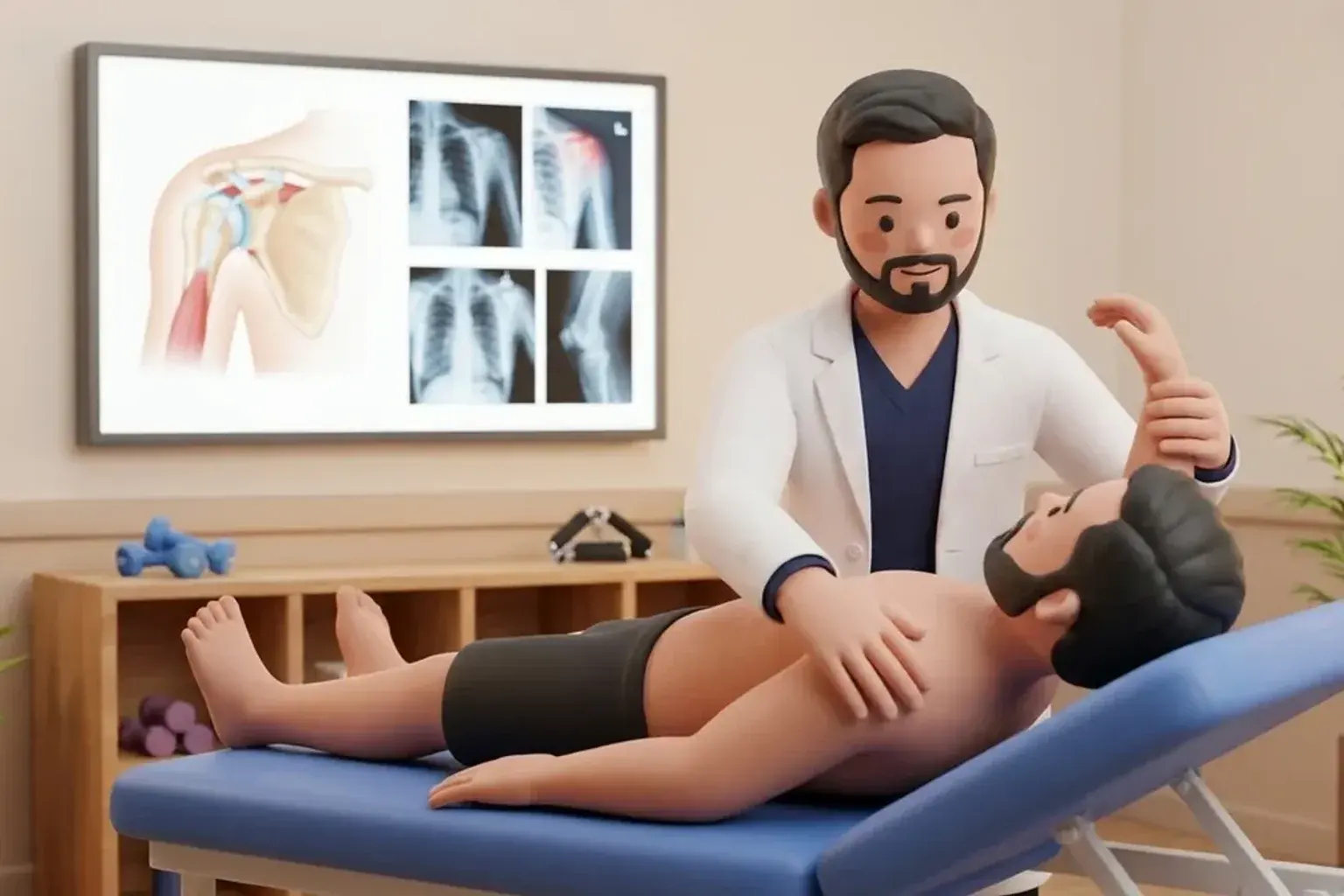
In pediatric and adolescent sports medicine, injuries to the hamstring complex present with fundamentally different pathology compared to adult athletes. In adults, high-velocity running or extreme stretching tears the collagenous tendon fibers or musculotendinous junction. In adolescent athletes between the ages of 13 and 18, however, the muscle and tendon are biologically stronger than the cartilaginous growth plate from which they originate. The ischial tuberosity develops as a secondary ossification centre (an apophysis) that remains open and mechanically vulnerable throughout puberty, typically fusing to the pelvis only between the ages of 18 and 25. Repetitive, explosive traction from the contracting hamstring complex leads to ischial apophysitis, a painful chronic overuse traction osteochondrosis that, if ignored, can culminate in an acute avulsion fracture.
School Athletic Meets, State Trials, and Indian Academy Pressures
Across India, young track and field athletes, school sprinters, and junior cricketers face intense competitive demands during regional school sports federations and state team trials. Promising teenage sprinters in athletic academies across Kerala, Haryana, Punjab, and Maharashtra often train twice daily on unyielding cinder tracks or hard dirt grounds without structured periodization. When an adolescent athlete begins complaining of deep sitting bone pain or difficulty running, coaches and parents often misinterpret the symptom as simple muscle stiffness, encouraging the teenager to stretch harder. This dangerous advice subjects the inflamed, fragile growth plate to further mechanical distraction, threatening the young athlete long-term sporting future.
Apophyseal Biology: Fibrocartilaginous Weakness During Peak Height Velocity
The peak incidence of ischial apophysitis coincides with the adolescent growth spurt (Peak Height Velocity). During this rapid growth phase, long bones lengthen faster than the surrounding soft-tissue units, leading to relative muscle tightness and elevated passive tension across the posterior chain. The ischial apophysis consists of a layer of unmineralized columnar cartilage anchored to the subchondral bone. Repetitive eccentric contractions during sprinting terminal swing exert powerful tensile shear across this cartilaginous interface. This traction induces microscopic stress microfractures, cartilage hypertrophy, and subchondral bone marrow edema, manifesting on pelvic radiographs as irregular widening, sclerosis, or fragmentation of the ischial growth plate.
Staged Management: Relative Rest, Unloaded Mechanics, and Phased Loading
Managing adolescent ischial apophysitis requires a strict commitment to biological healing. In the acute reactive phase, all high-velocity sprinting, jumping, and aggressive hamstring stretching must be temporarily paused for 4 to 6 weeks. Rest, however, must be active rather than completely sedentary: non-compressive cross-training (such as swimming with a pull buoy or gentle upright cycling) maintains cardiovascular fitness. Rehabilitation focuses on restoring lumbopelvic stability, correcting anterior pelvic tilt, and strengthening the core and gluteals. Progressive isometric hamstring loading is introduced only when sitting pain has settled, advancing to eccentric resistance training as the apophysis undergoes bony consolidation.
Youth Supine Pelvic Neutral Bridge with Gentle Gluteal Squeeze
Objective: Retrain symmetrical posterior chain recruitment while protecting the healing ischial apophysis from tensile strain
- 1Lie comfortably on your back on an exercise mat with both knees bent to 90 degrees and feet flat on the floor, hip-width apart.
- 2Place your hands on your lower abdomen, taking a deep breath in through your nose to relax your body.
- 3Gently tighten your lower tummy muscles and squeeze your buttocks firmly together.
- 4Lift your hips off the floor until your knees, hips, and shoulders form a straight line, keeping the effort gentle (roughly 50% max effort).
- 5Hold the bridge for 5 seconds while breathing normally, focusing on using your bottom muscles rather than pulling with the back of your thighs.
- 6Lower your hips smoothly back to the mat and rest for 5 seconds before repeating.
| Clinical Feature | Adolescent Ischial Apophysitis (Ages 13-18) | Adult Proximal Hamstring Tendinopathy (Ages 25+) |
|---|---|---|
| Primary Anatomical Site | Cartilaginous growth plate (apophysis) between tendon and pelvic bone | Collagenous tendon enthesis on the inferolateral ischial tuberosity |
| Radiographic Findings (X-Ray) | Apophyseal widening, cortical irregularity, sclerosis, or bony fragmentation | Plain X-rays typically normal; may show subtle enthesophytic spurs in chronic cases |
| Impact of Stretching | Extremely hazardous; pulls the open growth plate apart, risking complete avulsion | Contraindicated due to compressive wrap-around against bone |
| Biological Healing Timeline | Consolidates over 8 to 16 weeks as cartilage ossifies with rest and progressive loading | Tendon remodeling takes 12 to 24 weeks through heavy slow resistance training |
If an adolescent athlete experiences a sudden, loud pop in the buttock during an explosive sprint start, hurdle clearance, or long-jump takeoff, accompanied by an inability to stand upright, this is an acute ischial avulsion fracture. Plain pelvic radiographs (anteroposterior and 45-degree internal oblique views) must be obtained immediately to evaluate the degree of bony fragment displacement.
Frequently Asked Questions
Will my teenage child outgrow this sitting bone pain without treatment?
While the growth plate will eventually fuse to the pelvis in late adolescence, leaving apophysitis untreated is dangerous. Continued sprinting on an inflamed growth plate can cause the bone to pull completely off the pelvis (an avulsion fracture), requiring surgery. Prompt rest, physiotherapy, and proper exercise allow the bone to heal strong and flat.
Do I need a doctor referral to rehabilitate a hamstring strain on BookPhysio.in?
BookPhysio.in does not require a doctor referral. Under the National Commission for Allied and Healthcare Professions (NCAHP) Act 2021, patients across India enjoy direct access to autonomous registered physiotherapists. Through BookPhysio.in, you connect directly with verified clinicians and pay per session with transparent fees, completely free from advance package commitments, commission markups, or platform subscription charges.
Related condition guides


Related recovery guides & articles
BookPhysio.in Editorial Team
The BookPhysio.in editorial team writes and maintains this content, checking it against reliable clinical sources. Content follows our medical review policy: general information only, and no page claims a clinical review until a named registered physiotherapist has signed it off.
Read our medical review policy