
Bedbound Elderly & Post-ICU Deconditioning: Sit-to-Stand Physiotherapy Guide
In short
Prolonged bed rest in older adults rapidly triggers critical illness myopathy and catastrophic sarcopenia, requiring a staged, progressive bed-to-stand rehabilitation protocol.
In this guide (2 sections)
The Devastating Speed of Sarcopenic Loss During Hospital Bed Rest
For an older adult, acute hospitalization and Intensive Care Unit (ICU) admission represent catastrophic physiological insults. A healthy senior loses up to 1.5 kilograms of muscle mass after just 3 days of strict bed rest, with preferential wasting of the antigravity muscles: quadriceps, gluteus maximus, and gastrocnemius.
Compounding this disuse atrophy is Intensive Care Unit Acquired Weakness (ICUAW), comprising critical illness polyneuropathy (CIP) and critical illness myopathy (CIM). When elderly patients are discharged home bedbound, family members often feel overwhelmed. Reversing this bedbound state demands a structured, step-by-step biomechanical progression.
Biomechanical Stages: From Bedbound to Independent Ambulation
| Rehabilitation Stage | Primary Functional Milestones | Target Musculature | Key Safety Rails & Precautions | |
|---|---|---|---|---|
| Stage 1: Bed Mobility & Sitting Balance | Supine bridging, independent rolling, supported edge-of-bed sitting for 15 mins | Core abdominals, gluteals, deep neck flexors | Monitor orthostatic blood pressure; support trunk to prevent backward falls | |
| Stage 2: Dynamic Seated Stability & Reaching | Unsupported edge-of-bed sitting, lateral weight shifts, seated leg extensions | Erector spinae, transversus abdominis, quadriceps | Ensure feet are planted firmly flat on floor; use non-slip socks | |
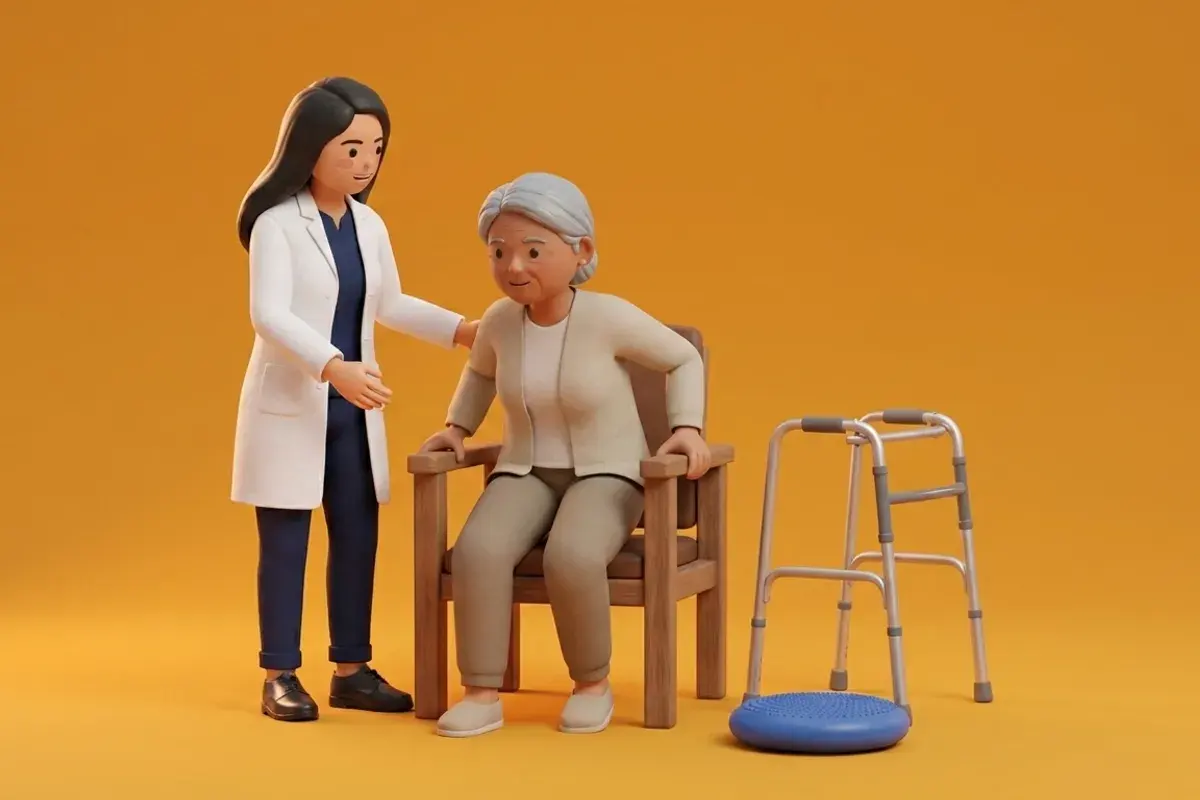
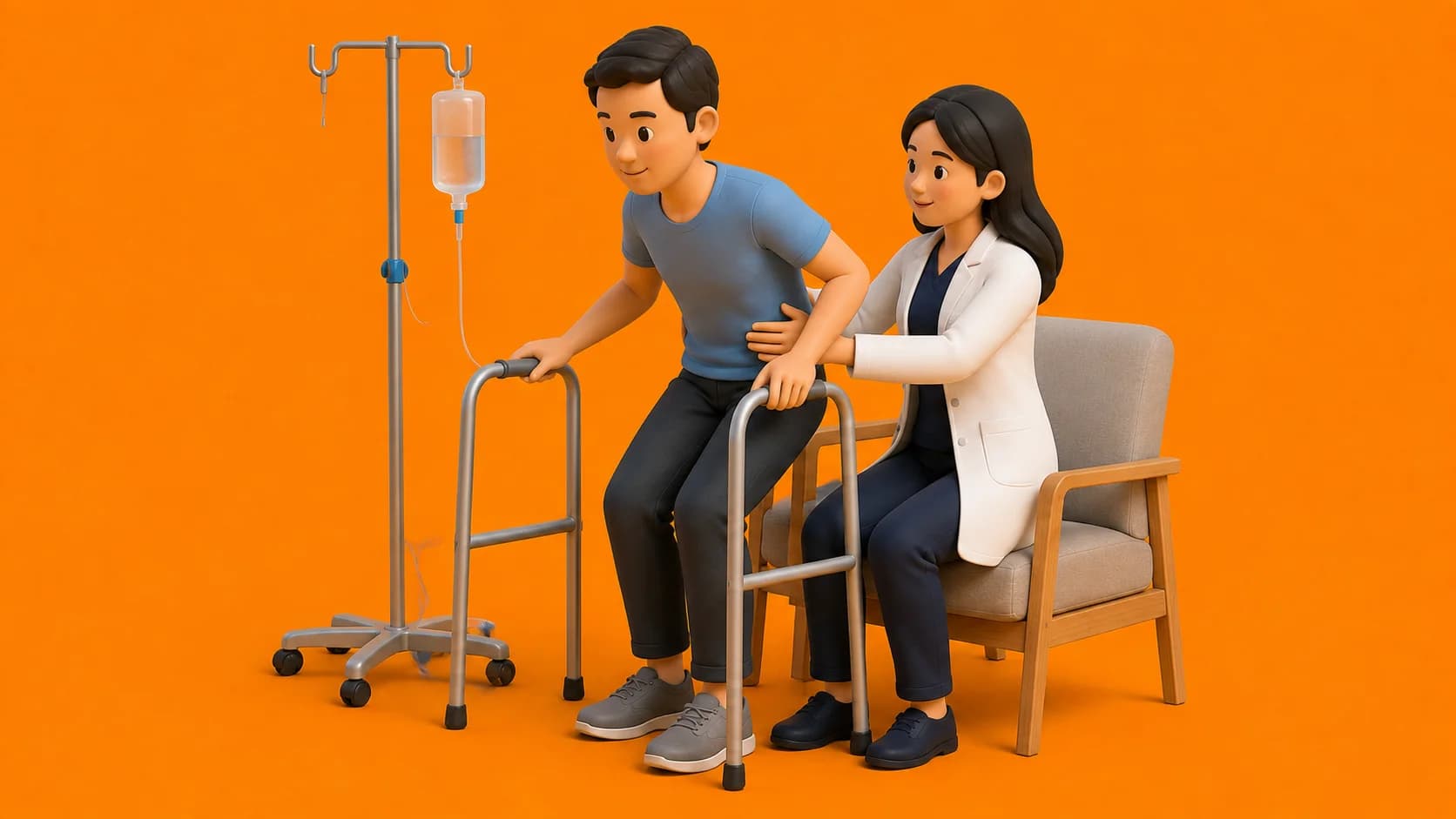
| Stage 3: Assisted Sit-to-Stand Transfers | Weight-shift forward ('nose over toes'), pushing through armrests to stand with assistance | Quadriceps, gluteus medius, gastrocnemius | Check for knee buckling; use a sturdy gait transfer belt around pelvis | |
| Stage 4: Static & Dynamic Standing Balance | Standing with hands resting on walker, gentle weight-shifting, knee bends | Soleus, anterior tibialis, hip stabilizers | Keep chair directly behind patient; monitor for post-standing fatigue collapse | |
| Stage 5: Stepping & Progressive Walking | Short reciprocal stepping, marching on spot, hallway walking with 2-wheeled walker | Whole-body kinetic chain | Schedule sessions after morning medication and adequate hydration |
Practical Biomechanical Techniques for the Sit-to-Stand Transfer
- Scooting to the Front Edge: Never attempt to stand from the back of a deep bed or soft mattress. Guide the patient to scoot their hips forward until their thighs are clear of the bed edge.
- Feet Positioning Under Knees: Place both feet shoulder-width apart, pulling heels back until they are situated slightly behind the vertical line of the knee joints.
- Forward Trunk Pitch ('Nose Over Toes'): Instruct the patient to fold forward from the hips with a flat spine, moving their upper body mass over their feet before exerting upward force.
- Two-Hand Push Off: Both hands must push down against the bed surface or chair armrests; pulling on a walker handle is dangerous as it tips the walker backwards.
- Extensor Thrust Drive: Coordinate a powerful upward push through the heels while simultaneously driving hips forward into complete extension at the finish.
Frequently Asked Questions About Post-ICU Elderly Rehabilitation
Can an elderly patient who has been bedridden for months walk again?
Yes. Even after prolonged immobility, older skeletal muscle fibers retain the physiological capacity to regenerate with targeted progressive resistance training and neuro-motor re-education. Many bedbound seniors regain the ability to stand and walk with a frame within 6 to 12 weeks of structured home physiotherapy.
How can family members safely help a weak elderly parent stand up from bed?
Never pull a parent up by their hands or armpits, as this can dislocate weak shoulders and strain the caregiver's back. Use a wide canvas gait belt around their waist, position their feet back, bring their chest forward over their knees, and assist their upward hip drive from the side.
Related condition guides


Related recovery guides & articles
BookPhysio.in Editorial Team
The BookPhysio.in editorial team writes and maintains this content, checking it against reliable clinical sources. Content follows our medical review policy: general information only, and no page claims a clinical review until a named registered physiotherapist has signed it off.
Read our medical review policy