
Bent-Knee Stretch Test and Puranen-Orava Test for Proximal Tendinopathy
In short
Explore validated clinical provocation tests including the Bent-Knee Stretch Test and Puranen-Orava test for diagnosing proximal hamstring tendinopathy.
In this guide (4 sections)
Diagnosing proximal hamstring tendinopathy (PHT) with high diagnostic accuracy requires provocation tests that systematically apply both tensile stretch and mechanical compression across the ischial tuberosity. While imaging modalities such as magnetic resonance imaging and diagnostic ultrasound provide structural visualization, clinical decision-making relies heavily on reproducing the patient familiar pain. Two of the most validated and clinically useful physical examination maneuvers are the Bent-Knee Stretch Test (BKST), described by Cacchio and colleagues, and the standing Puranen-Orava Test. These tests place the hip into maximal or near-maximal flexion while extending the knee, systematically stressing the proximal tendon insertion against the ischium.
Adapting Clinical Provocation in Busy Indian Hospital Outpatient Departments
In busy Indian orthopaedic and sports medicine clinics, clinicians often encounter patients who have experienced chronic deep buttock pain for months or years, frequently misdiagnosed as sciatica or piriformis syndrome. Many of these individuals have undergone lumbar MRIs showing minor degenerative disc bulges that distract from the true underlying tendon pathology. Performing rapid, high-yield clinical tests like the Bent-Knee Stretch Test and Puranen-Orava test at the plinth-side allows physiotherapists to establish an accurate differential diagnosis within minutes, avoiding unnecessary spine interventions and directing rehabilitation toward progressive tendon loading.
Biomechanics of Provocation: Compressive Wrap-Around and Tensile Peak
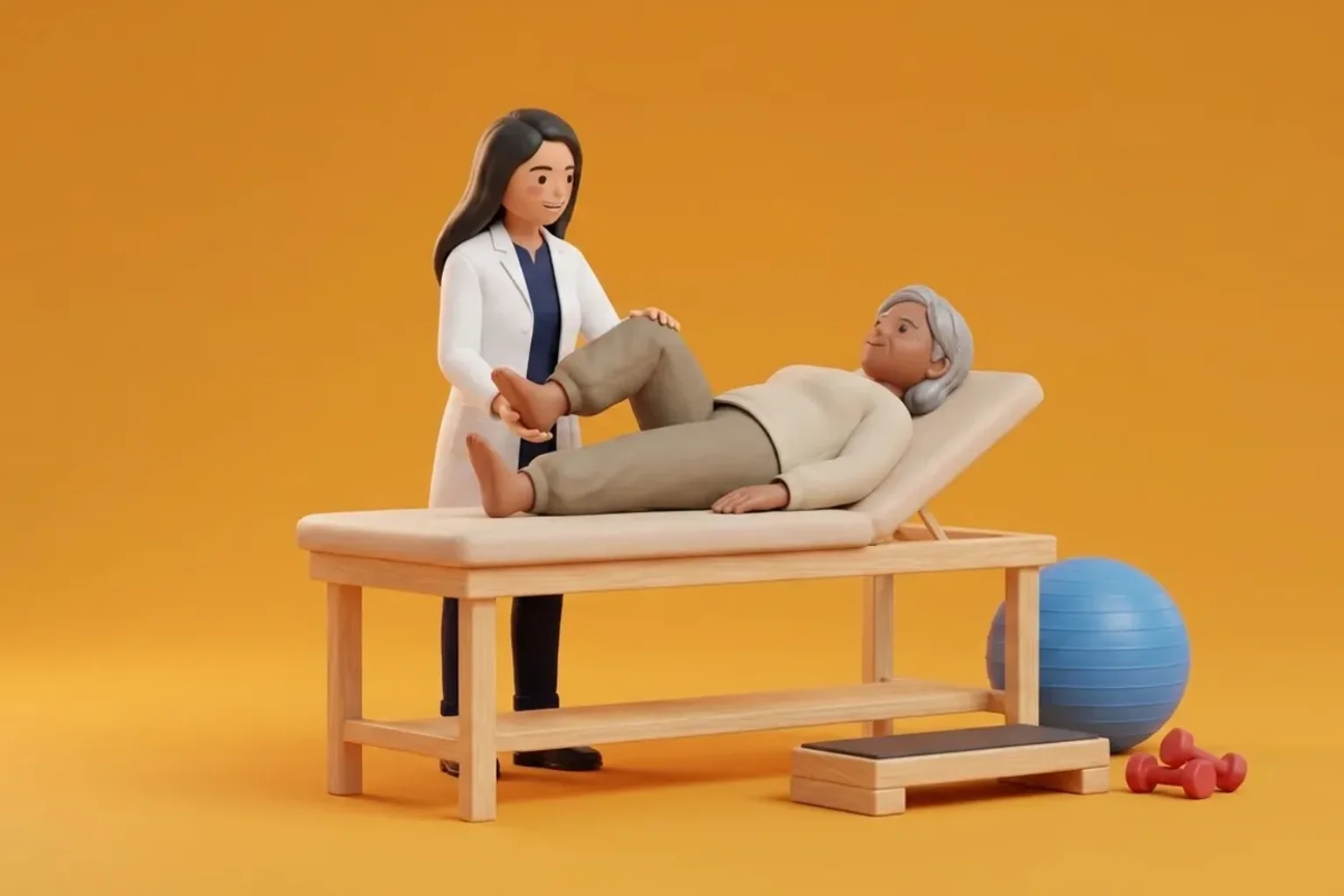
The biomechanical sensitivity of the Bent-Knee Stretch Test stems from the wrap-around effect of the proximal hamstring tendon around the ischial tuberosity. When the patient lies supine with the hip maximally flexed, the proximal tendon is compressed tightly against the bone. As the examiner slowly extends the knee, high tensile strain is superimposed on top of this pre-existing compression. If the tendon enthesis is degenerate or inflamed, this combined loading immediately stimulates mechanically sensitive nociceptive nerve endings within the tendon substance and overlying ischiogluteal bursa, reproducing the exact deep buttock ache the patient reports during sitting or running.
Using Provocation Tests to Gauge Tissue Irritability and Load Progression
Provocation tests serve not only as diagnostic tools but also as reliable objective measures of tissue irritability throughout rehabilitation. In high-irritability stages, even the slow Bent-Knee Stretch Test triggers sharp buttock pain within the first 30 degrees of knee extension. As rehabilitation progresses through isometric loading and heavy slow resistance training, the angle of pain onset shifts toward greater knee extension. In later stages, clinicians utilize the Rapid Bent-Knee Stretch Test, which adds dynamic velocity, to verify that the tendon can tolerate high-speed tensile elongation before clearing the athlete for return to sprinting.
Gentle Supine Passive Hamstring Straightening within Pain-Free Range
Objective: Safely assess and recondition proximal tendon tolerance to gradual knee extension under supervised control
- 1Lie on your back on a firm, comfortable plinth or floor mat with both legs extended.
- 2Raise your affected leg and hold the back of your thigh with both hands, keeping your hip flexed to 90 degrees.
- 3Slowly straighten your knee, moving your foot toward the ceiling until you feel a gentle, comfortable stretch behind your thigh.
- 4Stop immediately if you feel deep buttock pain or sharp pinching near the sitting bone.
- 5Hold the gentle stretch position for 5 seconds, then lower your foot smoothly back down.
| Provocation Maneuver | Patient Position and Execution | Positive Diagnostic Criteria | Sensitivity and Specificity |
|---|---|---|---|
| Bent-Knee Stretch Test (BKST) | Supine with hip and knee maximally flexed; examiner slowly extends knee to full extension | Sharp reproduction of familiar pain at the ischial tuberosity during extension | High sensitivity (84%) and specificity (87%) for proximal tendinopathy |
| Rapid Bent-Knee Stretch Test | Same positioning as BKST, but examiner rapidly extends the knee through full range | Exquisite sharp pain provoked by high-velocity tensile loading | High sensitivity (89%) and specificity (91%) in athletic populations |
| Puranen-Orava Test | Standing on uninvolved leg; affected heel placed on examination plinth with knee fully extended, patient reaches forward toward foot | Reproduction of localized ischial tuberosity pain when reaching forward | High sensitivity (76%) and specificity (82%) for chronic proximal hamstring syndrome |
| Modified Puranen-Orava Test | Standing position with plinth support; patient bends knee 20 degrees and flexes torso forward | Differentiates sciatic nerve tethering from true insertional tendon pathology | Useful in ruling out neural mechanical sensitivity in chronic cases |
A positive Bent-Knee Stretch Test can occasionally be confused with a positive straight leg raise (Lasègue sign) in lumbar disc herniation. However, in true proximal hamstring tendinopathy, palpation directly over the ischial tuberosity reproduces the pain, and adding ankle dorsiflexion (Bragard sign) does not intensify symptoms. If ankle dorsiflexion significantly increases buttock or calf pain, lumbar nerve root tension is strongly suspected.
Frequently Asked Questions
What is the difference between a normal hamstring stretch feeling and a positive test for tendinopathy?
A normal hamstring stretch produces a diffuse, pulling sensation across the middle or lower back of the thigh that feels relieving. A positive test for proximal tendinopathy produces a sharp, localized, familiar ache directly at the ischial sitting bone that feels like the exact deep buttock pain you experience when sitting on a hard chair.
Do I need a doctor referral to rehabilitate a hamstring strain on BookPhysio.in?
BookPhysio.in does not require a doctor referral. Under the National Commission for Allied and Healthcare Professions (NCAHP) Act 2021, patients across India enjoy direct access to autonomous registered physiotherapists. Through BookPhysio.in, you connect directly with verified clinicians and pay per session with transparent fees, completely free from advance package commitments, commission markups, or platform subscription charges.
Related condition guides



Related recovery guides & articles
BookPhysio.in Editorial Team
The BookPhysio.in editorial team writes and maintains this content, checking it against reliable clinical sources. Content follows our medical review policy: general information only, and no page claims a clinical review until a named registered physiotherapist has signed it off.
Read our medical review policy