
Cardiac Anxiety and Kinesiophobia: Overcoming Fear of Movement
In short
Fear of movement and cardiac anxiety frequently paralyze patients following a heart attack or bypass surgery. Learn how graded cardiopulmonary physiotherapy restores confidence.
In this guide (6 sections)
Experiencing an acute myocardial infarction or undergoing emergency open-heart surgery is a life-altering event that frequently precipitates substantial psychological trauma. Cardiac anxiety, post-traumatic stress symptoms, and kinesiophobia (the irrational and debilitating fear of physical movement) affect up to 40 percent of post-cardiac patients. Believing that any increase in heart rate or breathing signals an imminent secondary cardiac arrest, patients enter a cycle of severe self-imposed physical restriction. Cardiopulmonary physiotherapists employ graded exposure protocols, heart rate biofeedback, and diaphragmatic relaxation to break this fear-avoidance loop and restore functional autonomy.
Domestic and Cultural Indian Realities
In Indian society, psychological distress following serious illness is frequently shrouded in silence or misattributed to weakness of will. Family members, motivated by deep affection and protective concern, often reinforce cardiac invalidism by urging the patient to stay completely in bed (aaram karo), forbidding them from walking to the dining table, answering phone calls, or ascending stairs. Every benign somatic sensation, such as normal exertional breathlessness, harmless intercostal muscle twitches, or heat-induced sweating, triggers intense domestic alarm and rushed visits to emergency rooms. Educating joint family caregivers alongside the patient on what normal physiological exertion feels like is vital to rebuild domestic confidence.
Clinical Biomechanics and Psychophysiological Feedback Loops
The fear-avoidance model in cardiology operates through a vicious neurovegetative cycle. Anxious hyper-vigilance toward cardiac sensations triggers acute sympathetic hyperactivation, increasing catecholamine release, heart rate, and blood pressure. The patient misinterprets this anxiety-induced tachycardia as active myocardial ischaemia, intensifying panic and promoting rapid thoracic breathing that causes hypocapnia, respiratory alkalosis, chest tightness, and lightheadedness. Prolonged physical inactivity leads to rapid skeletal muscle deconditioning, ensuring that even minor physical efforts evoke high heart rates and fatigue, seemingly confirming the patient catastrophic fears.
Bedside Clinical Evaluation and Risk Stratification
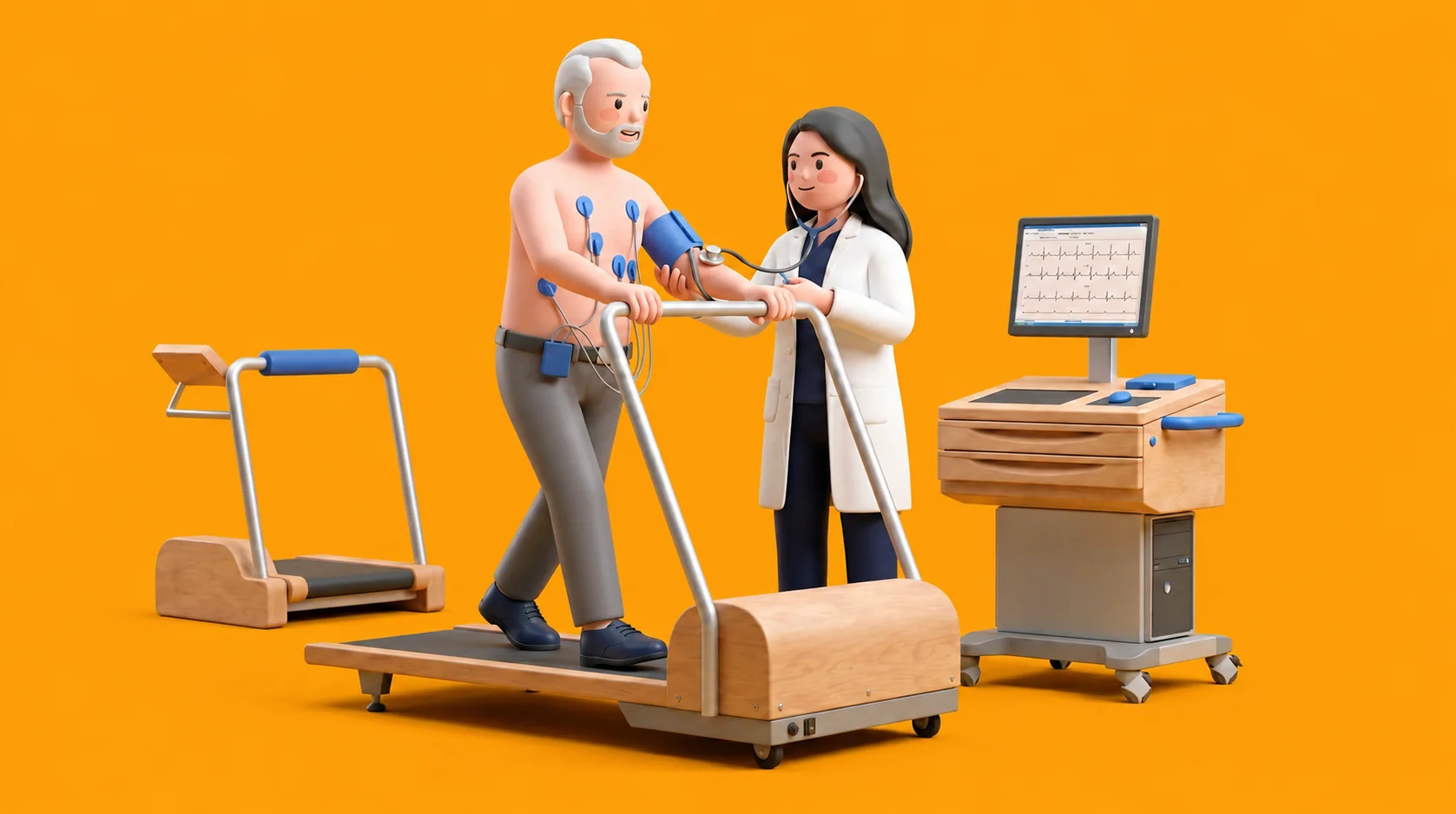
The physiotherapist evaluates psychological distress using validated screening instruments, including the Tampa Scale for Kinesiophobia Heart (TSK-SV Heart) and the Hospital Anxiety and Depression Scale (HADS). The clinician observes breathing patterns during quiet rest and transfers, identifying apical accessory muscle breathing or chronic breath-holding. Objective physiological monitoring during a submaximal corridor walk demonstrates to the patient that their pulse and oxygen saturation remain stable within safe therapeutic boundaries during gentle exertion.
Structured Rehabilitation and Movement Protocols
Rehabilitation utilizes graded interoceptive exposure: patients perform progressive physical tasks while wearing real-time telemetry or pulse oximetry. Seeing objective proof that an exercise-induced heart rate of 95 beats per minute is normal and safely recovers toward baseline within minutes disproves catastrophic beliefs. Diaphragmatic breathing with prolonged exhalation is practiced before and after each walk, stimulating vagal parasympathetic outflow to quiet autonomic arousal.
Calming Paced Diaphragmatic Vagal Activation Sequence
Objective: Lower sympathetic tone and alleviate acute panic-induced chest tightness through prolonged exhalation
- 1Sit comfortably in a supportive armchair with both feet flat on the floor and shoulders relaxed.
- 2Place one hand gently on your upper chest and the other hand flat on your lower abdomen.
- 3Breathe in slowly through your nose for a quiet count of 4, feeling your belly expand gently outward.
- 4Exhale smoothly through pursed lips for a relaxed count of 7 or 8, feeling your belly soften inward.
- 5Repeat this slow, calming breathing cycle continuously for 5 minutes whenever you feel anxious.
| Symptom Feature | Cardiac Anxiety / Panic Symptoms | True Myocardial Ischaemia (Angina) |
|---|---|---|
| Pain Quality | Sharp, fleeting, localized, or pin-prick sensation | Dull, heavy, squeezing pressure or constricting band |
| Radiation Pattern | Rarely radiates; moves unpredictably across chest | Radiates predictably to jaw, left shoulder, neck, or inner arm |
| Breathing Relation | Sharp catch on deep breath; hyperventilation air hunger | Exertional breathlessness accompanied by central tightness |
| Response to Rest | Worsens with hyper-focus; improves with slow diaphragmatic calm | Predictably subsides within 3 to 5 minutes of seated rest |
Red Flags and Specialist Escalation
While cardiac anxiety is common, genuine clinical emergencies must never be overlooked. Immediate medical escalation is mandatory if chest discomfort is accompanied by diaphoresis, nausea, radiation to the jaw or left arm, syncope, or if symptoms persist beyond 10 minutes of complete rest. When severe depression, suicidal ideation, or paralyzing agoraphobia is identified, prompt referral to a clinical psychologist or psychiatrist is essential.
Frequently Asked Questions
Why do I feel terrified every time my heart beats a little faster during a walk?
After a heart event, it is completely normal to feel hyper-aware of your heartbeat. Your brain treats every increase in pulse as a warning signal. Supervised cardiac rehabilitation gently retrains your mind and body, showing you that a temporary rise in heart rate during walking is healthy, safe, and strengthens your heart muscle.
Do I need a doctor referral to start cardiac rehabilitation with BookPhysio.in?
Under the National Commission for Allied and Healthcare Professions (NCAHP) Act 2021, patients in India have direct access to registered physiotherapists without requiring a doctor referral. BookPhysio.in does not ask for a doctor referral to connect with verified cardiopulmonary physiotherapists. Consultations are paid directly per session without hidden fees or platform commissions.
Related condition guides



Related recovery guides & articles
BookPhysio.in Editorial Team
The BookPhysio.in editorial team writes and maintains this content, checking it against reliable clinical sources. Content follows our medical review policy: general information only, and no page claims a clinical review until a named registered physiotherapist has signed it off.
Read our medical review policy