
Cervical Distraction Test: Mechanism of Action, Execution, and Relief of Arm Pain
In short
Learn how the cervical distraction test decompresses exiting nerve roots, widens the neural foramen, and serves as a major diagnostic and prognostic test.
In this guide (4 sections)
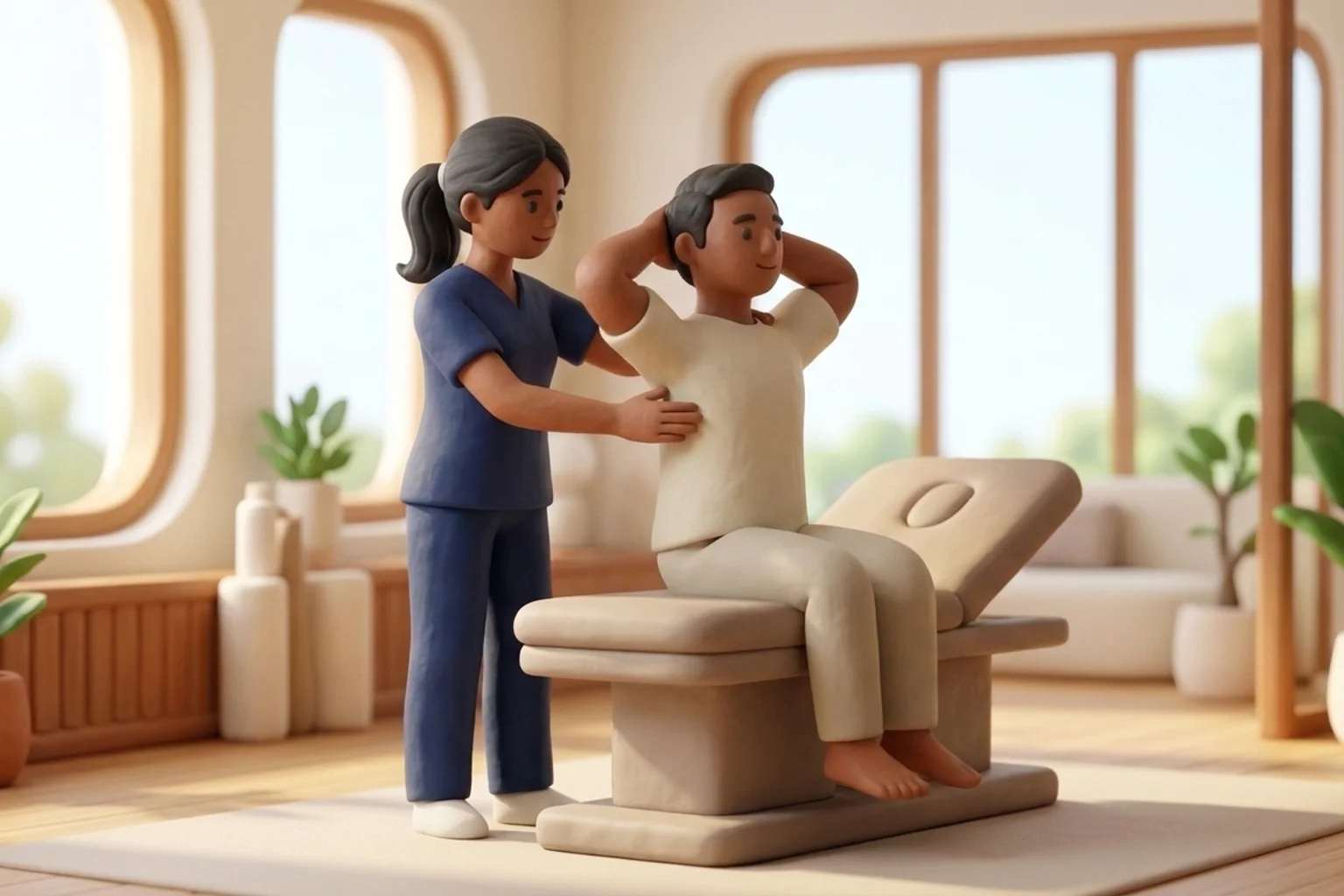
The cervical distraction test is a foundational diagnostic and therapeutic evaluation technique in the management of cervical radiculopathy. It is recognized as one of the four validated components of Wainner's Clinical Prediction Rule for cervical nerve root compression. Unlike provocative maneuvers that aim to reproduce radiating pain by narrowing the intervertebral foramen, the distraction test is an alleviation test. A positive test occurs when the application of an axial distracting force to the cervical spine results in the complete resolution or significant reduction of peripheral radicular symptoms radiating down the arm. Beyond its high diagnostic specificity of approximately ninety percent, a positive distraction test provides immediate clinical justification for incorporating manual or mechanical cervical traction into the patient's rehabilitation plan.
Kitchen Chopping Strains, Low Desk Slumping, and Bus Commuter Compression
In Indian daily life, continuous axial loading and downward cervical flexion are pervasive. Homemakers frequently spend hours preparing food while standing over low kitchen slabs or sitting on small floor stools (patlas) with their neck bent forward at forty degrees, chopping vegetables and rolling rotis. This unremitting downward tilt increases intradiscal pressure and narrows the posterior foraminal exit zones. Similarly, commuters riding crowded suburban buses across uneven urban roads endure continuous vertical jarring that drives the cervical vertebrae together, repeatedly impinging sensitized nerve roots. Patients frequently discover on their own that lying flat on an unyielding cot or placing their hands behind their head provides immediate relief, instinctively replicating the exact biomechanical unloading of the cervical distraction test.
Biomechanical Dynamics: Foraminal Area Expansion and Intradiscal Decompression
The mechanical effects of cervical distraction are mediated by several distinct anatomical changes. When an axial upward tensile force of ten to fifteen kilograms is applied to the occiput and mastoid processes, the intervertebral disc spaces widen vertically by one to two millimeters per motion segment. This elongation creates negative intradiscal pressure, which can promote centripetal migration of minor nuclear protrusions away from the neural canal. Simultaneously, distraction tensions the posterior longitudinal ligament and ligamentum flavum, flattening any redundant or buckled ligamentous tissue that may be encroaching upon the ventral and dorsal borders of the canal. Crucially, the vertical and transverse dimensions of the intervertebral neural foramen increase by up to twenty-four percent, immediately restoring local microvascular venous drainage to the compressed dorsal root ganglion.
Manual to Home Mechanical Traction Translation and Progressive Loading
When a patient demonstrates a clear positive cervical distraction test, manual traction techniques are immediately integrated into clinical treatment sessions. The physiotherapist applies intermittent or sustained manual distraction in twenty to twenty-five degrees of cervical flexion to optimize foraminal opening at the C5-C7 segments. Once symptom centralization is established and pain irritability subsides, patients are transitioned to self-directed home distraction techniques utilizing specialized over-the-door or pneumatic cervical traction collars calibrated precisely to comfort. Concurrently, progressive isometric strengthening of the cervical stabilizers is initiated to build muscular support, ensuring that the temporary anatomical expansion achieved through distraction is maintained during active upright weight-bearing tasks.
Supine Self-Distraction with Occipital Traction Towel Cradle
Objective: Apply gentle, controlled axial distraction to the cervical spine at home to decompress inflamed nerve roots
- 1Lie comfortably on your back on a firm mattress or exercise mat with your knees bent and feet flat.
- 2Take a soft, long bath towel, roll it lengthwise, and cradle it securely around the base of your skull just behind your ears.
- 3Hold the two free ends of the towel firmly with your hands positioned above your head, keeping your forearms relaxed.
- 4Gently and smoothly pull the towel ends toward the wall behind you, applying a steady, mild axial traction force along your spine.
- 5Maintain this gentle traction stretch for twenty to thirty seconds while focusing on slow diaphragmatic breathing, then slowly ease off.
| Anatomical Structure | Mechanical Change under Distraction | Physiological Benefit | Clinical Symptom Response |
|---|---|---|---|
| Intervertebral Disc Space | Vertical separation of vertebral endplates by 1.0 to 2.0 mm | Generates transient negative intradiscal pressure gradient | Reduces mechanical nuclear impingement on the posterior longitudinal ligament |
| Neural Foramen | Transverse and vertical cross-sectional area increases up to 24% | Relieves direct osseous and uncinate compression on nerve root | Immediate reduction or complete cessation of radiating arm paresthesia |
| Ligamentum Flavum | Longitudinal tensioning pulls redundant buckled tissue taut | Eliminates posterior indentation on the dorsal thecal sac | Decreases spinal canal crowding and relieves non-specific aching |
While cervical distraction is generally soothing, it must be halted immediately if the patient reports dizziness, visual disturbances (diplopia), lightheadedness, nausea, or perioral numbness during the maneuver. These symptoms point toward cervical arterial dysfunction or vertebrobasilar insufficiency triggered by stretching compromised vertebral arteries. Immediate medical evaluation is required if cranial nerve or vascular symptoms emerge.
Frequently Asked Questions
If pulling on my neck feels so good, can I have someone at home pull my head hard to fix my pinched nerve?
No, aggressive or uncontrolled pulling on the neck by untrained family members is dangerous and can cause ligamentous sprains, vertebral artery dissection, or acute disc herniation. Clinical distraction uses precise vectors (typically twenty degrees of flexion) and carefully measured forces (ten to fifteen kilograms) tailored to specific spinal levels. Self-decompression should strictly follow guided physiotherapist protocols using gentle towel cradles or calibrated traction devices.
Do I need a doctor referral to treat cervical radiculopathy on BookPhysio.in?
BookPhysio.in does not require a doctor referral. Under the National Commission for Allied and Healthcare Professions (NCAHP) Act 2021, patients across India enjoy direct access to autonomous registered physiotherapists. Through BookPhysio.in, you connect directly with verified clinicians and pay per session with transparent fees, completely free from advance package commitments, commission markups, or platform subscription charges.
Related condition guides



Related recovery guides & articles
BookPhysio.in Editorial Team
The BookPhysio.in editorial team writes and maintains this content, checking it against reliable clinical sources. Content follows our medical review policy: general information only, and no page claims a clinical review until a named registered physiotherapist has signed it off.
Read our medical review policy