
Chronic Sciatica and Central Sensitization: Neuroplasticity and Nerve Re-Education Strategies
In short
Understand how acute sciatica evolves into chronic central sensitization, and discover how neuroplastic retraining and Graded Motor Imagery rewire persistent pain.
In this guide (4 sections)
For the vast majority of patients with lumbar disc herniations, structural tissue healing and disc resorption occur predictably over several months. However, a significant subset of individuals continue to experience persistent, debilitating sciatica symptoms lasting for six months, a year, or even longer, despite repeat MRI scans confirming that the original disc herniation has completely resorbed and the nerve root is physically decompressed. This baffling, distressing condition represents Chronic Sciatica driven by Central Sensitization. Rather than a persistent structural fault in the spinal column, chronic sciatica reflects a profound neuroplastic maladaptation within the central nervous system: the spinal cord and the brain have become hyper-sensitized, amplifying normal, non-painful sensory signals into persistent agony. Treating chronic sciatica requires shifting focus from passive spinal biomechanics to neuroplastic brain re-education.
Two-Wheeler Pothole Shocks, Indian Squatting Commode Hazards, and IT Chair Stress
In Indian society, individuals living with persistent sciatica frequently become trapped in a vicious cycle of fear, disability, and medical over-investigation. Believing that their ongoing burning leg pain means their disc is still broken or slipping further, patients consult multiple spine surgeons, undergoing repeated CT and MRI scans. They often withdraw completely from family gatherings, religious ceremonies, and physical hobbies, spending their days lying on hard beds out of fear that any movement will snap their nerve. Well-meaning relatives reinforce this kinesiophobia by cautioning them against lifting even a cup of tea. This profound fear and social isolation fuels the central nervous system danger alarms, keeping pain pathways locked on high volume. Pain Neuroscience Education (PNE) empowers patients to break this cycle.
Annular Disruption, Chemical Radiculitis, and Dermatomal Nerve Root Compression
The neurobiology of central sensitization involves structural and chemical remodeling across the entire neuraxis. During prolonged acute radiculopathy, relentless high-frequency nociceptive firing from the inflamed nerve root bombards second-order dorsal horn transmission neurons. This continuous bombardment triggers the wind-up phenomenon: unblocking NMDA receptors, activating microglial cells, and causing long-term potentiation of spinal synapses. Concurrently, descending inhibitory pathways from the periaqueductal gray and rostral ventromedial medulla lose their ability to suppress ascending pain signals. In the cerebral cortex, the continuous barrage causes neuroplastic cortical smudging in the primary somatosensory cortex: the crisp topographical neural map of the lower back and leg becomes blurred and distorted, causing the brain to misinterpret harmless sensations (like muscle stretch or light skin contact) as intense burning threats.
McKenzie Centralization, Neural Dynamic Sliders, and Graded Lumbar Mobilization
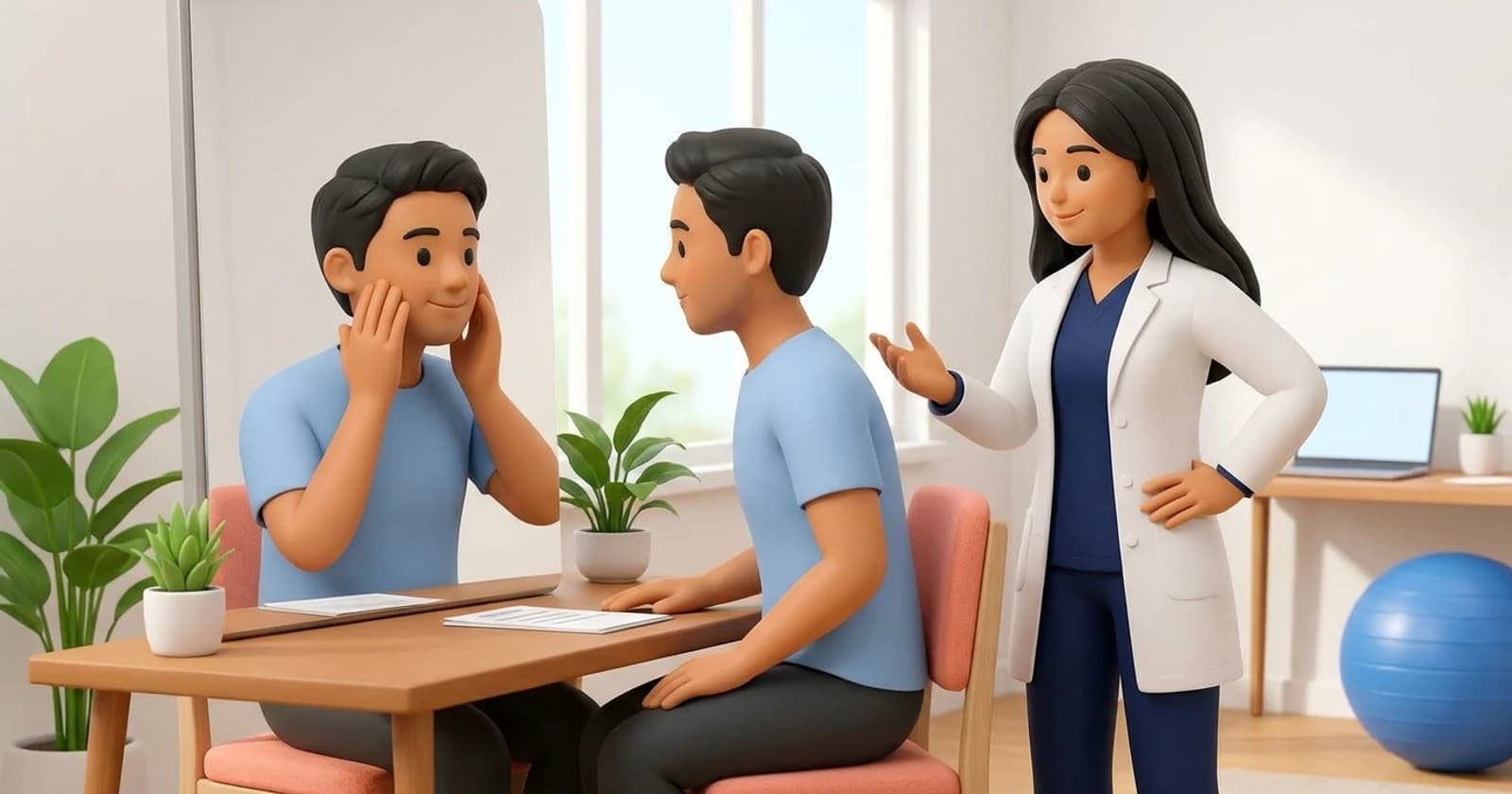
Re-educating a sensitized nervous system requires modern neuro-orthopedic strategies that target central processing rather than structural spinal joints. The foundational educational tool is Pain Neuroscience Education (PNE), teaching patients that ongoing chronic pain reflects an overprotective central alarm system rather than ongoing tissue destruction. To recalibrate the smudged cortical map, physiotherapists implement Graded Motor Imagery (GMI), progressing through three evidence-based stages: left-right limb discrimination (implicit motor imagery), imagined movements (explicit motor imagery), and mirror visual feedback therapy. As cortical processing normalizes, patients advance into graded exposure to previously feared movements, such as gentle forward bending and interval walking, progressively disconfirming danger beliefs and rewiring the nervous system for lasting freedom.
Graded Motor Imagery: Implicit Left-Right Foot Discrimination Drill
Objective: Normalize cortical sensory smudging in the primary somatosensory cortex without triggering physical pain firing
- 1Sit comfortably in a quiet, relaxed room holding a smartphone or photo flashcard deck displaying images of left and right feet in various angles.
- 2Look at each photograph for no more than 2 seconds and immediately identify whether the picture shows a left foot or a right foot.
- 3Do not move your own legs or feet: focus purely on rapid mental recognition of limb orientation.
- 4Practice identifying 40 to 50 randomized images continuously, aiming for both accuracy (above 85 percent) and speed (under 2 seconds per image).
- 5Notice how this pure cognitive exercise activates the sensory planning regions of your brain without firing pain alarms in your lower back.
| Clinical & Physiological Metric | Acute Structural Lumbar Radiculopathy | Chronic Central Sensitization Sciatica |
|---|---|---|
| Primary Underlying Pathology | Physical disc-nerve root conflict; acute chemical radiculitis; localized axonal ischemia | Neuroplastic central amplification; dorsal horn wind-up; cortical sensory smudging |
| MRI Imaging Correlation | Strong structural correlation: large extrusion matches exact dermatomal symptom path | Poor correlation: scan often shows healed disc, small scar, or normal post-resorption status |
| Pain Behavioral Response | Mechanical, predictable: pain increases with specific loading and centralizes with extension | Widespread, unpredictable: pain spreads across multiple non-anatomical zones; fatigue-linked |
| Primary Treatment Strategy | McKenzie directional preference, neural dynamic sliders, and ergonomic offloading | Pain Neuroscience Education (PNE), Graded Motor Imagery (GMI), and graded movement exposure |
Central sensitization explains persistent non-structural pain, but true neurological emergencies must never be overlooked. If you develop sudden numbness around your groin, loss of bowel control, or difficulty urinating, attend an emergency hospital immediately.
Frequently Asked Questions
Does central sensitization mean my sciatica pain is all in my head and I am making it up?
No, your pain is 100 percent real. Central sensitization is a physical, biological change in the wiring of your spinal cord and brain. Your nervous system has become like a home security alarm that is set too sensitive: a gentle breeze or a passing cat sets off the loud siren. Your tissues in your back have healed, but your nervous system needs gentle retraining to turn the volume back down to normal.
Do I need a doctor referral to treat a herniated disc on BookPhysio.in?
BookPhysio.in does not require a doctor referral. Under the National Commission for Allied and Healthcare Professions (NCAHP) Act 2021, patients across India enjoy direct access to autonomous registered physiotherapists. Through BookPhysio.in, you connect directly with verified clinicians and pay per session with transparent fees, completely free from advance package commitments, commission markups, or platform subscription charges.
Related condition guides

Related recovery guides & articles
BookPhysio.in Editorial Team
The BookPhysio.in editorial team writes and maintains this content, checking it against reliable clinical sources. Content follows our medical review policy: general information only, and no page claims a clinical review until a named registered physiotherapist has signed it off.
Read our medical review policy