
Complex Regional Pain Syndrome (CRPS) Sudeck Atrophy: Prevention After Wrist Fracture
In short
Distal radius fractures are the single most frequent trigger for CRPS Type I. Understand Budapest diagnostic criteria, early warning signs, and prevention protocols.
In this guide (4 sections)
Complex Regional Pain Syndrome Type I (CRPS I), historically referred to as Sudeck atrophy or reflex sympathetic dystrophy (RSD), represents one of the most debilitating complications that can follow a distal radius fracture. Triggered in up to seven percent of wrist fractures, CRPS is characterized by chronic, disabling pain that is disproportionate in intensity, duration, and anatomical spread relative to the inciting traumatic event. The disorder involves aberrant autonomic, sensory, vasomotor, and trophic regulation, manifesting as burning pain, severe allodynia (pain provoked by non-painful stimuli like light touch or clothing contact), hyperalgesia, temperature and color asymmetry, localized edema, and progressive joint stiffness. Early identification and prompt, specialized physiotherapy intervention are essential to halt the progression of neurogenic inflammation and prevent permanent functional loss.
Monsoon Wet Floor Falls, Two-Wheeler Skids, and Traditional Indian Cooking Rebuilding
In Indian clinical practice, CRPS can develop insidiously following either conservative casting or surgical plate fixation. Patients frequently report that simple environmental stimuli cause excruciating distress: a gentle breeze from a ceiling fan, cool water during morning ablutions, or the soft fabric of a cotton saree brushing against the dorsum of the hand triggers unbearable burning. In domestic life, the individual becomes terrified of touching objects. Homemakers cannot chop vegetables, touch kitchen water, or hold warm cooking pots, while office workers cannot rest the hand on a computer mouse pad or desk surface. The intense nocturnal burning pain leads to severe insomnia, emotional distress, and social withdrawal. Because CRPS is frequently misunderstood or misdiagnosed as psychological catastrophizing, clinical validation and early, gentle care are vital.
Colles Malunion Mechanics, Palmer TFCC Classification, and DRUJ Instability
The pathophysiological mechanisms underlying CRPS Type I involve both peripheral neurogenic inflammation and central nervous system maladaptive neuroplasticity. Traumatic fracture and tissue ischemia trigger massive localized release of pro-inflammatory neuropeptides, including substance P and calcitonin gene-related peptide (CGRP), inducing vasodilation, plasma extravasation, and microvascular hyper-permeability. Over time, autonomic sympathetic dysregulation develops, resulting in excessive vasoconstriction, tissue hypoxia, and altered cutaneous temperature (initially hot and red, later cold and cyanotic). Centrally, continuous nociceptive bombardment from the sensitized peripheral receptors induces spinal cord dorsal horn wind-up and substantial cortical reorganization within the primary somatosensory cortex, blurring the cortical hand representation and perpetuating chronic allodynic pain.
Dart-Thrower Motion, Thermoplastic Splint Weaning, and Progressive Putty Loading
Preventing and managing CRPS requires absolute avoidance of aggressive, painful passive stretching, which accelerates sympathetic flare-ups. Clinical guidelines recommend prophylactic high-dose Vitamin C (500 milligrams daily for fifty days post-fracture), which reduces CRPS incidence by up to fifty percent by scavenging reactive oxygen species. Active rehabilitation emphasizes gentle, pain-free active movement, contrast baths, and sensory desensitization. The foundation of neuroplastic retraining is Graded Motor Imagery (GMI), comprising three progressive stages: left/right hand limb recognition training, imagined motor movements (explicit motor imagery), and mirror visual feedback therapy. Physical loading is introduced through the stress-loading protocol (active scrub-and-carry exercises), which stimulates joint mechanoreceptors without provoking inflammatory pain.
Gentle Sensory Desensitization and Stress-Loading Scrub Protocol
Objective: Normalize cutaneous mechanoreceptor processing and desensitize hyperalgesic skin zones without pain
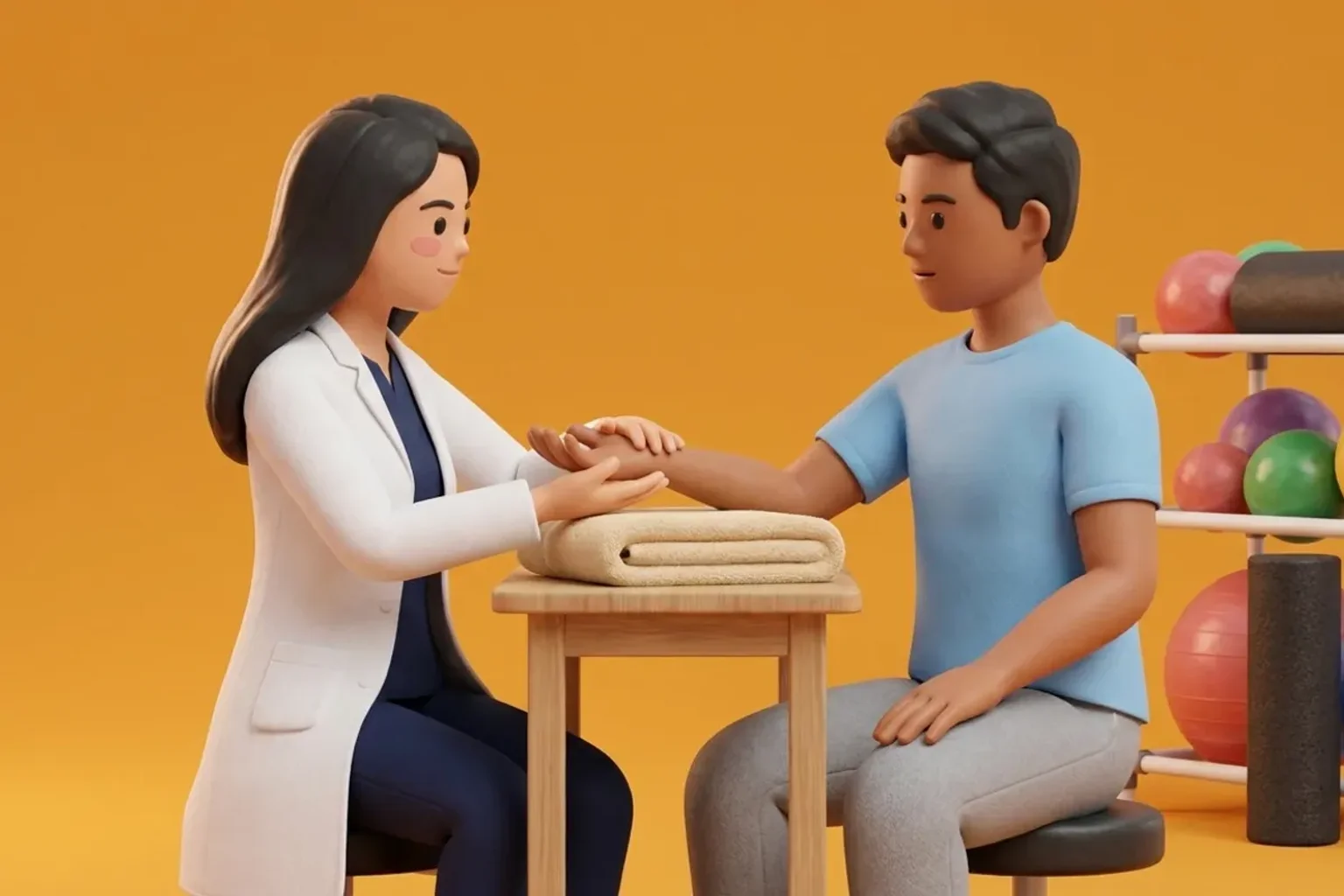
- 1Sit comfortably at a table with your affected hand resting palm-down on a soft towel or smooth wooden board.
- 2Take a very soft material, such as a silk scarf or cotton ball, and gently brush it across your hypersensitive wrist and finger skin for 2 minutes.
- 3Progress gradually to slightly textured fabrics, such as soft flannel or denim, over subsequent days as comfort improves.
- 4Place a light dry washcloth under your palm and gently slide it forward and backward across the tabletop, mimicking a light scrubbing motion.
- 5Apply only 1 to 2 kilograms of gentle downward pressure during the scrubbing motion for 3 minutes, ensuring pain remains completely tolerable.
| Diagnostic Symptom Category | Patient-Reported Symptoms (At Least 3 Categories) | Objective Clinical Signs (At Least 2 Categories) |
|---|---|---|
| 1. Sensory Category | Reports of hyperalgesia (exaggerated response to pinprick) and/or allodynia (pain provoked by light brush, clothing, or air). | Objective evidence of mechanical allodynia on cotton swab touch or hyperalgesia on light neuro-tip examination. |
| 2. Vasomotor Category | Reports of skin temperature asymmetry between hands and/or fluctuating skin color changes (mottled, red, purple). | Objective skin temperature difference (> 1°C difference between hands) and/or observable asymmetrical skin color. |
| 3. Sudomotor/Edema Category | Reports of localized hand swelling, fluctuating edema, and/or asymmetrical sweating changes on palms. | Objective evidence of brawny or pitting hand edema and/or asymmetrical hyperhidrosis on clinical examination. |
| 4. Motor/Trophic Category | Reports of decreased wrist/finger range of motion, motor weakness, tremor, dystonia, or abnormal nail/hair growth. | Objective limitation in active range of motion, motor weakness, muscle atrophy, coarse hair, or ridged brittle nails. |
Never attempt forceful, painful passive joint manipulation on a patient suspected of having CRPS. Aggressive stretching triggers severe sympathetic flare-ups, amplifies central sensitization, and accelerates joint contracture. If unprovoked burning pain and allodynia develop, shift immediately to pain-free graded motor imagery and sympathetic calming.
Frequently Asked Questions
What is Sudeck atrophy, and is it permanent?
Sudeck atrophy is the historical medical name for Complex Regional Pain Syndrome Type I, referring to patchy bone mineral loss and autonomic nerve sensitivity following an injury. It is not permanent if identified early. With prompt, gentle physiotherapy, graded motor imagery, and desensitization, the vast majority of patients achieve significant recovery and return to normal functional activities.
Do I need a doctor referral to see a wrist fracture physiotherapist on BookPhysio.in?
BookPhysio.in does not require a physician prescription. Under the National Commission for Allied and Healthcare Professions (NCAHP) Act 2021, patients across India enjoy direct access to autonomous registered physiotherapists. Through BookPhysio.in, you connect directly with verified clinicians and pay per session with transparent fees, completely free from advance package commitments, commission markups, or platform subscription charges.
Related condition guides
Related recovery guides & articles
BookPhysio.in Editorial Team
The BookPhysio.in editorial team writes and maintains this content, checking it against reliable clinical sources. Content follows our medical review policy: general information only, and no page claims a clinical review until a named registered physiotherapist has signed it off.
Read our medical review policy