
Costoclavicular Space Compression and First Rib Elevation in TOS
In short
The costoclavicular space narrows whenever the first rib elevates or the clavicle depresses. Discover how posture, carrying loads, and breathing patterns compress this tunnel and how physiotherapy restores clearance.
In this guide (4 sections)
The costoclavicular space forms the second anatomical compartment of the thoracic outlet, positioned between the posterior surface of the middle third of the clavicle and the superior surface of the first rib. Medially, this tunnel is bordered by the costoclavicular (rhomboid) ligament, while posterolaterally it is bounded by the superior border of the scapula and the subclavius muscle. Within this compact corridor travel the subclavian vein, the subclavian artery, and the divisions of the brachial plexus. Compression within this space arises through a scissor-like mechanism: either the clavicle is depressed and retracted toward the chest wall, or the first rib is elevated superiorly toward the clavicle. Because the subclavian vein lies most anteriorly and medially within this space, costoclavicular narrowing frequently provokes venous engorgement alongside neural symptoms.
Heavy Luggage Hauling, Market Bags, and Domestic Overhead Reaching
In Indian households, daily physical demands place repetitive compressive strains upon the shoulder girdle. Homemakers and domestic workers frequently lift heavy metal pressure cookers, stainless steel storage canisters, and buckets of water from floor level, depressing the clavicle against the first rib. In bustling wholesale markets and railway stations, passengers and vendors carry overloaded bags suspended by thin shoulder straps that press directly over the middle third of the clavicle. Furthermore, storing and retrieving heavy items from high lofts or overhead cupboards requires sustained arm elevation with backward shoulder retraction, immediately narrowing the costoclavicular clearance and pinching the neurovascular structures beneath.
Bony Scissor Biomechanics, Subclavius Spasm, and Venous Stasis
Under normal mechanics, shoulder abduction and elevation prompt the clavicle to elevate, rotate posteriorly, and move away from the first rib, preserving adequate tunnel dimensions. However, in individuals with thoracic kyphosis, forward shoulder posture, or subclavius muscle contracture, this normal clearance fails. Chronic hypertonicity of the subclavius muscle draws the clavicle inferiorly and medially. Concurrently, hyperactive scalene muscles pull the first rib upward. This dual mechanical fault creates structural bony abutment. The subclavian vein, lacking the thick muscular wall of the adjacent artery, is compressed against the subclavius tendon and the costoclavicular ligament, creating hemodynamic resistance, venous stasis, and neural irritation.
First Rib Mobilization, Clavicular Kinematic Restoration, and Serratus Retraining
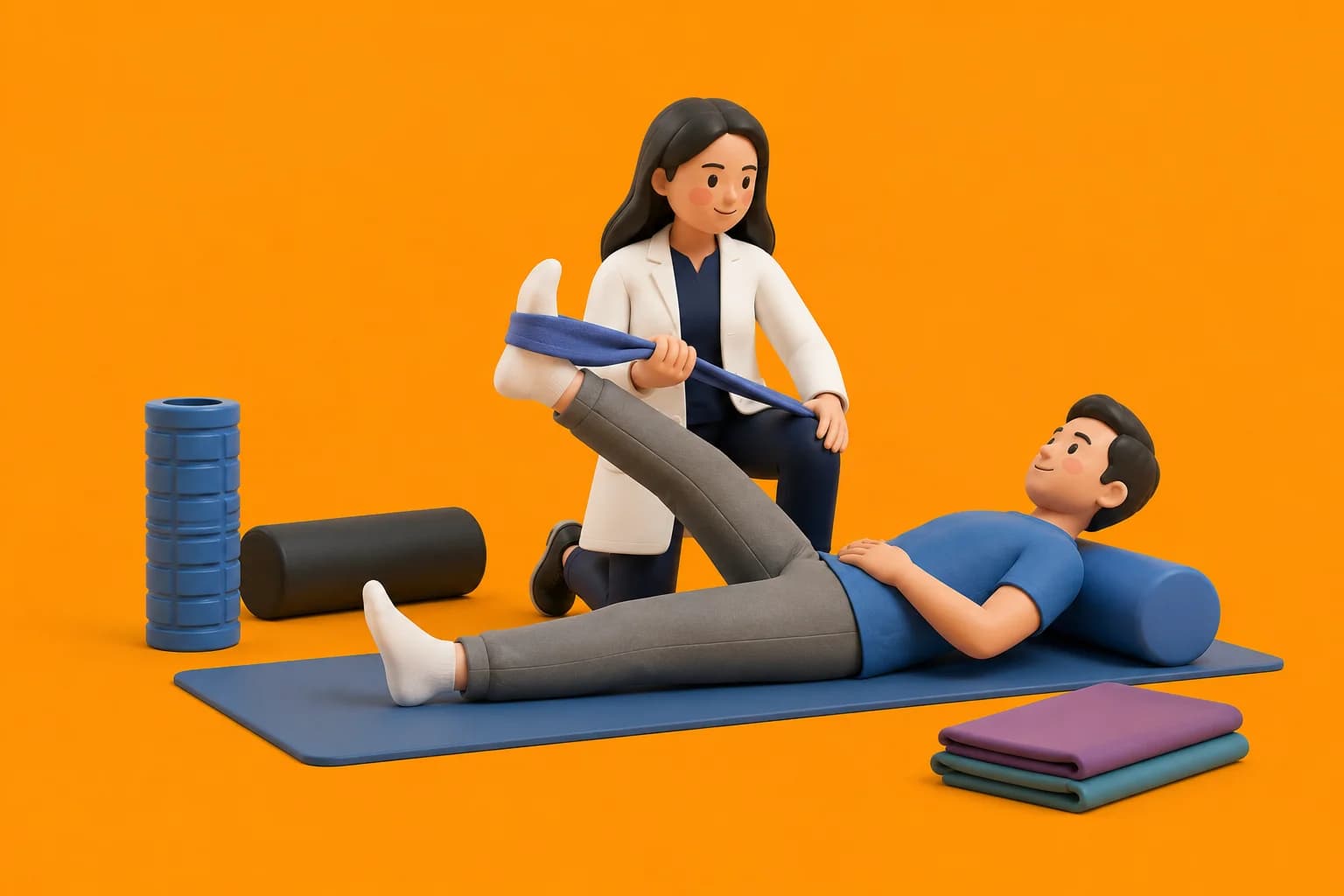
Physiotherapy intervention targets both sides of the costoclavicular scissor. Restoring inferior mobility of the first rib requires manual joint depression techniques combined with the exhalation phase of diaphragmatic breathing. Myofascial release of the subclavius muscle and pectoralis minor relieves downward clavicular tension. Concurrently, rehabilitation focuses on activating the lower trapezius and serratus anterior muscles to promote upward scapular rotation and posterior clavicular roll during arm movements. Educating the patient on backpack strap placement and load distribution protects the healing neurovascular bed from recurrent external compression.
Seated First Rib Self-Depression with Lateral Neck Flexion
Objective: Mobilize the elevated first rib inferiorly to expand the costoclavicular tunnel
- 1Sit tall on a sturdy chair, maintaining a neutral lumbar spine and relaxed shoulders.
- 2Drape a wide woven cotton belt over your shoulder at the base of your neck on the affected side.
- 3Cross the ends of the belt across your chest, securing the lower end firmly under your opposite foot or hand.
- 4Take a deep diaphragmatic breath in through your nose, expanding your lower abdomen.
- 5As you exhale completely, apply firm downward tension on the belt while gently tilting your ear toward the opposite shoulder, holding for 5 seconds.
| Biomechanical Factor | Normal Joint Kinematics | Impaired Mechanics in Costoclavicular TOS |
|---|---|---|
| Clavicular Motion | Elevates 30 degrees and rotates posteriorly during full overhead shoulder abduction. | Depressed, protracted, and anteriorly tilted, compressing the underlying tunnel. |
| First Rib Position | Descends during exhalation and remains stable during resting upper limb movement. | Chronically subluxated superiorly by overactive anterior and middle scalenes. |
| Subclavius Muscle | Acts as a dynamic stabilizer of the sternoclavicular joint during arm swinging. | Hypertrophied or shortened, pulling clavicle inferiorly against subclavian vein. |
| Neurovascular Effect | Free glide of brachial plexus divisions and unobstructed laminar blood flow. | Venous pooling, forearm fullness, paresthesia in lower trunk distribution. |
A history of midshaft clavicle fracture with exuberant bony callus or nonunion can severely reduce the costoclavicular space. If symptoms develop after prior trauma, plain radiographs or CT imaging must rule out structural bony impingement before initiating aggressive manual therapy or joint mobilization.
Frequently Asked Questions
Why does carrying a heavy backpack worsen costoclavicular compression?
A heavy backpack places direct downward pressure across the middle third of the clavicle, pressing it against the first rib. This mechanical compression clamps down on the subclavian vein and brachial plexus, causing rapid numbness, tingling, and hand fatigue.
Do I need a doctor referral to see a thoracic outlet physiotherapist on BookPhysio.in?
BookPhysio.in does not require a physician prescription. Under the National Commission for Allied and Healthcare Professions (NCAHP) Act 2021, patients across India enjoy direct access to autonomous registered physiotherapists. Through BookPhysio.in, you connect directly with verified clinicians and pay per session with transparent fees, completely free from advance package commitments, commission markups, or platform subscription charges.
Related condition guides


Related recovery guides & articles
BookPhysio.in Editorial Team
The BookPhysio.in editorial team writes and maintains this content, checking it against reliable clinical sources. Content follows our medical review policy: general information only, and no page claims a clinical review until a named registered physiotherapist has signed it off.
Read our medical review policy