
Direct Access Physiotherapy for Knee Osteoarthritis Under NCAHP Act 2021
In short
Learn how the National Commission for Allied and Healthcare Professions (NCAHP) Act 2021 grants patients across India direct access to autonomous physiotherapists.
In this guide (4 sections)
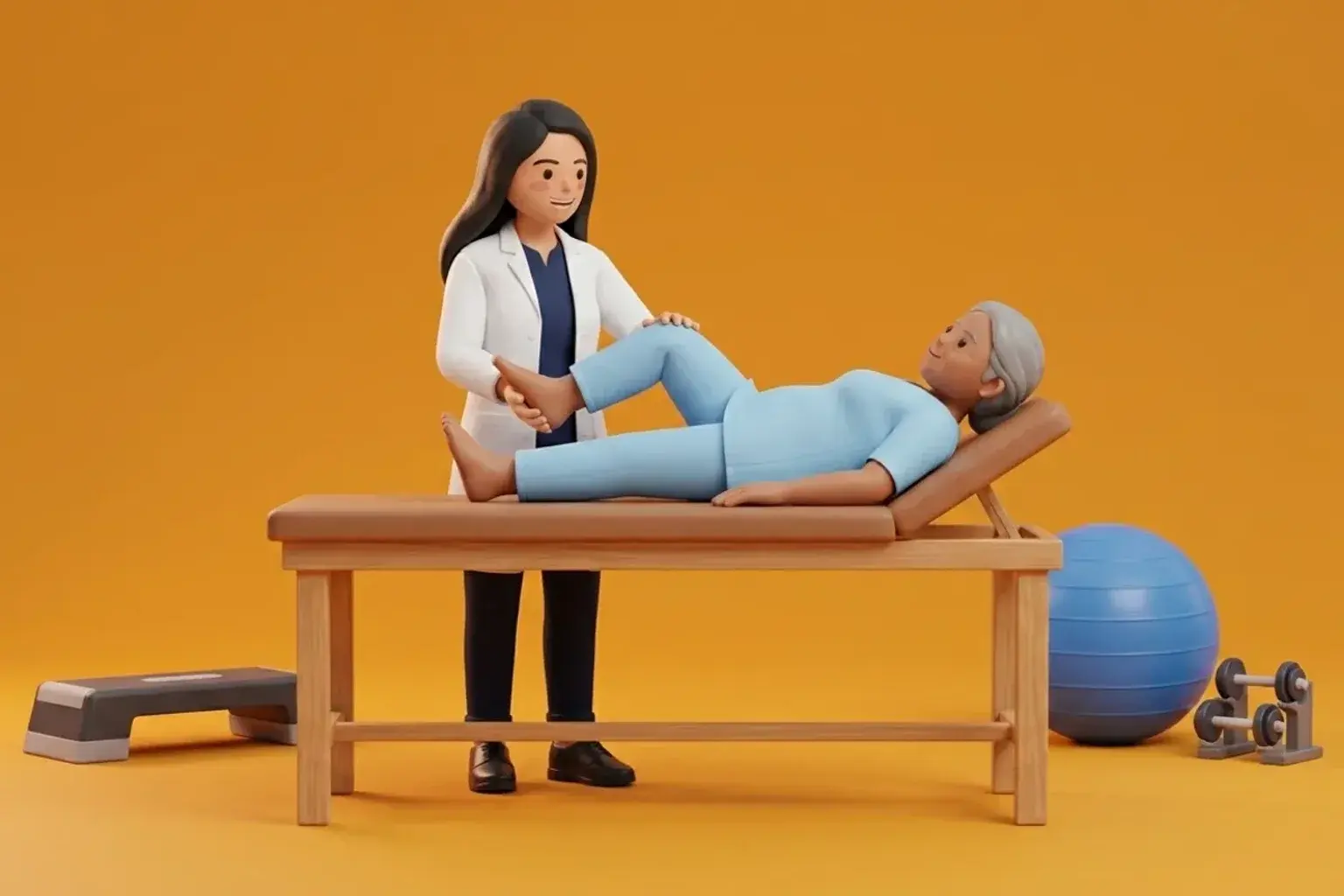
In the legal and professional framework of Indian healthcare, the enactment of the National Commission for Allied and Healthcare Professions (NCAHP) Act 2021 by the Parliament of India represents a historic milestone. For decades, outdated administrative traditions led many patients to believe that they could only consult a physiotherapist if they possessed a formal written referral or prescription from an orthopaedic surgeon or general medical practitioner. The NCAHP Act 2021 fundamentally dismantled this obsolete barrier, granting statutory legal recognition to qualified physiotherapists as independent, autonomous healthcare practitioners. Under the Act, registered physiotherapists possess the legal authority and professional mandate to perform primary physical assessments, establish independent clinical musculoskeletal diagnoses, formulate comprehensive rehabilitation care plans, and deliver direct physiotherapy treatments without requiring an intermediary physician referral.
Indian Healthcare Realities: Eliminating OPD Waiting Lines and Referral Delays
In India’s overcrowded metropolitan and tier-two cities, seeking medical care for chronic knee osteoarthritis through traditional referral pathways frequently involves an exhausting, expensive ordeal. An elderly patient experiencing knee stiffness must first endure hours waiting in crowded hospital outpatient department (OPD) queues to see a busy surgeon, pay consultation fees, receive routine painkiller prescriptions, and only then be directed down to physiotherapy. These administrative delays often stretch over weeks or months, during which time joint stiffness worsens and quadriceps muscles atrophy. Direct access under the NCAHP Act 2021 empowers patients to bypass these unnecessary delays entirely. An individual suffering from knee pain can directly schedule an appointment with a verified, registered physiotherapist, receiving immediate, personalized care.
Autonomous Physical Examination, Differential Diagnosis, and Red-Flag Screening
Autonomous direct access practice carries a heavy professional responsibility: the registered physiotherapist must possess rigorous clinical diagnostic skills to differentiate common degenerative knee osteoarthritis from sinister, non-musculoskeletal pathologies. A comprehensive direct-access physical evaluation begins with subjective history taking and systematic red-flag screening to rule out systemic inflammatory arthropathies, deep vein thrombosis, septic arthritis, primary bone tumors, and referred pain from the lumbar spine or hip joint. Clinicians execute validated orthopaedic physical tests, including joint line palpation, McMurray and Apley tests for meniscal integrity, Lachman and pivot-shift tests for cruciate stability, and patellar mobility assessments. By systematically synthesizing clinical findings, the autonomous physiotherapist establishes an accurate clinical diagnosis and identifies patients requiring immediate medical or surgical referral.
Evidence-Based Conservative Care Pathways and Primary Healthcare Integration
Once an autonomous clinical diagnosis of knee osteoarthritis is established, the registered physiotherapist designs an individualized, evidence-based conservative management plan. Rather than relying on passive, short-term modalities like ultrasound or heat packs, contemporary autonomous physiotherapy emphasizes active interventions: progressive high-load low-velocity quadriceps strengthening, neuromuscular balance retraining, gait modification, unloader bracing calibration, and weight optimization counseling. Autonomous physiotherapists serve as primary musculoskeletal gatekeepers, coordinating closely with orthopaedic surgeons, rheumatologists, and general physicians when pharmacological management or surgical joint replacement is indicated, ensuring coordinated, patient-centered care.
Seated Active Knee Flexion-Extension with Pelvic Posture Alignment
Objective: Perform an active functional self-assessment and mobility drill to evaluate daily joint range of motion and muscular response
- 1Sit tall on a sturdy, firm chair with your spine naturally upright and your feet flat on the floor.
- 2Place your hands on your thighs and consciously relax your shoulders and neck.
- 3Slowly lift your affected foot off the floor, extending your knee smoothly until it is completely straight in front of you.
- 4Hold the leg in full straight extension for 3 seconds, observing your thigh muscle contract and feeling for any pain or catching.
- 5Slowly bend your knee backward as far as comfortably possible, letting your foot slide beneath the chair before returning to the start.
| Healthcare Parameter | Outdated Traditional Referral Pathway | NCAHP Act 2021 Direct Access Framework | Patient & System Benefit |
|---|---|---|---|
| Initial Access Requirement | Mandatory written referral from medical doctor or surgeon | Direct primary access: patient books directly with registered physiotherapist | Eliminates weeks of painful treatment delays and redundant OPD visits |
| Diagnostic Authority | Physiotherapist treated merely as a technician executing a prescription | Autonomous healthcare practitioner performing comprehensive clinical evaluation | Accurate, individualized clinical diagnosis and tailored exercise prescription |
| Out-of-Pocket Healthcare Costs | Requires paying multiple specialist consultation fees before therapy starts | Single direct consultation with transparent, pay-per-session pricing | Substantially reduces overall family out-of-pocket healthcare expenses |
| Patient Safety & Screening | Relied on initial doctor visit; delayed detection of changing symptoms | Rigorous, continuous red-flag screening at every physiotherapy session | Immediate referral to emergency or orthopaedic care when red flags appear |
Under the NCAHP Act 2021 direct access framework, physiotherapists must execute strict red-flag screening. If an autonomous physical examination reveals non-mechanical bone pain, unexplained weight loss, nocturnal fever, severe neurological deficits (foot drop or bowel/bladder dysfunction), or acute hot swollen joints, the physiotherapist must refer the patient immediately to an orthopaedic surgeon or medical specialist for emergent investigation.
Frequently Asked Questions
Is it completely legal in India to see a physiotherapist without a prescription from an orthopaedic doctor?
Yes, it is 100 percent legal across India. Under the National Commission for Allied and Healthcare Professions (NCAHP) Act passed by the Parliament of India in 2021, registered physiotherapists are recognized as independent, primary healthcare practitioners. You have full legal direct access to consult a qualified physiotherapist directly for your knee pain without needing any doctor referral or prescription.
Do I need a doctor referral to see a knee osteoarthritis physiotherapist on BookPhysio.in?
BookPhysio.in does not require a doctor referral. Under the National Commission for Allied and Healthcare Professions (NCAHP) Act 2021, patients across India enjoy direct access to autonomous registered physiotherapists. Through BookPhysio.in, you connect directly with verified clinicians and pay per session with transparent fees, completely free from advance package commitments, commission markups, or platform subscription charges.
Related condition guides

Related recovery guides & articles
BookPhysio.in Editorial Team
The BookPhysio.in editorial team writes and maintains this content, checking it against reliable clinical sources. Content follows our medical review policy: general information only, and no page claims a clinical review until a named registered physiotherapist has signed it off.
Read our medical review policy