
Direct Access Physiotherapy for Spondylolisthesis Under NCAHP Act 2021
In short
The NCAHP Act 2021 guarantees Indian patients direct access to autonomous physiotherapists. Learn how early evaluation accelerates spondylolisthesis recovery.
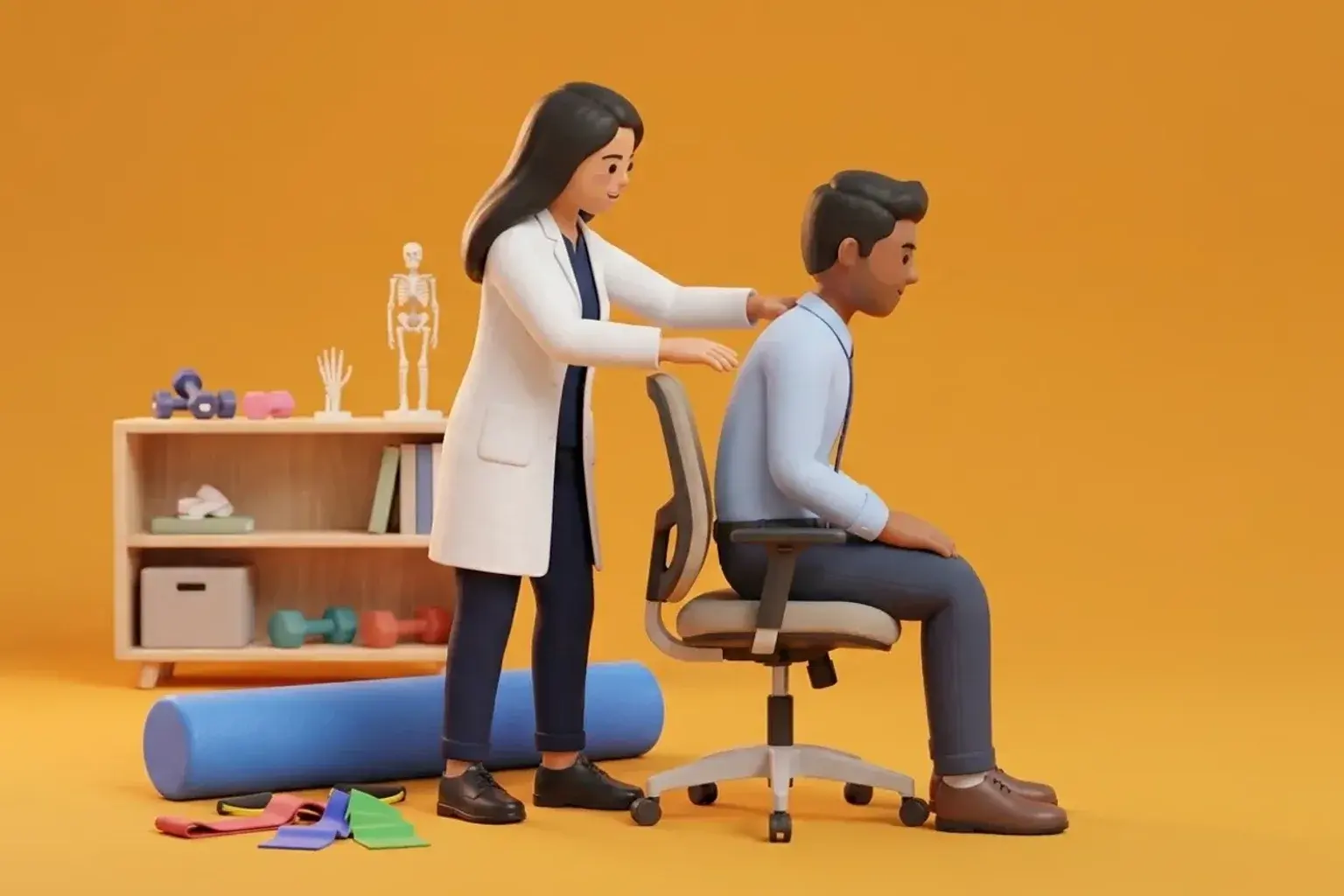
In this guide (4 sections)
Healthcare delivery in India achieved a historic statutory milestone with the enactment of the National Commission for Allied and Healthcare Professions (NCAHP) Act 2021. Passed by the Parliament of India, this landmark legislation formally recognized physiotherapy as an independent, autonomous healthcare profession, legally establishing direct access rights for patients across the nation. Under the provisions of the NCAHP Act, individuals suffering from lower back disorders, lumbar spondylolysis, and spondylolisthesis are fully empowered to consult a registered, qualified physiotherapist directly as a first-contact practitioner without requiring a doctor prescription, referral slip, or hospital intermediary. Direct access eliminates diagnostic delays, reduces healthcare expenditure, and ensures timely, conservative rehabilitation.
Indian Referral Delays, Out-of-Pocket Costs, and Clinic Crowding
Prior to the implementation of the NCAHP Act 2021, patients in India navigating chronic back pain faced frustrating, multi-tiered referral pathways. A patient experiencing lower back pain typically waited weeks for an appointment at an overcrowded government hospital or paid heavy consultation fees at private clinics, only to receive a brief prescription for painkillers and muscle relaxants before finally being sent to a physiotherapy department. In the interim, unmanaged pars stress fractures often progressed into permanent vertebral slips. Direct access empowers Indian citizens, from corporate professionals in metro cities to agricultural workers in rural towns, to seek immediate, professional clinical triage from autonomous physiotherapists at the very first onset of pain.
Autonomous Diagnostic Triage, Differential Screening, and Safety Red Flags
The statutory autonomy conferred by the NCAHP Act 2021 places profound clinical responsibility upon registered physiotherapists. As primary-contact healthcare professionals, physiotherapists perform comprehensive differential diagnostic evaluations, utilizing evidence-based clinical prediction rules, neurological reflex testing, dermatomal mapping, and special orthopedic maneuvers (such as the Prone Instability Test and Passive Lumbar Extension Test) to distinguish mechanical spondylolisthesis from non-mechanical systemic spinal pathologies. Autonomous practitioners are rigorously trained to identify red flags, including spinal infections (such as Pott disease), occult malignancies, visceral pain referral from renal or pelvic organs, and acute cauda equina syndrome, immediately routing patients to specialist medical teams when operative care is needed.
First-Contact Management, Active Rehabilitation, and Patient Empowerment
When an individual accesses an autonomous physiotherapist directly for spondylolisthesis, care begins with an individualized mechanical evaluation rather than generic passive modalities. The physiotherapist formulates an evidence-based clinical management plan that integrates pain neuroscience education, directional preference training, and deep motor control reconditioning. Clinicians empower patients with self-management strategies, teaching spine-sparing domestic lifting techniques and postural pacing. By serving as an accessible, autonomous entry point into the healthcare system, registered physiotherapists guide patients through non-surgical recovery safely, ordering diagnostic imaging when clinically justified and ensuring transparent, accountable care.
First-Contact Active Pelvic Tilt and Transversus Activation Check
Objective: Establish baseline motor control and pain-free neutral alignment during your initial autonomous physiotherapy visit
- 1Lie flat on your back on your physiotherapist treatment plinth with your knees bent and feet flat on the surface.
- 2Place your open hands flat beneath your lower back to feel the natural hollow space between your spine and the surface.
- 3Gently exhale while tightening your lower abdominal muscles, pressing your lower back firmly downward into your hands.
- 4Feel your pelvis gently rock backward as your tailbone curls slightly off the surface, eliminating the space beneath your spine.
- 5Hold this flattened, braced position firmly for 6 seconds while continuing to breathe calmly, then slowly release.
| Healthcare Parameter | Historical Referral Model (Pre-2021) | Direct Access Model (NCAHP Act 2021) |
|---|---|---|
| Legal Practitioner Status | Physiotherapy viewed as ancillary support requiring physician supervision and prescription | Recognized as an independent, autonomous healthcare profession with direct first-contact rights |
| Time to Treatment Initiation | Average delay of 3 to 6 weeks navigating referrals, specialist visits, and imaging lines | Immediate consultation; clinical evaluation and rehabilitation commence on Day 1 |
| Total Healthcare Expenditure | High out-of-pocket costs with multiple doctor fees, unnecessary medications, and scans | Cost-effective care; transparent per-session clinic pricing; zero referral markups |
| Clinical Diagnostic Autonomy | Restricted to administering prescribed passive treatments (traction, heat packs, ultrasound) | Full autonomous differential diagnosis, red flag screening, and functional motor prescription |
Under the ethical and professional standards established by the NCAHP Act 2021, autonomous physiotherapists are legally and clinically mandated to maintain robust referral networks. If clinical examination reveals non-mechanical red flags (such as unexplained weight loss, night pain unrelieved by rest, fever, or progressive neurological deficits), the practitioner must immediately initiate urgent medical referral to a spine surgeon or physician.
Frequently Asked Questions
Is it completely legal in India to visit a physiotherapist without a prescription from an MBBS or orthopedic doctor?
Yes, it is one hundred percent legal and officially recognized under the National Commission for Allied and Healthcare Professions (NCAHP) Act 2021, passed by the Parliament of India. The law grants Indian citizens the statutory right of direct access, meaning you can consult a qualified, registered physiotherapist directly for diagnosis and treatment without needing a referral or prescription from any medical doctor.
Do I need a doctor referral to consult a spondylolisthesis physiotherapist on BookPhysio.in?
BookPhysio.in does not require a doctor referral. Under the National Commission for Allied and Healthcare Professions (NCAHP) Act 2021, patients across India enjoy direct access to autonomous registered physiotherapists. Through BookPhysio.in, you connect directly with verified clinicians and pay per session with transparent fees, completely free from advance package commitments, commission markups, or platform subscription charges.
Related condition guides



Related recovery guides & articles
BookPhysio.in Editorial Team
The BookPhysio.in editorial team writes and maintains this content, checking it against reliable clinical sources. Content follows our medical review policy: general information only, and no page claims a clinical review until a named registered physiotherapist has signed it off.
Read our medical review policy